what is a palindrome
Have you ever come across a word that looks exactly the same when read from left to right and right to left? Words such as “level,” “radar,” and “civic” are simple examples of a fascinating language pattern called a palindrome. But what is a palindrome, and why do these unusual words and sequences attract so much attention?
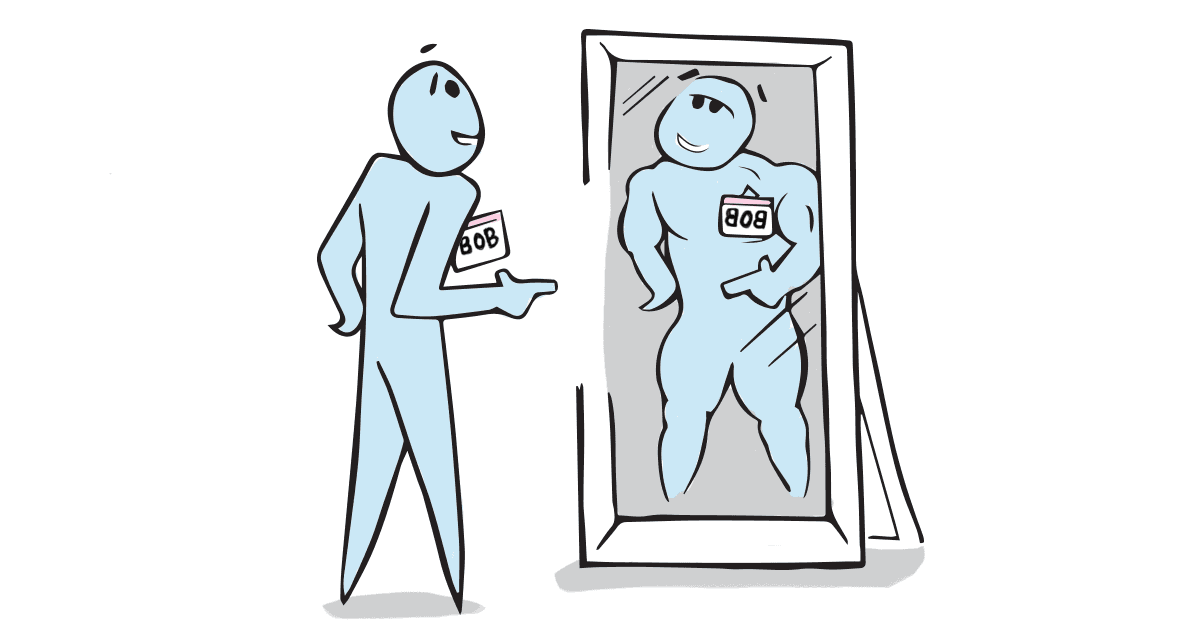
A palindrome is a word, phrase, number, or sequence that remains the same when its characters are reversed, usually when spaces, punctuation, and capitalization are ignored. Palindromes can be found in everyday language, mathematics, literature, names, dates, and even computer science. They are not only entertaining but also provide an interesting way to explore patterns, symmetry, and logical thinking.
What Is a Palindrome?
A palindrome is a sequence that reads the same forward and backward. what is a palindrome The term can be applied to words, numbers, phrases, and other ordered sequences.
For example:
- level
- radar
- civic
- madam
- racecar
- rotator
Take the word “level.” If you read it from the beginning, you get L-E-V-E-L. If you read it backward, you get L-E-V-E-L again. Because the sequence does not change when reversed, it is a palindrome.
The same basic idea applies to numbers. For example, 121, 1331, and 1221 are palindromic numbers because reversing their digits produces the same number.
The concept is simple, but palindromes can become surprisingly complex when they are used in longer phrases or mathematical problems.
How Does a Palindrome Work?
The easiest way to understand a palindrome is to compare characters from opposite ends of a sequence.
Consider the word “radar.”
The first letter is R, and the last letter is R.
The second letter is A, and the second-to-last letter is A.
The middle letter is D.
Every corresponding pair matches, so “radar” is a palindrome.
Now consider the word “apple.” The first letter is A, while the last letter is E. Since they do not match, “apple” is not a palindrome.
This simple comparison method can be used with words, numbers, sentences, and computer-generated strings.
Examples of Palindrome Words
English contains many recognizable palindrome words. Some are common in everyday conversation, while others are less frequently used.
Here are several examples:
- level
- radar
- civic
- madam
- refer
- rotor
- kayak
- racecar
- reviver
- deified
- repaper
- tenet
Short palindromes are often easier to recognize. Longer examples are particularly interesting because maintaining the same sequence in both directions requires a strong structural balance.
The word “racecar,” for example, has seven letters. Reading it backward gives exactly the same sequence. This makes it one of the most famous examples used when explaining palindromes to beginners.
Palindrome Phrases
Palindromes are not limited to individual words. Entire phrases can also be palindromic.
When checking a phrase, spaces, punctuation marks, and capitalization are usually ignored. What matters is the sequence of letters.
One famous example is:
“A man, a plan, a canal: Panama!”
If the spaces and punctuation are removed and the letters are treated without regard to capitalization, the sequence reads the same in both directions.
Another well-known example is:
“Was it a car or a cat I saw?”
These phrases demonstrate why palindromes can be more challenging than simple words. A writer must arrange many letters so that the entire sequence has mirror-like symmetry.
Palindrome Numbers
The idea of a palindrome also applies to numbers. A palindromic number is a number that remains unchanged when its digits are reversed.
Examples include:
- 11
- 22
- 101
- 121
- 202
- 1331
- 1221
- 12321
- 123321
For instance, reversing 1221 gives 1221. Therefore, 1221 is a palindrome.
However, reversing 1234 gives 4321, which is different from the original number. Therefore, 1234 is not a palindromic number.
Palindrome numbers are particularly interesting in mathematics because they appear across different ranges and can be used in puzzles, programming challenges, and number theory.
Even-Length and Odd-Length Palindromes
Palindromes can have either an odd number of characters or an even number of characters.
An odd-length palindrome has one central character.
For example:
radar
The letter D sits in the center, while the surrounding letters mirror one another.
An even-length palindrome has no single central character. Instead, the two middle characters form a matching pair.
For example:
1221
The two middle digits are both 2, and the outer digits are both 1.
This distinction is useful when studying how palindromes are constructed. In both cases, the key feature is symmetry around the center.
Why Are Palindromes Interesting?
Palindromes are interesting because they combine language with patterns. Humans naturally notice symmetry, repetition, and order, which makes palindromes satisfying to discover.
They can also be used as mental exercises. Finding whether a word or phrase is a palindrome requires careful attention to sequence. Creating one is even more challenging because every character must contribute to the mirrored structure.
For children, palindromes can make language learning more enjoyable. Teachers can use them to introduce concepts such as spelling, letter order, symmetry, and word structure.
For adults, palindrome puzzles can serve as entertaining brain teasers.
Palindromes in Literature
Writers have experimented with palindromes for centuries. Although creating long and meaningful palindromic sentences is difficult, the form can be used as a literary curiosity.
Palindromes demonstrate how flexible language can be. A writer normally focuses on meaning, grammar, rhythm, and style. With a palindrome, the writer must also satisfy a strict structural requirement.
This makes long palindromic phrases an impressive form of wordplay. The challenge becomes even greater when punctuation and meaningful sentences are involved.
Palindromes are therefore connected with a broader tradition of linguistic games, including anagrams, rhymes, riddles, and other forms of wordplay.
Palindromes in Names
Some names are palindromic or contain palindromic patterns. Examples include Anna, Hannah, Otto, and Eve.
For instance, “Anna” reads the same in both directions:
A-N-N-A
Names can make palindromes especially memorable because they are used in real life rather than being created only as vocabulary examples.
Some people also enjoy discovering whether their first name, surname, or initials form an interesting pattern.
Palindromes in Dates
Dates can sometimes form palindromic patterns when written using a particular numerical format.
For example, depending on the date format being used, a date may contain the same sequence of digits from either direction. Such dates are sometimes called palindrome dates.
The important point is that the format matters. A date can look palindromic in one notation but not another because different countries arrange the day, month, and year differently.
Palindrome dates often attract attention because they are relatively unusual and provide a fun example of numerical symmetry.
Palindromes in Computer Science
Palindromes are also useful in programming. A common beginner programming exercise asks students to write a program that determines whether a word or number is a palindrome.
A simple approach is to reverse the input and compare the reversed version with the original.
For example, suppose a program receives:
racecar
It reverses the sequence:
racecar
Because both are identical, the program reports that the input is a palindrome.
For a number such as:
12321
The reversed number is again 12321, so it qualifies as a palindrome.
Programming exercises involving palindromes teach important concepts such as strings, loops, arrays, indexing, comparison, and algorithms.
How to Check if Something Is a Palindrome
Checking a palindrome manually is straightforward.
First, ignore spaces and punctuation if you are dealing with a phrase. Next, make capitalization consistent. Then compare the first character with the last character, the second character with the second-to-last character, and continue toward the center.
For example, consider:
“Never odd or even.”
After removing spaces and punctuation and using lowercase letters, the sequence becomes:
neveroddoreven
Reading it backward produces the same sequence. Therefore, it is a palindrome.
For short words, this process can be done mentally. For very long strings, a computer program can perform the comparison much faster.
How to Create a Palindrome
Creating a palindrome is more difficult than identifying one. One simple method is to begin with a central letter or pair of letters and build matching characters around them.
For an odd-length palindrome, you can start with a central character:
A
Then add matching letters:
ABA
Add another matching pair:
ABCBA
You can continue expanding the structure as long as the sequence remains meaningful.
For an even-length palindrome, you can begin with a matching pair:
AA
Then add matching characters around it:
BAAB
The difficulty increases when you want the result to be a meaningful English word or sentence.
Common Misunderstandings About Palindromes
One common misunderstanding is that every palindrome must be a single word. This is not true. Palindromes can be phrases, numbers, sentences, or other sequences.
Another misunderstanding is that punctuation and spaces must always match exactly. In most linguistic examples, they are ignored when determining whether a phrase is palindromic.
Capitalization is also generally ignored. Therefore, a phrase does not stop being a palindrome simply because one letter is uppercase and another is lowercase.
The central requirement is the order of the meaningful characters.
Why Learning About Palindromes Is Useful
Learning about palindromes may seem like simple entertainment, what is a palindrome but it offers several educational benefits.
First, palindromes encourage attention to detail. A single incorrect letter can break the pattern.
Second, they help students understand symmetry and sequences. These ideas are important in mathematics, computer science, and logical reasoning.
Third, palindromes make vocabulary practice more engaging. Students can search for examples, classify them, and even attempt to create their own.
Finally, palindrome puzzles encourage creativity. Finding a phrase that works in both directions is a genuine language challenge.
Final Thoughts on What Is a Palindrome
So, what is a palindrome? In simple terms, it is a word, phrase, number, or sequence that reads the same forward and backward when the relevant characters are considered. Examples such as “level,” “radar,” and “racecar” make the basic concept easy to understand, while longer phrases and numerical patterns show how fascinating the idea can become.
Palindromes are more than unusual words. They are examples of symmetry in language and numbers. They appear in vocabulary, literature, mathematics, dates, names, puzzles, and programming. Their simple rule creates countless possibilities for exploration.
Whether you are a student learning about word patterns, a puzzle enthusiast looking for a challenge, or simply someone curious about language, palindromes offer an entertaining way to think about letters and sequences. Once you understand the basic principle, you may start noticing palindromes in places you never expected—and you might even find yourself trying to create one.
About the Author