proscribe vs prescribe
The English language contains many words that look or sound similar but have completely different meanings. These words can easily confuse readers, writers, students, and even experienced professionals. One common example is proscribe vs prescribe. Although both words share the same ending and have similar spellings, their meanings are almost opposite in many situations.
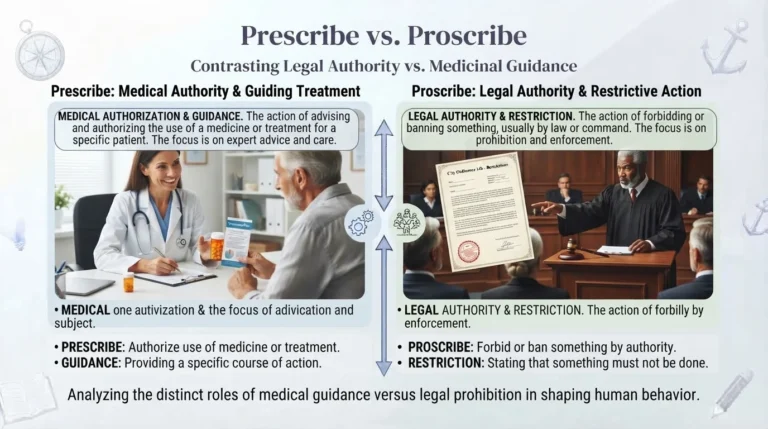
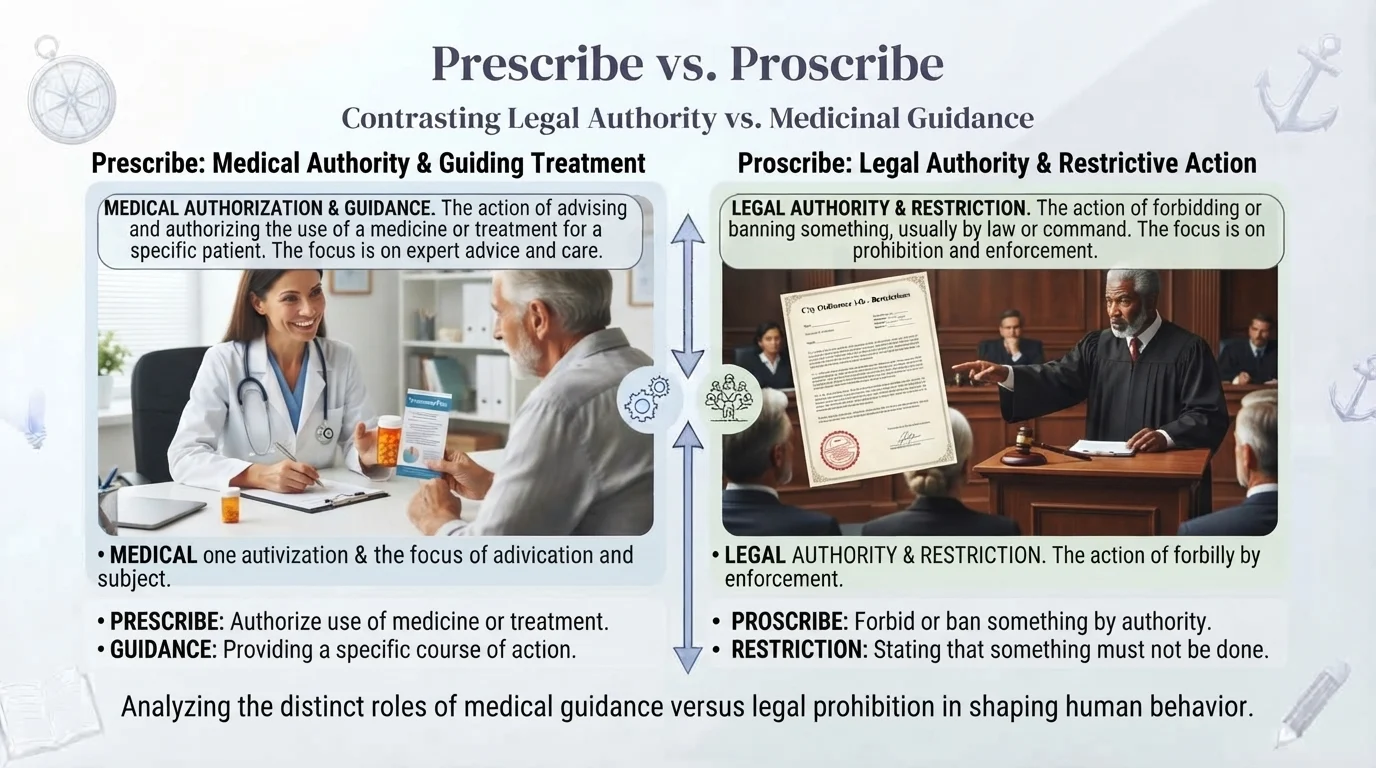
Understanding the difference between proscribe and prescribe is important for clear communication. One word refers to forbidding or prohibiting something, while the other usually refers to recommending, directing, or officially ordering something. Confusing these terms can change the meaning of a sentence, particularly in medical, legal, academic, and professional contexts.
In this article, we will explore the meanings of proscribe and prescribe, explain their differences, provide practical examples, discuss their origins, and share simple techniques for remembering which word to use.
What Does Proscribe Mean?
The word proscribe vs prescribe means to prohibit, forbid, or officially declare something unacceptable. It is commonly used when an authority, organization, government, or institution establishes a rule against a particular activity, practice, behavior, or organization.
When something is proscribed, people are generally not permitted to do it under the relevant rules or authority. The word often appears in formal writing, legal discussions, political commentary, and academic texts.
For example, a government might proscribe an organization because its activities violate national laws. Similarly, a school might proscribe certain forms of behavior to maintain discipline and protect students.
Here are a few examples of proscribe in sentences:
- The school rules proscribe bullying and harassment.
- The government decided to proscribe the illegal organization.
- Company policies proscribe the sharing of confidential information.
- The regulations proscribe the use of certain chemicals in food production.
- The organization chose to proscribe discriminatory practices in the workplace.
In each example, proscribe indicates that something is forbidden or prohibited.
Common Situations Where Proscribe Is Used
Proscribe frequently appears in formal situations involving restrictions or prohibitions. In legal contexts, a law may proscribe an action that authorities consider unlawful. In education, school policies may proscribe cheating, harassment, or disruptive behavior.
The term also appears in political discussions. For instance, a government may proscribe an organization under applicable laws. In workplaces, an employer may proscribe actions that violate ethical standards or company policies.
Although proscribe is a precise and useful word, it is less common in everyday conversation than simpler alternatives such as prohibit, forbid, or ban.
Instead of saying, “The rules proscribe smoking inside the building,” someone might say, “The rules prohibit smoking inside the building.” Both sentences communicate the same basic idea, but proscribe sounds more formal.
What Does Prescribe Mean?
The word prescribe means to recommend, direct, or officially order something. It is particularly common in medicine, where a doctor prescribes medication or treatment for a patient.
However, prescribe is not limited to healthcare. It can also refer to establishing instructions, requirements, procedures, or standards that someone is expected to follow.
For example, a doctor may prescribe antibiotics for a bacterial infection when medically appropriate. A teacher may prescribe a reading list for a course, while an organization may prescribe a particular procedure for completing a task.
Here are several examples of prescribe in sentences:
- The doctor prescribed medication to help treat the infection.
- The physician prescribed a course of physical therapy.
- The teacher prescribed three books for the literature assignment.
- The company prescribes specific procedures for handling customer complaints.
- The regulations prescribe minimum safety standards for construction projects.
In these examples, prescribe means to recommend, order, establish, or specify something that should be followed.
Common Situations Where Prescribe Is Used
Prescribe is especially important in medical communication. Doctors prescribe medications, treatments, and other forms of care based on a patient’s needs and professional judgment.
The word also appears in education. A course instructor may prescribe particular readings, assignments, or learning activities for students.
In professional environments, managers and organizations may prescribe procedures to ensure consistency and safety. Regulations may prescribe standards that businesses must meet.
Prescribe can also be used more generally to describe giving advice or recommending a course of action. For example, a counselor might prescribe a daily routine of relaxation exercises as part of a broader plan for managing stress.
Nevertheless, the exact meaning depends on the context. In medicine, prescribing medication has a specific professional meaning and is not simply the same as offering casual advice.
Proscribe vs Prescribe: The Main Differences
The most important difference between proscribe and prescribe is the action each word describes.
Proscribe means to forbid something, whereas prescribe means to recommend, direct, or officially order something.
Although both words can be used in formal settings, their purposes differ significantly.
Consider the following comparison:
| Feature | Proscribe | Prescribe |
|---|---|---|
| Basic meaning | To prohibit or forbid | To recommend, order, or specify |
| Main purpose | To establish a restriction | To establish a direction or requirement |
| Common context | Laws, policies, restrictions | Medicine, instructions, standards |
| Similar words | Ban, prohibit, forbid | Order, recommend, direct |
| Example | The rules proscribe cheating. | The doctor prescribes treatment. |
The easiest way to understand the difference is to focus on whether something is being prohibited or directed.
If a regulation says that an activity is not allowed, proscribe may be appropriate. If a professional gives instructions or officially orders a treatment, prescribe is usually the correct choice.
Examples That Show the Difference
Consider these two sentences:
- The school proscribes the use of mobile phones during examinations.
- The teacher prescribes a daily reading exercise for students.
The first sentence means that mobile phone use during examinations is forbidden. The second means that students are instructed or required to complete a reading exercise.
Now consider a medical example:
- The hospital proscribes the use of an unsafe substance under its safety policy.
- The doctor prescribes a suitable medication for the patient.
The first sentence communicates a prohibition, while the second describes an instruction concerning treatment.
These examples demonstrate why replacing one word with the other can create confusion. The words may look similar, but they communicate different actions.
Proscribe vs Prescribe in Medical Contexts
Medicine is one of the areas where the distinction between proscribe and prescribe is particularly important.
When a doctor prescribes medication, the doctor authorizes or orders a particular treatment within the relevant professional and legal framework. The prescription may specify the medication, dosage, frequency, and duration of use.
For example, a doctor might prescribe a medication to treat a diagnosed condition. The patient is then expected to follow the instructions provided by the healthcare professional.
Proscribe, on the other hand, refers to prohibiting something. A healthcare organization might proscribe a particular practice under its safety rules. A medical guideline might also prohibit a procedure or substance in specified circumstances.
For example:
- The physician prescribed medication after examining the patient.
- The clinic’s policy proscribes unsafe practices that put patients at risk.
The first sentence describes directing treatment. The second describes forbidding certain practices.
Confusing the two terms could make medical instructions difficult to understand. Patients should always clarify any uncertain medical directions with a qualified healthcare professional rather than guessing what a particular word means.
Proscribe vs Prescribe in Legal and Professional Writing
Legal and professional documents often use precise language to explain duties, restrictions, and requirements. Both proscribe and prescribe can appear in these documents, but they serve different purposes.
In legal writing, proscribe generally refers to prohibiting conduct. A law may proscribe fraud, bribery, or other unlawful activities. In such cases, the word emphasizes that the conduct is forbidden by a rule or legal authority.
Prescribe is often used when a law or regulation specifies what must be done. For instance, a regulation may prescribe safety procedures for operating particular equipment.
Consider these examples:
- The law proscribes the unauthorized disclosure of certain protected information.
- The regulation prescribes procedures for reporting workplace accidents.
The first sentence describes a restriction. The second establishes a required procedure.
In business writing, the distinction works similarly. A company might proscribe conflicts of interest or the misuse of company property. At the same time, it might prescribe procedures for approving expenses or handling customer information.
Writers should choose the word that accurately reflects the intended action. If the sentence concerns something that is forbidden, proscribe may be suitable. If it concerns instructions or established requirements, prescribe may be more appropriate.
The Origins of Proscribe and Prescribe
Understanding the origins of these words can help explain their meanings.
Both words come from Latin and contain the element scribe, which is associated with writing. This shared element helps explain why the words look similar.
Proscribe comes from the Latin proscribere, which historically referred to publishing a public notice, including a notice of condemnation or outlawry. Over time, its meaning developed into the modern sense of officially forbidding or condemning something.
Prescribe comes from the Latin praescribere, meaning to write beforehand or set down instructions in advance. This meaning connects naturally to the modern use of prescribe for issuing medical orders, establishing rules, and specifying procedures.
Their different prefixes provide a useful clue, but remembering their historical origins is not necessary for everyday use. The most important point is that proscribe concerns prohibition, while prescribe concerns direction or instruction.
Easy Ways to Remember Proscribe vs Prescribe
If you frequently confuse these words, a few simple memory techniques can make them easier to distinguish.
1. Associate Proscribe With Prohibit
Both proscribe and prohibit begin with the letter combination “pro.” Although this similarity does not explain their complete etymology, it can serve as a practical memory aid.
Think of proscribe as a formal way of saying prohibit.
For example, if a rule proscribes cheating, it prohibits cheating.
Whenever you see proscribe, ask yourself whether the sentence describes something that is forbidden.
2. Associate Prescribe With a Prescription
The word prescribe is closely connected to prescription, a familiar term in healthcare.
A doctor prescribes medication, and the resulting instructions may appear on a prescription.
This association is particularly helpful because prescription is widely used in everyday life. Connecting prescribe with medical instructions makes it easier to remember that the word concerns directing or ordering something rather than banning it.
3. Remember the Opposite Actions
Another effective technique is to remember the basic contrast:
- Proscribe: Do not allow it.
- Prescribe: Direct or specify it.
These short explanations capture the central distinction without requiring you to memorize lengthy definitions.
For example, a school may proscribe cheating while prescribing a particular format for assignments. The first action prohibits misconduct, while the second establishes instructions.
4. Practice With Your Own Sentences
Creating your own examples is an effective way to strengthen your understanding.
Try writing one sentence about a rule that prohibits an action and another about an instruction that someone must follow.
For instance:
- The safety policy proscribes the use of damaged equipment.
- The manual prescribes a specific inspection procedure.
Once you can use both words correctly in several contexts, you are less likely to confuse them when reading or writing.
Common Mistakes When Using Proscribe and Prescribe
One common mistake is using prescribe when the intended meaning is prohibit.
For example, the sentence “The rules prescribe cheating” would normally suggest that the rules direct or require cheating, rather than forbid it. If the intended meaning is that cheating is not allowed, the correct sentence is “The rules proscribe cheating.”
Another mistake is using proscribe when the intended meaning is to recommend treatment.
For example, “The doctor proscribed medication for the patient” would suggest that the doctor prohibited medication rather than ordered it. If the doctor recommended or ordered the medication, prescribe is the appropriate word.
Writers sometimes avoid these mistakes by replacing the unfamiliar term with a simpler alternative. If you are uncertain whether to use proscribe, consider whether prohibit or forbid would express your meaning. If you are considering prescribe, ask whether order, recommend, or specify would fit the sentence.
However, the best approach is not to avoid the words altogether. Learning their meanings allows you to use them accurately when a formal or precise expression is needed.
Is Proscribe the Opposite of Prescribe?
Proscribe and prescribe can function as opposites in many contexts, but they are not perfect opposites in every situation.
Proscribe specifically means to forbid or prohibit something. Prescribe means to direct, recommend, or specify something. Because one word can express a restriction while the other can express an instruction, they often contrast with each other.
For example, a policy might proscribe the use of unauthorized software while prescribing the approved software employees should use.
Nevertheless, prescribe does not always mean to require something. A healthcare professional may prescribe a treatment, while a teacher may prescribe a reading list. Depending on the context, the word can indicate an official order, a recommendation, or an established requirement.
Likewise, proscribe is not always used as a direct antonym of prescribe. The precise relationship between the words depends on how they are used in a sentence.
It is therefore more accurate to say that their meanings are often contrasting rather than claiming that they are exact opposites in every possible context.
Practice Exercise: Proscribe or Prescribe?
Test your understanding by choosing the correct word for each sentence.
- The doctor will ______ a suitable treatment after evaluating the patient.
- The company rules ______ the sharing of confidential information without authorization.
- The teacher decided to ______ a reading assignment for the weekend.
- The new regulations ______ the use of certain dangerous substances.
- The safety manual ______ regular inspections of workplace equipment.
Answers:
- Prescribe — the doctor directs or orders treatment.
- Proscribe — the rules prohibit unauthorized sharing.
- Prescribe — the teacher assigns or specifies the reading.
- Proscribe — the regulations prohibit certain substances or their use.
- Prescribe — the manual specifies a required inspection procedure.
These examples show that the correct choice depends on the action being described, not on the general topic of the sentence.
Frequently Asked Questions
What is the difference between proscribe and prescribe?
proscribe vs prescribe means to prohibit, forbid, or officially declare something unacceptable. Prescribe means to recommend, direct, order, or specify something. The first word focuses on restrictions, while the second focuses on instructions or directions.
Is prescribe only used for medicine?
No. Although prescribe is very common in healthcare, it can also describe establishing procedures, requirements, instructions, or standards. For example, a company can prescribe a process for handling customer complaints.
Can proscribe be used in everyday conversation?
Yes, but it is more formal than words such as ban, forbid, and prohibit. It is most common in legal, political, academic, and professional writing.
What is an example of proscribe?
“The school rules proscribe bullying.” This means that bullying is prohibited by the school’s rules.
What is an example of prescribe?
“The doctor prescribed medication for the patient.” This means that the doctor ordered or recommended the medication as part of the patient’s treatment.
How can I remember which word to use?
Associate proscribe with prohibit and prescribe with prescription. Remember that proscribe means to forbid something, while prescribe means to direct, recommend, or specify something.
Conclusion
Understanding proscribe vs prescribe is an important step toward using English more accurately. Although the two words look similar, they communicate different ideas and should not be used interchangeably.
Proscribe means to forbid, prohibit, or officially condemn something. It commonly appears in discussions about laws, policies, restrictions, and unacceptable behavior. Prescribe means to direct, recommend, order, or establish something, especially in medicine, education, and professional settings.
The easiest way to remember the difference is to connect proscribe with prohibition and prescribe with a prescription or set of instructions. When writing a sentence, consider whether you are describing something that is forbidden or something that is being directed or specified.
With regular practice and attention to context, you can use both words confidently. Choosing the correct term will make your writing clearer, more precise, and more professional.
About the Author