blow this popsicle stand origin
Introduction
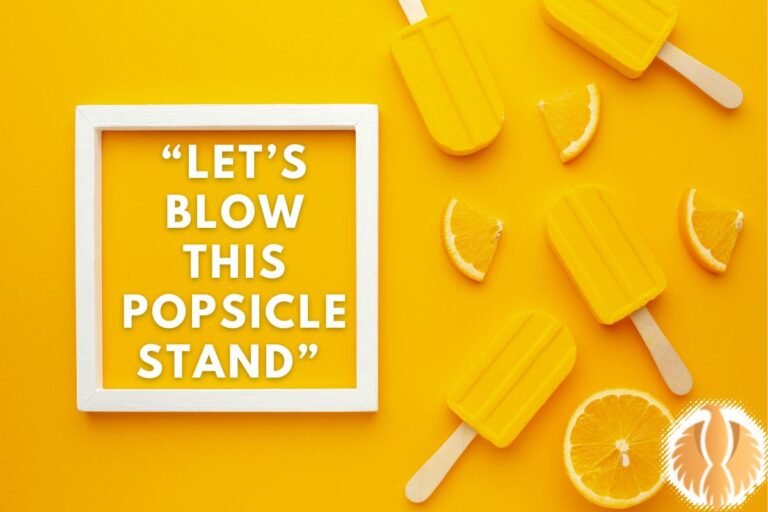
The English language is full of colorful expressions that make everyday conversations more interesting. Some phrases sound funny, others seem confusing at first, and many have fascinating stories behind them. One such expression is “blow this popsicle stand.” It is an informal saying that people use when they want to leave a place, quit an activity, or move on from a situation that no longer interests them.
If you have ever wondered about the blow this popsicle stand origin, you are not alone. This unusual phrase has attracted attention because it combines an ordinary frozen treat with a dramatic way of announcing a departure. Although the expression sounds as if it might refer to destroying a small business, its actual meaning is much more lighthearted.
The phrase is generally associated with American informal English and has been used in casual conversations, movies, television, and other forms of popular culture. However, its precise origin is difficult to establish. There is no universally accepted account identifying the exact person, date, or event that first introduced it into everyday speech.
Understanding its meaning, possible historical background, and modern usage helps explain why this amusing expression has remained recognizable across generations.
What Does “Blow This Popsicle Stand” Mean?
The expression “blow this popsicle stand origin” means to leave a place or situation, usually because you are bored, disappointed, uncomfortable, or ready to do something else.
For example, imagine a group of friends attending a party that has become dull. One person might say, “This party is getting boring. Let’s blow this popsicle stand and find somewhere more exciting.”
The speaker is not suggesting that anyone should damage property. Instead, the statement communicates a desire to leave immediately or stop participating in the current activity.
The expression can also suggest independence, impatience, or a playful refusal to remain somewhere unpleasant. Its humorous wording makes an ordinary decision to leave sound more entertaining.
Depending on the context, it can communicate several related ideas:
- Leaving a party, restaurant, or social gathering.
- Ending an uninteresting activity.
- Moving away from an uncomfortable environment.
- Quitting a situation that has become frustrating.
- Encouraging friends to go somewhere more enjoyable.
The tone is usually casual rather than formal. It works best among friends, family members, or people who are comfortable using informal expressions.
Blow This Popsicle Stand Origin: Where Did It Come From?
The exact blow this popsicle stand origin remains uncertain. The expression belongs to a broader family of informal English sayings that describe leaving a place in a humorous or exaggerated way.
Rather than having one clearly documented inventor, the phrase appears to have developed within conversational American English. Like many idioms, it may have spread through repeated everyday use before becoming widely recognizable.
The expression combines familiar words in an unexpected way. A popsicle stand sounds small, harmless, and ordinary. Pairing that image with the verb “blow” creates a memorable contrast, giving the phrase its distinctive personality.
It is important to distinguish between a plausible explanation of how an expression developed and a proven historical origin. Without reliable early records identifying its first use, claims that a particular person invented the phrase or that it began in a specific year should be treated cautiously.
The Meaning of the Word “Blow”
The word “blow” has several meanings in English. It can refer to moving air, striking something, or causing an explosion. In informal expressions, however, it can also contribute a sense of dramatic action or decisive change.
In “blow this popsicle stand,” the word helps make the act of leaving sound more forceful and entertaining than simply saying, “Let’s go.”
The phrase is not normally interpreted as a literal instruction to destroy a building. Its meaning comes from the expression as a whole rather than from the most literal definition of each word.
This kind of figurative language is common in English. Speakers frequently use dramatic imagery to communicate ordinary experiences, particularly when they want to sound humorous, confident, or impatient.
Why a Popsicle Stand?
A popsicle is a frozen treat commonly associated with warm weather, childhood, and casual outdoor activities. A popsicle stand, therefore, creates an image of a small, uncomplicated place rather than a serious or intimidating destination.
The expression’s unusual imagery is part of its appeal. Instead of saying something ordinary such as “Let’s leave,” a speaker uses a phrase that paints a memorable picture.
The word “stand” also gives the expression a specific setting. It suggests a small place where someone might buy refreshments, although the phrase can refer to virtually any location or situation.
There is no need to assume that the expression originated from an actual popsicle business. The stand may simply serve as a colorful element in the idiom.
The Historical Background of the Expression
Tracing the history of everyday expressions can be difficult because informal speech often exists long before it appears in printed records.
People exchange slang in conversations, at work, in schools, and among friends. These expressions may spread throughout communities without anyone recording who first said them.
The same challenge applies to the history of “blow this popsicle stand.” Its exact first appearance is not firmly established, so a precise origin date would be misleading without documentary evidence.
Nevertheless, several aspects of its development can be understood by examining the broader history of American slang.
The Growth of American Informal English
American English has developed a rich collection of informal phrases that communicate movement, frustration, excitement, and independence.
Expressions such as “hit the road,” “take off,” and “get out of here” all communicate departure in different ways. Some are relatively neutral, while others sound more energetic or humorous.
“Blow this popsicle stand” fits naturally into this tradition. It expresses a simple idea through unusual imagery, making the statement more memorable than a direct instruction to leave.
Such phrases often become popular because they are easy to understand even when their literal meanings seem strange. Once speakers recognize the intended meaning, they can use the expression without explaining it every time.
The Role of Everyday Conversation
Ordinary conversation is an important source of idioms. People enjoy inventing playful ways to describe familiar experiences, especially situations that involve boredom, disappointment, or a desire for change.
An expression may begin within a particular group before spreading to a wider audience. Friends repeat it, colleagues adopt it, and eventually people outside the original community may recognize it.
This is a plausible way for many informal expressions to spread, although it does not establish the precise history of this particular phrase.
The lack of a clearly identified inventor is not unusual. Many established sayings have no known author because their development took place gradually through spoken language.
How Popular Culture Helped the Phrase Spread
Popular culture can help informal expressions travel beyond the communities in which they first become familiar. Films, television programs, books, and online conversations expose audiences to distinctive ways of speaking.
A phrase such as “blow this popsicle stand” is particularly suitable for dialogue because it communicates a character’s attitude as well as an action.
A character who uses it might appear impatient, playful, rebellious, or eager to escape a dull situation. The expression can also create a humorous moment by turning an ordinary departure into a dramatic announcement.
Movies and Television
Screenwriters often use informal expressions to make dialogue sound natural and distinctive. Characters do not always say, “I would like to leave this location.” Instead, they might say, “Let’s get out of here” or use a more colorful alternative.
The popsicle stand expression fits this conversational style because it sounds relaxed and slightly exaggerated.
However, identifying movies or television shows that used the phrase does not automatically establish where it originated. A particular appearance may have helped popularize an existing expression rather than introduce it.
Without reliable evidence, it is best not to credit one specific film, television episode, or celebrity with inventing the saying.
The Influence of Books and Written Dialogue
Writers sometimes include slang to capture the personality of a character or the atmosphere of a particular setting.
When readers encounter an unfamiliar phrase in a book, they may remember it and begin using it in conversation. Written examples can also help researchers trace how an expression was used at different points in time.
For this reason, early dated appearances in books, newspapers, magazines, or searchable historical collections can be valuable when investigating the phrase’s history.
A reliable origin study would compare those early examples rather than simply repeat an unsupported claim about when the saying began.
Why Is the Phrase So Memorable?
One reason the expression remains interesting is that it combines familiar vocabulary in an unexpected way.
A popsicle stand is associated with something pleasant and harmless, while the word “blow” introduces a more dramatic tone. This contrast creates humor and makes the phrase stand out.
The expression also communicates more than a simple physical movement. Depending on the speaker’s delivery, it may suggest frustration, excitement, impatience, or a shared desire to escape a boring situation.
Consider the difference between these statements:
“I’m leaving now.”
“Let’s blow this popsicle stand!”
Both can communicate a desire to leave, but the second sounds more playful and energetic. It can turn a routine decision into a shared joke.
This combination of humor, imagery, and conversational usefulness helps explain why unusual idioms can remain in circulation even when more straightforward alternatives are available.
How to Use “Blow This Popsicle Stand” in Everyday English
The phrase is most appropriate in informal situations. It is especially useful when speaking with friends or describing an uninteresting place in a humorous way.
Here are several examples showing how it works in context.
Example 1: Leaving a Party
“It’s getting late, and the music isn’t very good. Let’s blow this popsicle stand and head home.”
In this example, the speaker wants to leave a party. The expression adds humor to the decision and makes the invitation sound casual.
Example 2: Finishing a Boring Meeting
“We have been discussing the same thing for an hour. Can we blow this popsicle stand and get some lunch?”
Here, the speaker expresses impatience with a long discussion. The wording is humorous, although it might be too casual for a formal business meeting.
Example 3: Ending a Shopping Trip
“We have visited every store in the mall. I’m tired, so let’s blow this popsicle stand.”
The expression communicates that the speaker is ready to leave the shopping area.
Example 4: Leaving an Uncomfortable Gathering
“I don’t know anyone here, and the conversation feels awkward. I think it’s time to blow this popsicle stand.”
In this situation, the phrase expresses a desire to leave an uncomfortable social environment.
Example 5: Making Weekend Plans
“If this place gets any more crowded, we should blow this popsicle stand and find a quieter café.”
The expression makes the suggestion sound lighthearted rather than confrontational.
These examples demonstrate that the phrase is flexible. It can refer to leaving almost any place, provided the informal tone fits the situation.
Is “Blow This Popsicle Stand” Appropriate in Professional Settings?
Although the expression is understandable in many casual conversations, it is not usually the best choice for formal communication.
During a business presentation, job interview, official meeting, or professional email, a clearer alternative may be more appropriate.
For example, instead of saying, “Let’s blow this popsicle stand,” a person could say:
- “I think we should wrap up this meeting.”
- “Shall we move on to the next activity?”
- “I’m ready to head out.”
- “Let’s finish here for today.”
- “Perhaps we should continue this discussion another time.”
These alternatives communicate the intended message without relying on slang.
In a relaxed workplace where colleagues regularly joke with one another, the original expression might be perfectly acceptable. The important consideration is the audience and the atmosphere.
Language is not only about choosing words with the correct meaning. It also involves understanding the relationship between speakers and the expectations of a particular setting.
Similar Expressions and Their Meanings
Several other English idioms communicate the idea of leaving a place. Comparing them with “blow this popsicle stand” helps clarify its tone.
Hit the Road
“Hit the road” means to begin a journey or leave a place. It is widely understood and can sound more direct than the popsicle stand expression.
Example: “We have a long drive tomorrow, so we should hit the road early.”
Get Out of Here
This expression can mean leaving a location. Depending on the speaker’s tone, it may also communicate disbelief or surprise.
Example: “It’s getting crowded. Let’s get out of here.”
Call It a Day
“Call it a day” means stopping work or an activity, usually because enough has been accomplished or the person is ready to rest.
Example: “We have finished the main tasks, so let’s call it a day.”
Unlike “blow this popsicle stand,” this phrase focuses on ending an activity rather than physically leaving a particular location.
Take Off
“Take off” is an informal way to describe leaving, especially when someone is departing quickly.
Example: “I have an early start tomorrow, so I’m going to take off.”
Make a Move
“Make a move” can mean leaving a place or beginning to act, depending on the context.
Example: “It’s nearly midnight. We should make a move.”
These expressions share a general idea, but each carries a slightly different tone. Choosing the right one depends on whether the speaker wants to sound humorous, neutral, energetic, or professional.
Common Misunderstandings About the Phrase
Despite its playful wording, “blow this popsicle stand” is relatively easy to understand once its figurative meaning is known.
One common misunderstanding is interpreting “blow” literally. In ordinary use, the phrase does not suggest destroying a business or damaging a building.
Another mistake is assuming that a real popsicle stand must have played a central role in the expression’s creation. Although that is imaginable, there is no established evidence that the saying originated from one particular business.
Some people may also assume that the phrase is a modern internet invention because it sounds humorous and memorable. However, determining its actual age requires dated examples from reliable sources rather than assumptions based on its style.
Finally, the expression should not be treated as formal English. It is an idiom suited to relaxed conversation, and its humor may not translate well into every professional or cultural setting.
Understanding these distinctions makes it easier to use the phrase naturally and avoid spreading inaccurate claims about its history.
How Researchers Can Investigate the Phrase’s Origin
Anyone interested in the blow this popsicle stand origin can investigate historical language records to look for earlier examples.
One useful approach is to search digitized newspapers, historical book collections, magazines, and language databases. These sources may reveal when the expression began appearing in print.
Researchers should also distinguish between the earliest example they can find and the actual moment the phrase entered spoken English. A saying may circulate orally for years before appearing in a surviving document.
It is also important to examine the context of each example. A phrase might appear as a character’s dialogue, a headline, a joke, or a quotation. Understanding how it was used helps determine whether the example represents the same expression and meaning.
A strong historical account would compare multiple dated records and explain the limits of the available evidence. Until such evidence establishes a clearer timeline, the phrase’s precise origin should remain an open question.
Conclusion
The expression “blow this popsicle stand” is a humorous and informal way to announce that someone is ready to leave a place or situation. Its distinctive wording combines an ordinary image with dramatic language, creating a memorable alternative to simply saying, “Let’s go.”
The blow this popsicle stand origin is not firmly documented, and there is no universally accepted evidence identifying its inventor or exact starting date. The phrase fits within the broader tradition of American slang, where colorful expressions make everyday communication more entertaining.
Its meaning is straightforward even though its history remains uncertain. People use it when they want to leave a boring party, end an uninteresting activity, or move on from an uncomfortable situation.
Whether spoken among friends or encountered in fictional dialogue, the expression demonstrates how language can turn a simple action into something humorous and memorable. By understanding its meaning, tone, and limitations, English speakers can recognize the phrase and use it naturally in the right context.
About the Author