reevaluation
Life rarely moves in a perfectly straight line. Goals change, circumstances shift, new information appears, and experiences can completely change the way we understand a situation. Something that seemed like the right decision yesterday may look different today. This is where reevaluation becomes important.
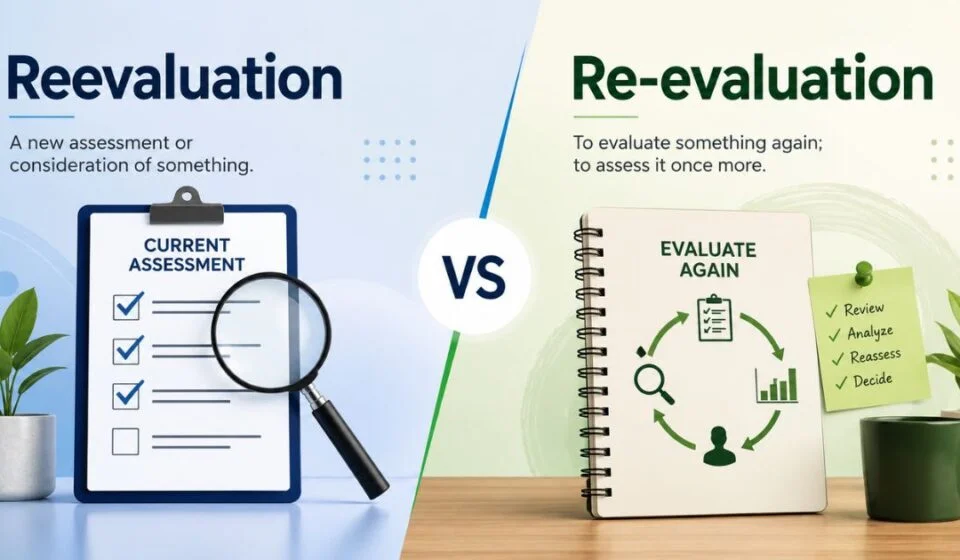
Reevaluation is the process of examining something again to determine whether it still has the same value, meaning, purpose, or effectiveness. It can involve reviewing a personal decision, reassessing a business strategy, reconsidering a relationship, examining financial priorities, or simply looking at personal goals from a fresh perspective.
Rather than meaning that an earlier decision was necessarily wrong, reevaluation recognizes that circumstances can change. Taking another look can help people make better choices, correct mistakes, and move forward with greater confidence.
What Does Reevaluation Mean?
At its simplest, reevaluation means evaluating something again. The first evaluation may have been based on the information, experience, and circumstances available at that particular moment. A later reevaluation can include new facts, different priorities, and lessons learned since the original decision.
For example, someone may choose a particular career because it offers financial security. After several years, however, their interests may change. They might discover that another field better matches their abilities and long-term goals. Reevaluating their career does not mean the original choice was a failure. It means they are responding to new knowledge.
Reevaluation can therefore be viewed as a practical form of reflection. It encourages people to pause instead of automatically continuing on the same path.
Why Is Reevaluation Important?
One of the biggest benefits of reevaluation is that it prevents people from becoming trapped by old decisions. People sometimes continue doing something simply because they have already invested time, money, or energy into it.
However, past investment does not always mean that continuing is the best choice.
Regular reevaluation allows individuals and organizations to ask useful questions. Is this still working? Does this goal still matter? Are the original assumptions still accurate? Has something changed that should influence the decision?
These questions can reveal opportunities that might otherwise remain hidden.
Reevaluation is also important because knowledge develops over time. A person may understand a situation differently after gaining experience. Similarly, businesses may learn more about their customers, competitors, and markets. Reviewing earlier assumptions can help them adapt before small problems become major ones.
Reevaluation in Personal Life
Personal development is one of the most common areas where reevaluation can make a meaningful difference.
People often establish goals based on what they believe they should want. They may pursue a certain career, lifestyle, financial target, or social expectation without stopping to consider whether it genuinely reflects their current values.
As people grow older, their priorities naturally change. A person who once valued professional achievement above everything else may eventually place greater importance on family, health, creativity, freedom, or personal fulfillment.
Reevaluation provides an opportunity to recognize these changes.
This process does not require completely changing one’s life. Sometimes a small adjustment is enough. Someone might reduce unnecessary commitments, change their daily routine, learn a new skill, or dedicate more time to an important relationship.
The key is to make intentional choices rather than simply following an outdated plan.
Reevaluation and Decision-Making
Good decision-making does not end when a choice is made. In many situations, decisions should be reviewed after a certain period.
Consider a person who decides to start a small business. At first, they may establish a business model based on expected customer demand. After six months, actual sales data may show that customers prefer a different product or service.
A sensible response is reevaluation.
The business owner can examine what worked, what failed, and what information was misunderstood. They can then adjust the strategy accordingly.
This approach is much more productive than treating the original plan as permanent. Decisions should provide direction, but they should not become chains that prevent adaptation.
Reevaluation in the Workplace
Businesses and organizations regularly use reevaluation to improve performance.
A company may reevaluate its products, pricing, employee policies, marketing campaigns, technology, or long-term objectives. Markets can change quickly, and strategies that worked several years ago may no longer produce the same results.
For example, changing customer expectations may encourage a company to reconsider how it communicates with its audience. New technology might make an old process inefficient. Increased competition could require the organization to improve its services.
Workplace reevaluation is especially valuable when it is based on evidence. Instead of relying entirely on assumptions, managers can examine performance data, customer feedback, employee experiences, and market trends.
This creates a culture of continuous improvement.
Reevaluation and Financial Planning
Financial circumstances can also change significantly over time. Income, expenses, family responsibilities, investments, and economic conditions may all influence financial decisions.
For this reason, financial plans should not necessarily remain unchanged for decades.
A person might reevaluate their budget after receiving a salary increase. Another person may need to reconsider their savings strategy after buying a home or starting a family. Someone approaching retirement may reevaluate their spending and investment priorities.
The purpose is not to make constant changes. Instead, it is to ensure that financial decisions remain appropriate for current circumstances.
A periodic review can also identify unnecessary expenses and opportunities to improve financial stability.
The Role of Reevaluation in Relationships
Relationships can also benefit from honest reflection.
Friendships, family relationships, and professional connections naturally evolve. People change, responsibilities shift, and expectations can become different over time.
Reevaluation in relationships does not automatically mean ending them. In many cases, it simply means recognizing what is working and what needs attention.
A person might realize that they have been neglecting an important friendship. Someone else may discover that unclear communication has created unnecessary tension. A thoughtful review can encourage better communication and healthier boundaries.
The important point is to approach relationship reevaluation with honesty and respect rather than making impulsive judgments.
Reevaluation After Failure
Failure can be uncomfortable, but it often creates one of the strongest reasons to reevaluate.
When a plan does not work, people may respond in two unhealthy ways. They may immediately give up, or they may stubbornly repeat the same approach without changing anything.
Reevaluation offers a third option.
Instead of asking only, “Why did I fail?” a person can ask, “What can I learn from what happened?”
Perhaps the goal was unrealistic. Maybe the timing was wrong. There may have been insufficient preparation, limited resources, or an unexpected external problem.
Understanding the cause allows a person to make a more informed second attempt.
In this sense, reevaluation can transform failure from a final destination into useful information.
How to Conduct an Effective Reevaluation
A useful reevaluation should be structured rather than purely emotional.
The first step is to define what is being reviewed. A vague feeling that “something is wrong” is difficult to act upon. Identify the specific goal, decision, strategy, or situation.
Next, gather relevant information. Look at results, feedback, experiences, and changes that have occurred since the original evaluation.
Then compare the original expectations with the current reality. What was expected to happen? What actually happened? Where are the differences?
The next step is to identify the reasons behind those differences. Some may be within your control, while others may result from external circumstances.
Finally, decide what should happen next. Sometimes the best choice is to continue as planned. In other cases, a small adjustment or complete change may be appropriate.
Avoiding Emotional Reevaluation
Reevaluation is most useful when it is thoughtful. Making major decisions immediately after an emotional event can create additional problems.
For example, someone might want to abandon a long-term goal after one disappointing day. Another person might make a major financial decision because of temporary fear.
A better approach is to allow emotions to settle before reviewing the larger situation.
Emotions are valuable because they provide information about how a person feels. However, they should be considered alongside facts, evidence, and long-term consequences.
Balanced reevaluation combines reflection with practical judgment.
Reevaluation Does Not Mean Constant Doubt
There is an important difference between healthy reevaluation and constantly questioning every decision.
If a person repeatedly changes direction without giving any plan enough time to develop, progress can become difficult. Constant doubt may create anxiety rather than improvement.
Effective reevaluation has a purpose. It happens because there is new information, a meaningful change in circumstances, or a reasonable need to review progress.
Once a decision has been reevaluated and a new direction has been selected, it is often important to commit to that direction long enough to measure the results.
The goal is flexibility, not indecision.
The Long-Term Value of Reevaluation
Over time, reevaluation can become a powerful habit.
People who regularly review their goals and choices are often better positioned to recognize changes before those changes become serious problems. They can identify outdated assumptions, learn from experience, and make adjustments while there is still time to benefit from them.
Reevaluation also encourages humility. It reminds us that being confident in a decision does not mean believing that the decision can never change.
The world changes, people change, and circumstances change. Good judgment requires the ability to respond.
Final Thoughts
Reevaluation is not an admission that something went wrong. It is a recognition that new information and changing circumstances deserve attention.
Whether applied to personal goals, careers, businesses, finances, relationships, or everyday decisions, reevaluation can help people make more thoughtful choices. It creates space to learn from experience and adjust direction when necessary.
The most successful approach is neither blind commitment nor constant doubt. Instead, it is a balance between determination and flexibility.
Taking a second look can reveal mistakes, confirm that a decision is still right, or uncover an entirely new opportunity. Sometimes the most important step forward begins with simply stopping for a moment and asking whether the path ahead still makes sense.
About the Author