what is - used for
Language is full of symbols that help people communicate clearly, organize information, and express ideas. Some symbols appear so frequently in everyday writing that readers rarely stop to consider their purpose. One such symbol is the hyphen (-). If you have ever wondered what is – used for, you are not alone. The hyphen is a small punctuation mark with several important functions in English grammar, spelling, and written communication.
The hyphen helps connect words, clarify meanings, and make certain expressions easier to understand. It appears in compound words, descriptions, numbers, and other forms of writing. Although it looks similar to the dash, the hyphen serves different purposes and follows its own set of grammatical conventions.
In this article, we will explore what a hyphen is used for, how it works, where it commonly appears, and how to use it correctly in everyday writing.
What Is a Hyphen?
A what is – used for is a short horizontal punctuation mark represented by the symbol (-). Writers use it primarily to connect words or word parts that function together as a single expression. It can also appear when dividing words at the end of a line in certain types of printed text.
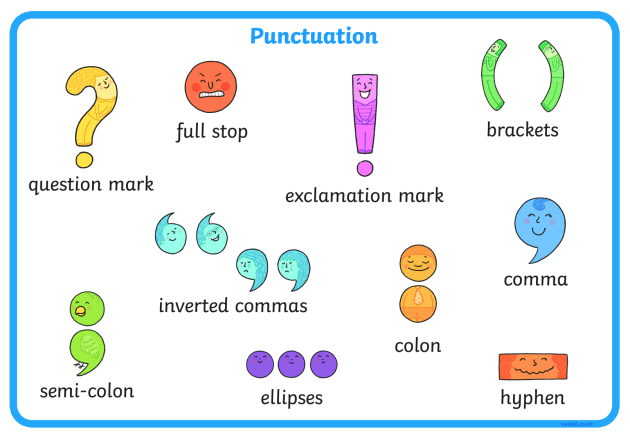
The hyphen is shorter than an en dash (–) and an em dash (—). These three punctuation marks may look similar, but they are not interchangeable in standard writing.
For example, consider the phrase “well-known author.” The hyphen connects “well” and “known” to create a compound adjective describing the author. Without the hyphen, the sentence might still be understandable, but the punctuation helps show how the words relate to each other.
Hyphens are common in newspapers, books, websites, academic papers, business documents, and everyday messages. Learning their basic functions can improve writing accuracy and make sentences easier to read.
What Is – Used For in English Grammar?
The hyphen has several uses in English grammar. Its most common function is to connect two or more words that work together to express one idea.
Here are the main purposes of a hyphen:
- Connecting words in compound adjectives.
- Forming certain compound nouns.
- Joining prefixes to words when necessary for clarity.
- Writing some numbers in words.
- Preventing confusion between words or expressions.
- Dividing words at the end of a line in traditional typesetting.
Each use follows specific conventions, although some hyphenation rules depend on the dictionary, publication style, or context.
1. Connecting Compound Adjectives
One of the most common uses of a hyphen is to connect words that jointly describe a noun. These combinations are called compound adjectives.
For example, consider the following expressions:
- A well-written article.
- A full-time employee.
- A high-quality product.
- A long-term investment.
- A user-friendly website.
In each example, the hyphen connects two words that work together to describe another word.
Consider this sentence: “She bought a high-quality laptop.”
The expression “high-quality” describes the laptop as a single characteristic. The hyphen makes the relationship between the two words clear.
However, compound adjectives are not always hyphenated. When the same expression appears after the noun, the hyphen may no longer be necessary.
For example:
“The laptop is high quality.”
In this sentence, “high quality” follows the linking verb “is,” so many style guides leave it open without a hyphen. Usage can vary depending on the expression and the chosen style guide.
Another example is “a well-known singer” compared with “the singer is well known.” Understanding the position of compound adjectives helps writers apply hyphens more accurately.
2. Forming Compound Words
A hyphen can connect two words to create a compound word. Compound words combine separate words to express a related or specific meaning.
Examples include:
- Mother-in-law.
- Editor-in-chief.
- Check-in.
- Runner-up.
- Self-esteem.
- X-ray.
These expressions use hyphens as part of their conventional spelling.
For example, “mother-in-law” refers to a particular family relationship. The hyphens connect the words into one established expression.
Similarly, “editor-in-chief” describes a person who holds the leading editorial position at a publication or organization.
It is important to remember that not every compound word requires a hyphen. Some are written as separate words, while others are written as a single word.
For example, “ice cream” is usually written without a hyphen, while “mother-in-law” is conventionally hyphenated.
The correct form depends on established usage, so checking a reliable dictionary can help when you are unsure.
3. Joining Prefixes to Words
Prefixes are word parts added to the beginning of other words to modify their meanings. Common prefixes include “self-,” “ex-,” “pre-,” and “anti-.”
Sometimes, a hyphen separates a prefix from the word that follows it.
Examples include:
- Ex-president.
- Self-confidence.
- Pre-existing condition.
- Anti-inflammatory medication.
- Non-English text.
The hyphen can improve readability, especially when the combined word might otherwise look confusing.
For example, “self-confidence” clearly connects “self” and “confidence” to describe belief in one’s own abilities.
However, prefixes do not always require hyphens. Words such as “unhappy,” “rewrite,” and “international” are normally written without them.
The decision depends on the prefix, the word, and the conventions of standard English. Some expressions also have different forms in British and American English.
When writing formal content, it is best to follow one consistent style guide.
4. Writing Numbers in Words
Hyphens are also used when writing certain numbers in English.
For example:
- Twenty-one.
- Thirty-five.
- Forty-eight.
- Sixty-seven.
- Ninety-nine.
In standard written English, compound numbers from twenty-one through ninety-nine generally use a hyphen when written as words, excluding the round tens themselves.
For example, the number 42 is written as “forty-two,” while 80 is written as “eighty.”
Hyphens also appear in some fractions written in words, such as “two-thirds” and “three-quarters,” although formatting can vary according to grammatical context and style.
Using hyphens correctly in numbers improves consistency in essays, reports, educational materials, and other documents.
Writers should also distinguish between a hyphen and a dash when presenting numerical ranges. For example, a range such as “pages 10–15” traditionally uses an en dash rather than a hyphen.
5. Preventing Confusion in Sentences
Another important purpose of the hyphen is to make meaning clearer. When two or more words appear together, readers sometimes need punctuation to understand which words belong together.
For example, consider these phrases:
- Small-business owner.
- Small business owner.
The first expression emphasizes that the business itself is small. The second can be less precise because readers may interpret the words differently depending on the surrounding sentence.
Hyphens can also help distinguish expressions such as “re-sign” and “resign.”
“Re-sign” means to sign something again, while “resign” means to leave a job or position.
Consider these examples:
“The athlete will re-sign the contract tomorrow.”
“The manager decided to resign from the company.”
The hyphen changes the meaning and helps prevent misunderstandings.
This is especially useful in professional writing, where a small punctuation difference can influence how readers interpret a statement.
6. Using Hyphens in Dates and Time Expressions
Hyphens sometimes appear in date-related expressions and descriptions of time.
For example:
- A five-year plan.
- A three-day trip.
- A ten-minute break.
- A two-week course.
- A twenty-year-old building.
In these examples, the hyphen connects the number and the time-related word when they function together as a compound modifier before a noun.
Consider the sentence, “They planned a three-day trip.”
The expression “three-day” describes the length of the trip. The hyphen connects the number and the noun into a single descriptive unit.
Compare it with this sentence: “The trip lasted three days.”
Here, “three days” follows the verb and functions as a regular quantity expression, so a hyphen is unnecessary.
This distinction is useful when writing travel articles, product descriptions, educational materials, and general informational content.
7. What Is – Used For in Digital Writing?
In digital communication, the hyphen is used in many places beyond traditional grammar. It appears in websites, email addresses, file names, programming languages, and search engine optimization.
For example, website addresses sometimes contain hyphens to separate words. A descriptive web address might include a phrase such as “healthy-eating-tips.”
Hyphens can make web addresses easier to read because they separate individual words visually.
They also appear in filenames such as “article-draft.txt” or “project-report.pdf.”
In programming, the hyphen can have different meanings depending on the language and context. It may appear in identifiers, command-line options, or mathematical expressions. However, programming languages do not all treat hyphens the same way.
In HTML and CSS, for example, hyphens are commonly used in property names such as “background-color” and “font-size.”
These examples show that the hyphen is useful not only in ordinary English writing but also in technical and digital environments.
8. Using Hyphens in SEO Content
Search engine optimization, commonly known as SEO, involves improving online content so that search engines can understand and present it effectively.
Hyphens can contribute to readable website addresses, particularly when separating words in descriptive URLs.
For example, a URL ending in “what-is-a-hyphen” is easier for many readers to interpret than a string of words with no visible separators.
Hyphens are also useful in article titles, headings, product descriptions, and explanatory text whenever grammar calls for them.
However, writers should not insert hyphens into keywords unnecessarily. The correct punctuation depends on the intended phrase and standard language usage.
For SEO content creators, the main goal should be clarity. A well-written article uses punctuation naturally rather than adding symbols merely to influence search rankings.
Clear headings, relevant information, accurate grammar, and helpful explanations are more valuable than excessive or unnatural hyphenation.
9. The Difference Between a Hyphen and a Dash
Many people confuse hyphens with dashes because the symbols look similar. However, they have different purposes.
A hyphen (-) is short and usually connects words.
An en dash (–) is slightly longer and often indicates a range, such as “Monday–Friday” or “pages 15–20.”
An em dash (—) is longer and can indicate a break in a sentence, add emphasis, or introduce an explanatory thought.
For example:
Hyphen: She purchased a second-hand bicycle.
En dash: The meeting will take place from 9:00–11:00 a.m.
Em dash: I wanted to explain the decision—but the meeting had already ended.
These examples demonstrate that each punctuation mark serves a different role.
Although some informal writing styles use a regular hyphen where a longer dash would be more appropriate, formal writing benefits from distinguishing between them.
10. Common Mistakes When Using Hyphens
Even experienced writers sometimes misuse hyphens. Fortunately, most mistakes can be avoided by learning a few basic principles.
Adding Hyphens Everywhere
A hyphen is not required between every pair of words that appear together.
For example, “school bus,” “real estate,” and “ice cream” are normally written without hyphens in standard English.
Writers should check conventional spelling instead of assuming every compound expression needs a hyphen.
Forgetting Hyphens in Compound Modifiers
Expressions such as “a full-time position” and “a five-minute meeting” generally require hyphens because they function as compound modifiers before nouns.
Leaving out the hyphen may make the sentence less clear or inconsistent with the chosen style guide.
Confusing Hyphens With Dashes
A hyphen should not automatically replace an en dash or em dash.
Writers should choose punctuation according to its purpose rather than relying only on the appearance of the symbol.
Using Inconsistent Spellings
A writer might use “long-term” in one paragraph and “long term” in another when both expressions serve the same grammatical function.
Although context can make different forms correct, inconsistent usage may distract readers.
Following a recognized dictionary or style guide can help maintain consistency throughout an article.
11. Practical Examples of Correct Hyphen Usage
The following examples demonstrate how hyphens work in everyday English.
Example 1: Compound adjective
Incorrect or less consistent: “She wrote a well written report.”
Preferred: “She wrote a well-written report.”
The hyphen connects “well” and “written” before the noun.
Example 2: Number expression
Incorrect: “The child is twenty one years old.”
Correct: “The child is twenty-one years old.”
The hyphen connects the two parts of the number.
Example 3: Time-related modifier
Preferred: “We attended a two-hour workshop.”
The hyphen connects the number and the time unit when they describe the workshop.
Example 4: Prefix
Preferred: “The author discussed a pre-existing problem.”
The hyphen separates the prefix from the following word for readability.
Example 5: Meaning distinction
Preferred: “The employee needs to re-cover the damaged chair.”
The hyphen helps indicate that the employee needs to cover the chair again. The exact wording may vary depending on the intended meaning.
These examples illustrate why punctuation matters even when the symbol itself is small.
12. How to Learn Hyphen Rules Easily
You do not need to memorize every hyphenation rule to become a better writer. Instead, focus on the patterns you encounter most often.
First, learn common compound adjectives, including “well-known,” “high-quality,” and “long-term.”
Second, remember that numbers from twenty-one through ninety-nine generally require hyphens when written as words.
Third, understand that compound modifiers before nouns often use hyphens, especially when the punctuation helps prevent confusion.
Fourth, consult a trusted dictionary when you are uncertain about the spelling of a compound word.
Finally, use a consistent writing style. This is particularly important for bloggers, students, journalists, editors, and website owners who publish large amounts of content.
Reading well-edited English articles can also help you recognize common punctuation patterns.
Conclusion
Understanding what is – used for makes it easier to write clearly and correctly in English. The hyphen is a small but valuable punctuation mark that connects words, forms compound expressions, clarifies meanings, and helps organize written information.
Its most common uses include compound adjectives, compound words, prefixes, number expressions, and certain technical or digital applications. It can also prevent confusion between similar-looking words, such as “re-sign” and “resign.”
Although hyphens are useful, they should not be added automatically whenever two words appear together. Their use depends on grammar, established spelling, context, and the writing style being followed.
By learning the basic rules and practicing with everyday examples, you can use hyphens more confidently in emails, articles, reports, academic assignments, and online content.
Ultimately, effective punctuation is about helping readers understand your message. When used correctly, the hyphen makes writing more organized, precise, and professional.
About the Author