thusfar
Language is full of small words and expressions that can completely change the tone of a sentence. One such term is thusfar, a form that many readers encounter online, in informal writing, or while searching for the correct way to express the idea of “up to this point.” Although thusfar is commonly understood, questions often arise about its meaning, spelling, grammar, and proper use.
If you have ever wondered whether thusfar should be written as one word or as two words, you are not alone. The expression is related to the established phrase “thus far,” which means “up to now,” “until this point,” or “to this extent.” Understanding how the expression works can help you write more clearly and confidently.
What Does Thusfar Mean?
Thusfar is generally used to communicate the idea of something happening or being true up to a particular point in time or progress. In most standard English writing, however, the conventional form is “thus far,” written as two separate words.
For example:
- “Thus far, the project has been successful.”
- “We have received no complaints thus far.”
- “She has performed extremely well thus far.”
In each example, “thus far” means “up to now.”
The word “thus” traditionally means “in this way,” “to this degree,” or “as a result,” while “far” can refer to a point of progress or extent. Together, they create an expression that indicates the point reached in a process, situation, or period.
Is Thusfar One Word or Two?
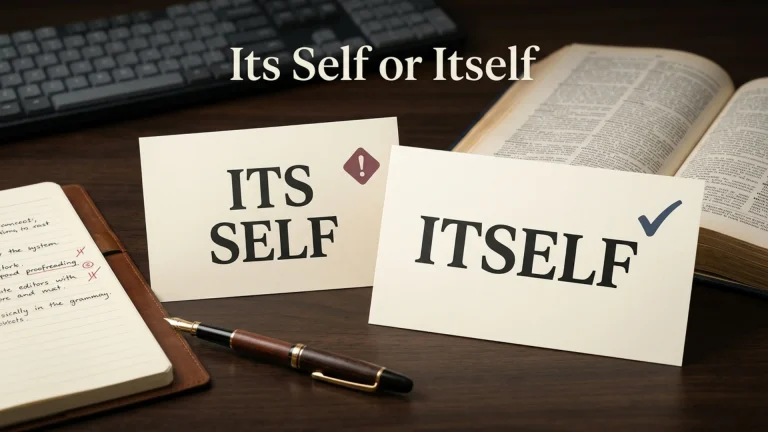
One of the most common questions about thusfar concerns its spelling. In standard modern English, “thus far” is normally written as two words.
The combined spelling “thusfar” sometimes appears in informal writing, search queries, usernames, digital content, or other contexts. However, writers who want to follow conventional English usage should generally choose “thus far.”
This distinction is especially important in academic writing, professional communication, journalism, and other formal contexts. Writing “thus far” as two words is the safer and more widely accepted choice.
For example, instead of writing:
“The results have been encouraging thusfar.”
A standard version would be:
“The results have been encouraging thus far.”
The meaning remains the same, but the second version follows conventional spelling.
The Meaning of “Thus Far”
The expression “thus far” has a simple meaning: up to this point.
Depending on the context, it can refer to:
- Up to now
- Until now
- So far
- To this point
- To this extent
- During the period completed so far
Consider the sentence:
“Thus far, the investigation has revealed several important details.”
This means that the investigation has revealed those details up to the present stage.
Another example is:
“The team has won five matches thus far.”
Here, “thus far” means from the beginning of the relevant period until now.
The expression can therefore describe progress, results, experiences, achievements, discoveries, or developments.
Thus Far vs. So Far
A useful way to understand thus far is to compare it with the much more common phrase “so far.”
Both expressions can mean “up to now,” but their tone is different.
“So far” is natural and conversational:
“So far, everything is going well.”
“Thus far” sounds more formal:
“Thus far, everything has proceeded according to plan.”
This difference does not mean that “thus far” is outdated or incorrect. It remains useful, especially when a writer wants a formal, measured, or polished tone.
In everyday conversation, people are much more likely to say “so far.” In reports, essays, presentations, and formal discussions, “thus far” may fit more naturally.
How to Use Thus Far in a Sentence
“Thus far” is usually used as an adverbial expression. It can appear at the beginning, middle, or end of a sentence.
At the Beginning
“Thus far, the research has produced promising results.”
Starting with the expression emphasizes the period that has already passed.
In the Middle
“The research has, thus far, produced promising results.”
Commas can be used when the expression is inserted parenthetically.
At the End
“The research has produced promising results thus far.”
This placement is also very common and sounds natural in formal writing.
The best position depends on the sentence and the emphasis the writer wants to create.
Examples of Thus Far in Everyday Writing
Although “thus far” has a formal tone, it can be used in many different situations.
Work
“The new strategy has generated positive results thus far.”
This tells readers that the results have been positive up to the current stage.
Education
“Thus far, the students have completed three major assignments.”
The sentence indicates progress in an academic course.
Sports
“The team has had an impressive season thus far.”
This means the season has been impressive up to the present point.
Business
“Sales have increased steadily thus far this year.”
The writer is discussing sales performance from the beginning of the year until now.
Personal Experience
“My experience with the new routine has been positive thus far.”
This communicates that the experience has been positive up to the present.
Why Do People Search for Thusfar?
People may search for thusfar because they have encountered the expression online and are unsure whether it is a single word. Search engines often connect related spellings and phrases, so users may type the combined form even when looking for information about the standard expression.
Another reason is that English contains many expressions that have evolved from separate words into compounds. Words such as “however,” “already,” and “altogether” demonstrate that English spelling can change over time. As a result, it is understandable that someone might wonder whether “thus far” has also become one word.
For careful writing, however, thus far remains the standard form to use.
Common Mistakes With Thus Far
There are several mistakes that writers can avoid when using this expression.
Mistake 1: Combining the Words
Writing “thusfar” in formal prose may look unusual to many readers.
Preferred:
“The project has progressed well thus far.”
Mistake 2: Confusing Thus Far With Therefore
“Thus” can sometimes mean “therefore,” but “thus far” has a different function.
For example:
“The evidence was incomplete; thus, the conclusion was uncertain.”
Here, “thus” means “therefore.”
But:
“Thus far, the evidence has been incomplete.”
Here, “thus far” means “up to now.”
Understanding this distinction prevents confusion.
Mistake 3: Using It When “So Far” Sounds Better
Not every sentence needs a formal expression. Sometimes “so far” is more natural.
For example:
“So far, I have enjoyed the book.”
This sounds more conversational than:
“Thus far, I have enjoyed the book.”
Neither is necessarily wrong, but the first is more suitable for casual conversation.
Thus Far in Formal Writing
One of the strongest uses of thus far is in formal writing. It works particularly well when discussing progress, evidence, research, or developments.
For example:
“The findings collected thus far indicate that additional research may be necessary.”
This style is common because it sounds precise without being overly complicated.
Another example is:
“No significant problems have been identified thus far.”
This sentence is concise and professional. It communicates that the writer is making a statement based on everything known up to the present point.
Researchers, business professionals, journalists, and students may all encounter the phrase in this type of writing.
The Difference Between Thus Far and Until Now
“Thus far” and “until now” can often communicate similar ideas, but they have slightly different stylistic effects.
“Until now” can sometimes suggest a change:
“Until now, the company had never experienced a major delay.”
The phrase can emphasize that circumstances are changing.
“Thus far” tends to focus more neutrally on the progress or information accumulated up to the present:
“Thus far, the company has avoided major delays.”
The context determines which expression is most appropriate.
The Difference Between Thus Far and To Date
Another related expression is “to date.”
For example:
“The organization has raised $50,000 thus far.”
and:
“The organization has raised $50,000 to date.”
Both can mean that the amount represents the total accumulated up to the present. However, “to date” is particularly common in business, financial, and professional writing.
“Thus far” has a slightly broader range and can describe actions, experiences, results, and developments.
Why Context Matters
Words and phrases cannot always be understood by looking at them individually. Context plays an important role in determining whether an expression sounds natural.
For example:
“Thus far, the experiment has produced consistent results.”
This is appropriate because the experiment is an ongoing process.
On the other hand, if the writer is discussing a completed historical event, another phrase may be more appropriate depending on the intended meaning.
The key question is simple: Are you describing something up to a particular point? If so, “thus far” may be an excellent choice.
Is Thusfar Grammatically Correct?
The meaning behind thusfar is understandable, but the conventional expression in standard English is “thus far.”
Therefore, if you are writing an article, school assignment, professional report, email, or other formal text, it is best to use the two-word form.
The issue is primarily one of standard spelling and usage rather than meaning. Readers will generally understand “thusfar,” but standard English favors “thus far.”
Tips for Using Thus Far Correctly
If you want to use the expression confidently, keep a few simple rules in mind.
First, remember that the standard spelling is two words: thus far.
Second, use it when you mean “up to now” or “up to this point.”
Third, consider the tone of your writing. “Thus far” is generally more formal than “so far.”
Finally, avoid using it repeatedly in the same paragraph. Even a useful phrase can become distracting if it appears too often. Alternating between “thus far,” “so far,” “up to this point,” and “to date” can make writing more natural when the context allows it.
Final Thoughts on Thusfar
The search term thusfar points to a simple but interesting question about English spelling and usage. While the combined form can be encountered in informal digital writing, the standard expression is “thus far,” written as two words.
The phrase means “up to now,” “so far,” or “up to this point.” It is particularly useful when describing progress, results, experiences, discoveries, or developments that have occurred within an ongoing period.
Whether you are writing a professional report, an academic assignment, a news article, or an everyday message, understanding the distinction between thusfar and thus far can help you choose the clearest form. When in doubt, use “thus far” as two words. It is familiar, grammatically useful, and widely accepted in standard English.
Ultimately, good writing is not only about knowing individual words. It is also about understanding how expressions function, recognizing differences in tone, and selecting language that fits the situation. Thus far is a perfect example of how a small expression can add precision and formality to a sentence while communicating a very simple idea: what has happened up to this point.
About the Author