Many business decisions are made repeatedly rather than just once. A retailer will be adjusting prices on a weekly basis, and a logistics team will be placing orders on a daily basis. Reinforcement learning (RL) is a subfield of machine learning which is designed for exactly this type of repeated decision-making. Rather than learn from labelled examples, an RL system learns by taking an action, seeing the result and then adjusting its behaviour accordingly.
This article is all about how RL works in simple terms and how companies are using it in three fairly practical areas: dynamic pricing, game theory and supply chain optimisation.
How Reinforcement Learning Works
An RL setup has five core parts:
- Agent: the decision maker (e.g. a pricing algorithm).
- Environment: the world the agent is interacting with (e.g. a market).
- State: the current situation (for example, inventory levels or time of day).
- Action: a choice the agent makes (e.g. a 5% price increase).
- Reward: a numerical signal which tells the agent how good the outcome was (e.g. profit earned).
The agent’s objective is to learn a policy. A policy is a rule for choosing actions which will maximise total reward over time rather than just immediate reward. A price cut today may well reduce margin, but it could build up customer loyalty which pays off in the longer term.
Common algorithms are Q-learning, Deep Q-Networks (DQN) and policy gradient methods such as Proximal Policy Optimisation (PPO).
Dynamic Pricing with RL
Dynamic pricing is all about adjusting your price according to demand, competition, inventory and time. It’s something that’s absolutely fundamental to the operations of airlines, hotels, ride-sharing, and the general e-commerce sector.
Why RL Fits Pricing
The traditional pricing model is to work out a demand curve and then calculate an optimal price. The problem is that demand is constantly shifting. An RL agent can try out prices, see what the customer response is and then adjust continuously.
A Practical Approach
- Define the state: current stock, day of the week, competitor prices and season.
- Define the actions: a set of allowable price points or percentage changes.
- Define the reward (revenue or profit, possibly with penalties for sharp price swings).
- Train safely: start with historical data or a simulator and then go live with limits.
Guardrails are important. The typical business will have price floors and ceilings, will limit how frequently prices can change and will monitor the outcome to ensure that customers are treated fairly and consistently.
Game Theory and Multi-Agent RL
Game theory is the study of how rational players make decisions when their payoffs are interdependent. In a business context, this would be things like competitor pricing, auctions, bidding for online ads and so on.
Where RL Comes In
Classical game theory is generally predicated on complete information, but the real world is messier. Multi-agent reinforcement learning (MARL) allows multiple agents to learn simultaneously, each one learning to respond to the behaviour of the others.
Business Examples
- Ad auctions: bidding agents learn how much to bid for ad space based on expected conversions and the bids of their rivals.
- Competitive pricing: you can simulate what your competitors might do in response to a price change before you actually do anything.
One caveat is that academic work has demonstrated that pricing algorithms operating in the same market can learn to keep prices high without any actual coordination. Companies should have a look at such systems with their legal and compliance teams to ensure there are no competition law issues.
Supply Chain Optimization
Supply chains are a series of linked decisions on ordering, storage and shipping. The choice you make at one point will have an impact on the cost and service levels at all the subsequent points.
Key Applications
- Inventory management: An RL agent learns when and how much to reorder, balancing holding costs against the risk of stockouts.
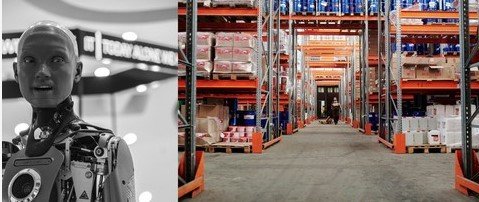
- Warehouse operations: RL can be used to guide robot movement and order picking sequences in order to reduce travel time.
- Routing and logistics: Agents learn delivery routes which adapt to traffic, weather and changing orders.
The Role of Simulation
Training RL on a live supply chain is a very risky proposition, so the norm is to build a digital twin. This is a digital replica of your actual operations in which the agent can make all the mistakes it wants without any real-world consequences. Once you’ve got a policy that’s performing well in simulation, you’ll then go on to test it in a small real-world pilot.
Building the Right Skills
Applying RL in a business context requires a mixture of skills: Python programming, probability, optimisation and a good understanding of the business problem itself. The libraries make it pretty easy to experiment (Gymnasium, Stable-Baselines3, Ray RLlib, etc.). The real challenge is still in designing good states, good actions and good rewards.
People looking for a proper, structured approach to AI will often be looking for ai classes in pune that start with the fundamentals of machine learning and then move on to reinforcement learning. When you’re evaluating the options, you’ll want to check that the course contains actual projects, real-world industry case studies and some form of mentorship. A good AI course in Pune should also cover model evaluation and responsible deployment as well as just the theory.
Conclusion
Reinforcement learning helps businesses make better sequential decisions in a dynamic environment. It’s used in dynamic pricing to set prices in response to actual demand. It’s used in game-theoretic settings to model the interaction between competitors and bidders. It’s used in supply chains to improve inventory, warehousing, and routing decisions. With the right skills and a clear business objective, it can turn the mundane into a real and tangible competitive advantage.
About the Author