Middleware functions are an important part of modern web application development. They act as processing layers between the incoming client request and the final server response. Instead of sending every request directly to the main business logic, applications often pass it through one or more middleware functions that inspect, modify, validate, or control the flow of data. This makes applications easier to manage, secure, and scale.
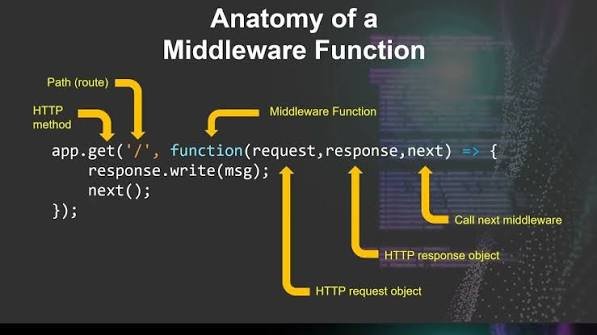
In simple terms, middleware functions have access to the request object, the response object, and usually a next function that passes control to the next middleware in the chain. Because of this, they can perform useful tasks such as authentication, logging, error handling, request parsing, and response formatting. For learners enrolled in a java full stack developer course, understanding middleware is essential because it explains how server-side applications organise request handling in a clean and modular way.
What Middleware Functions Actually Do
A middleware function sits in the path of request processing. When a client sends a request to a server, the middleware can examine the incoming data before the main route or controller handles it. It can also affect the outgoing response before it is returned to the client.
For example, if a user tries to access a protected API endpoint, a middleware function can first check whether the request contains a valid authentication token. If the token is valid, the middleware allows the request to continue. If not, it can stop the flow and send an error response immediately. This prevents unauthorised access without repeating the same code in every route handler.
Middleware is also useful for request transformation. Suppose an application receives data in JSON format. A middleware function can parse the request body so that the route handler works with structured data instead of raw text. Similarly, middleware can add custom properties to the request object, making useful data available to downstream functions.
This layered design helps developers separate general concerns from route-specific business logic. As a result, the application becomes more organised and easier to maintain.
Access to Request and Response Objects
The main reason middleware is so powerful is that it has access to both the request and response objects. The request object contains information sent by the client, such as headers, query parameters, cookies, body data, HTTP method, and URL path. Middleware can inspect this information to make decisions before the request moves further.
For instance, a logging middleware may record the request method, path, and timestamp for monitoring purposes. A validation middleware may check whether required fields are present in the body. A localisation middleware may read the language setting from headers and prepare the correct user context.
The response object gives middleware the ability to control what is sent back to the client. This means a middleware function can set headers, change status codes, or return a response early if needed. In an error-handling scenario, middleware can send a consistent error message structure instead of letting each route create its own style of response.
Because middleware works with both request and response, it can manage cross-cutting concerns in a centralised way. This avoids duplication and improves consistency across the application.
Common Types of Middleware in Web Applications
Several middleware types are used frequently in backend systems. One of the most common is authentication middleware. It verifies whether the user is logged in or has the correct permissions to perform an action. This is especially important in APIs that expose sensitive data or administrative functions.
Another common type is logging middleware. It records request details and sometimes response times. This is useful for debugging, performance monitoring, and security analysis. When issues occur in production, logs often provide the first clues.
Validation middleware is also widely used. It checks request payloads before they reach the business logic. For example, it may ensure that an email field is present and follows the correct format or that a numeric field is within an allowed range. This prevents invalid data from causing errors deeper in the application.
Error-handling middleware is equally important. Instead of handling exceptions separately in every function, developers can use a central middleware layer to catch errors and return standardised responses. This improves user experience and simplifies debugging.
These concepts are often introduced in a java full stack developer course because they reflect how real backend systems are structured in enterprise applications.
Why Middleware Improves Application Design
Middleware supports modular design. Instead of writing the same code in multiple routes, developers can create reusable middleware components and apply them where needed. This makes the codebase more concise and easier to update.
For example, if an application needs to log every request, a single logging middleware can be applied globally. If only certain routes require authentication, the authentication middleware can be attached only to those routes. This selective reuse gives developers both flexibility and control.
Middleware also improves readability. Route handlers can stay focused on core business operations, while supporting tasks are moved into dedicated processing layers. This separation makes the overall flow easier to understand and test.
In large applications, this design becomes even more valuable. As the number of routes, services, and integrations grows, middleware helps keep common functionality centralised rather than scattered across the codebase.
Best Practices for Using Middleware
Middleware should be designed carefully to avoid making the request flow confusing or inefficient. Each middleware function should have a clear responsibility. A single middleware should not try to perform logging, authentication, validation, and response formatting all at once.
It is also important to ensure that middleware either completes the response or passes control properly to the next function. If this flow is not handled correctly, requests may hang or behave unpredictably.
Performance should also be considered. Since middleware runs for each relevant request, heavy processing in middleware can affect response times. Developers should keep it efficient and use it only where it adds clear value.
Conclusion
Middleware functions are a foundational concept in backend development because they manage how requests and responses move through an application. By providing access to request and response objects, middleware can handle tasks such as authentication, logging, validation, and error management in a structured and reusable way.
This approach improves maintainability, consistency, and code clarity. As applications become more complex, middleware becomes even more important for organising server-side logic effectively. For developers building modern web applications, a strong understanding of middleware is an essential skill.
About the Author