Modern software is built out of dozens of services that talk to each other. If they’re talking synchronously then a single service slowing down can bring the whole system to its knees. Apache Kafka provides a very real solution in the form of an event driven architecture which allows services to pass data to each other asynchronously rather than synchronously. For anyone doing full stack Java developer training, understanding the producer/consumer model of Kafka is absolutely fundamental to being able to build systems that are scalable and fault tolerant.
What Is Event-Driven Architecture?
Event Driven Architecture (EDA) is a pattern where the components of a system communicate by publishing and subscribing to events rather than by calling each other directly. An event is just a record of something that has happened. A user has registered, an order has been placed, a payment has been processed etc.
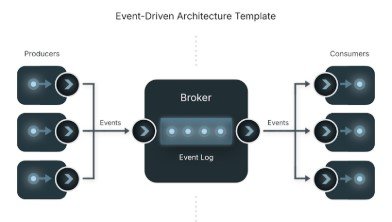
In the traditional request/response model you have Service A calling Service B and just sitting and waiting for a response. If Service B is slow or just not available then Service A is effectively blocked. In the event driven model Service A publishes an event to a message broker and Service B consumes that event when it’s ready. Neither service has any knowledge of the state of the other at that point.
Apache Kafka is the message broker. It’s a system which stores events in ordered, immutable logs known as topics. Producers write events to topics and consumers read from the topics.
Understanding the Producer-Consumer Pattern in Kafka
Kafka’s architecture is built around three core components: the producer, the broker and the consumer.
Producers are the services/applications that send the events to the Kafka topic. The producer doesn’t care who’s consuming the data. It just sends the message and gets on with its day. It’s designed to be non-blocking.
Brokers are Kafka servers which store and replicate the events. A Kafka cluster will typically have multiple brokers. Events are kept for a configurable length of time so that if required a consumer can re-read the data.
Consumers subscribe to topics and process events at their own pace. Kafka keeps track of where each consumer is in the log via an offset. So two separate services can consume the same topic and not interfere with each other.
A typical Java implementation makes use of the KafkaProducer and KafkaConsumer classes from the Kafka client library. The producer takes an object, serialises it and then sends it to a named topic. The consumer then polls continuously for new records, processes each record and commits its offset.
This is the model at the heart of the curriculum in the distributed systems training programmes as it shows how Java services can be completely independent and yet still be in sync.
How Kafka Enables Service Decoupling
Service decoupling means that you can deploy, scale and update individual components without having to do it all at the same time across the system. Kafka enables this through a number of key design decisions.
Topic based routing means that the producer and the consumer only know about the topic name. An order service publishes to an orders topic. The inventory service and the notification service both subscribe to that topic. If you then wanted to add a third consumer (say an analytics service) you’d make no changes to the producer.
Consumer groups allow Kafka to distribute event processing across multiple instances of the same service. If order volume spikes, you can scale the consumer group by adding more instances. Kafka automatically reassigns topic partitions among them, distributingSchema management via tools such as the Confluent Schema Registry means that producers and consumers can agree on the schema without having to be directly coupled. If a producer changes its event schema then the consumers can keep on using the old schema until they’re ready to move over.ngThese properties make Kafka ideally suited to a microservices environment where you’ve got dozens of services that need to be loosely coupled yet still be consistent.ervices must stay loosely coupled while remaining consistA practical Kafka setup in a Java Spring Boot application would be as follows. aFirstly configure your Kafka connection properties in application.yml (broker address, serialisation format and consumer group ID). Spring Boot’s spring-kafka library takes care of pretty much all the boilerplate. BSecondly annotate a method with @KafkaListener to receive the events from the topic. That method will be called automatically each time a new record is available. The framework takes care of the polling and offset management in the background.woThirdly, inject the KafkaTemplate into your producer service and then call kafkaTemplate.send(topicName, payload) in order to publish the event. The send operation is non-blocking by default and returns a CompletableFuture which you can use for error handling.d Common production considerations are appropriate retry policies on the producer, dead letter topics for events that fail to be processed and monitoring consumer lag to pick up the situation where the consumers are falling behind the producers. cThese implementation details are absolutely standard in a full stack Java developer training course covering microservices and event streaming. It’s very much the norm in enterprise Java development.ndard this tooling has become in enterprise Java development.
Conclusion
Apache Kafka provides a robust foundation for asynchronous, decoupled communication between services. The producer-consumer pattern allows teams to build systems where each service operates independently, scales on its own terms, and remains isolated from failures elsewhere. Understanding how to configure topics, manage consumer groups, and handle offset commits gives Java developers the tools needed to architect resilient distributed systems. As microservices continue to dominate backend development, Kafka proficiency remains one of the most practical skills any backend engineer can build.
About the Author