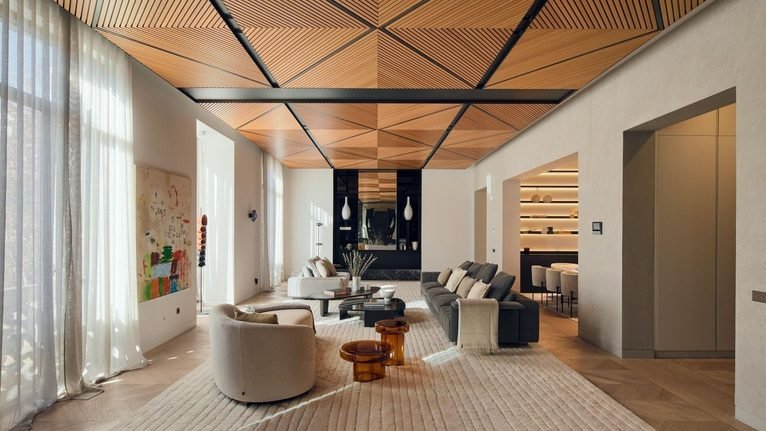
Curtains can look simple once they’re hanging, but getting them right takes more thought than choosing a fabric you like. The width, drop, heading style, lining, track position, and even the way the fabric folds all affect the finished room.
That’s why made-to-measure curtains can feel noticeably different from something bought off the shelf. The difference isn’t always dramatic at first glance. Often, it’s the small details working together that make the window look properly finished.
Start With How You Want the Room to Feel
Before looking at fabrics, think about the job the curtains need to do.
A bedroom may need darkness, privacy, and better insulation. A living room might benefit from soft daylight and a fabric that adds warmth without making the space feel heavy. For a large sliding door, easy operation may matter just as much as appearance.
This is where custom curtains become useful. Instead of forcing one curtain style into every room, you can choose the fabric, lining, dimensions, and operating method around each space.
For example, sheer curtains can soften strong daylight while retaining a bright, airy feeling. Blockout curtains are more suited to rooms where controlling light and privacy matters. Layering the two gives you flexibility throughout the day.
Accurate Measurements Change More Than the Fit
Measuring curtains sounds straightforward until you’re deciding exactly where they should begin and end.
Should the track sit directly above the window or closer to the ceiling? Should the curtains finish at the floor? How far should they extend beyond the sides of the window?
Those choices affect how large the window appears.
Installing curtains higher than the window frame can draw your eye upward and make the ceiling feel taller. Extending the track beyond the window can also allow more fabric to sit away from the glass when the curtains are open, helping expose more of the window.
With custom window curtains in Melbourne, measurements can be planned around the actual window and room rather than relying on standard curtain dimensions.
This becomes particularly helpful with wide windows, sliding doors, unusual layouts, curved areas, or homes where several windows need to look consistent.
Fabric Fullness Matters
A curtain isn’t normally made to the exact width of the window.
It needs additional fabric so that it forms folds when closed. Without enough fullness, curtains can look stretched and flat. Too much fabric, on the other hand, may feel bulky in a smaller room.
The right amount depends partly on the heading style and fabric.
A lightweight sheer behaves differently from a thick blockout material. The same measurements can create a completely different appearance depending on the weight and movement of the fabric.
It’s one reason fabric should be considered as part of the whole curtain design rather than as a colour choice alone.
The Heading Style Changes the Personality
Curtain headings are easy to overlook, yet they’re one of the first things you’ll notice once the curtains are installed.
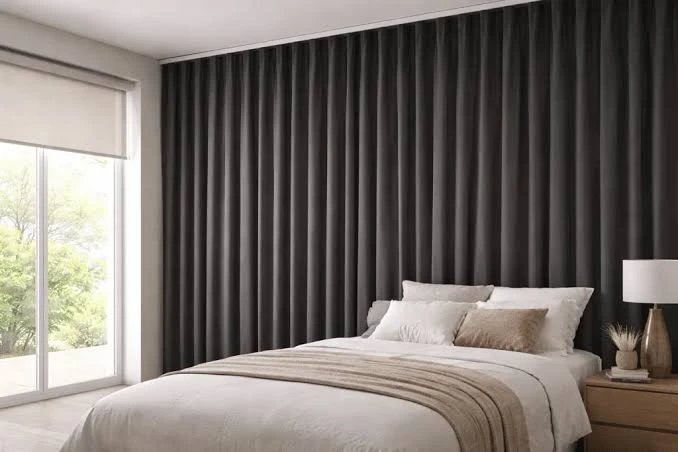
S-fold curtains create smooth, repeating waves. They’re often suited to contemporary interiors because the folds look orderly without appearing overly formal.
Pinch pleats create a more structured finish. Double and triple pinch pleats gather the fabric at regular intervals, giving the curtain more definition near the top.
Neither approach is automatically better. It depends on the room.
A minimalist living area might suit the relaxed repetition of an S-fold. A more traditional bedroom or formal sitting room may work beautifully with pleated curtains.
The track matters too. Recessing a track into the ceiling can create a clean appearance where the curtain seems to fall directly from above. It’s a small architectural detail, but it can dramatically change the finished result.
Think About Light Before Choosing Colour
People naturally focus on colour and texture when looking at curtain samples. That’s understandable, but light control deserves equal attention.
Ask yourself what happens in the room throughout the entire day.
Morning sunlight might hit a bedroom directly. Afternoon glare could make a television difficult to see. A street-facing room may need privacy without losing all its natural light.
Sheers are particularly useful when you want daylight without leaving the window completely exposed. For greater privacy or darkness, a blockout layer can sit behind or in front of the sheer.
Layering also means you’re not stuck with one setting.
During the day, you might close the shear and leave the blockout curtain open. At night, both can be closed.
Don’t Ignore Insulation
Windows can have a major influence on how comfortable a room feels.
Curtains create another layer between the room and the glass. Heavier fabrics and suitable linings can help reduce heat transfer, while a well-planned installation can limit gaps around the window.
This can be particularly useful in bedrooms and living areas where comfort matters for long periods.
If thermal performance is a priority, mention it early in the selection process. The prettiest lightweight fabric in the showroom may not be the right choice if your main problem is a cold bedroom window.
You can still have the look you want, but you may need a lined curtain or layered arrangement to get the practical performance as well.
Motorisation Can Make Sense for Certain Windows
Motorised curtains can sound like a luxury until you have a very wide window or a curtain that’s opened and closed several times every day.
They’re also useful for high or difficult-to-reach installations.
For ordinary windows, hand-drawn curtains may be perfectly adequate. There’s little reason to add technology simply because it’s available.
But for large expanses of glass, home automation setups, or rooms where convenience is important, motorisation can be worth considering during the design stage. Planning for it from the beginning is usually cleaner than trying to adapt the curtain system later.
Look at the Whole Wall, Not Just the Window
One of the most common curtain-planning mistakes is treating the window as an isolated rectangle.
Stand back and look at the complete wall.
Where is the ceiling? Are there nearby doors, cabinets, heaters, power outlets, or furniture? Does the window sit in the centre of the wall or noticeably off to one side?
Sometimes the most visually balanced curtain placement won’t follow the window frame exactly.
Floor-to-ceiling curtains, for example, can make the treatment feel like part of the architecture rather than something attached to a window. On a wide wall, extending the track can create a stronger sense of proportion.
This is where custom sizing earns its keep. You’re designing for the room you actually have, not the dimensions available in a packet.
Get the Practical Details Right First
Beautiful curtains shouldn’t be difficult to live with.
Think about how often you’ll open them, how much privacy you need, whether children or pets use the room, and how you’ll clean the chosen fabric. A gorgeous material that becomes annoying after six months isn’t a great choice.
The best custom curtains tend to be the ones you stop thinking about once they’re installed. They open properly, control the light the way you expected, sit neatly when closed, and feel like they belong in the room.
Good curtain design is less about finding one spectacular feature and more about getting a dozen small decisions right. Measure carefully, choose fabric for the room’s real needs, consider how the curtains will operate, and pay attention to proportion. When those details line up, the window doesn’t merely look dressed. The whole room feels more considered.
About the Author