
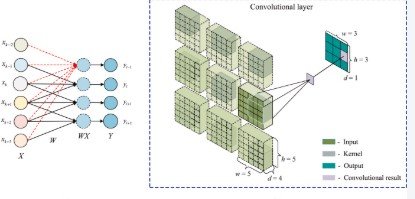
When a computer looks at an image, it does not see colours or shapes the way human eyes do. It sees a grid of numbers. The real challenge is teaching a machine to find meaningful patterns within that grid. Convolutional filters solve this problem by sliding a small mathematical window across an image and performing precise calculations at every position. This technique is at the heart of modern computer vision and deep learning. Understanding how these filters work gives learners a solid foundation in how neural networks actually process visual information.
What Is a Convolutional Filter?
A convolutional filter, often called a kernel, is a small matrix of numbers, typically 3×3 or 5×5 in size. This kernel moves across an input image from left to right and top to bottom. At each position, it multiplies its value by the corresponding pixel value below it and then sums all the results. This single output value is placed into a new matrix called a feature map.
The values inside the kernel are not chosen randomly. They are learned during the training process. Different kernels respond to different visual patterns. One kernel might highlight horizontal edges, another might detect vertical lines, and a third might respond to diagonal textures. The network learns which kernels are most useful for a given task.
How the Sliding Window Mechanism Works
The term “sliding window” describes how the kernel moves across the input. This movement is controlled by a parameter called the stride. A stride of 1 means the kernel moves one pixel at a time. A stride of 2 means it skips a pixel with each step, producing a smaller output map.
Before the kernel begins sliding, the input image is often padded with extra rows and columns of zeros around its border. This padding ensures that pixels at the edges of the image receive the same level of attention as pixels in the centre. Without padding, the output feature map would shrink after every convolution operation.
At each window position, the operation performed is called element-wise multiplication followed by summation. This is known as the dot product. The resulting scalar value captures how strongly the local image patch matches the pattern encoded in the kernel. Repeating this across the entire image produces a complete feature map that highlights where that particular pattern appears.
Spatial Feature Extraction in Practice
Multiple filters are applied simultaneously in a single convolutional layer. If a layer uses 32 filters, it produces 32 separate feature maps from one input. Early layers in a convolutional neural network tend to learn simple features such as edges and colour gradients. Deeper layers combine these basic features to detect more complex structures like curves, corners, and eventually entire objects.
This hierarchical approach to feature extraction closely resembles how the human visual cortex processes information. Low-level signals are combined progressively into high-level representations.
Activation functions like ReLU are applied after each convolution. These functions introduce non-linearity into the model, allowing it to capture complex relationships that a purely linear operation could not represent.
Pooling layers are inserted between convolutional layers to reduce the size of feature maps. Max pooling, for example, selects the highest value within a small region. This reduces computation, helps control overfitting, and makes the model more tolerant of small shifts in a feature’s position.
Why This Knowledge Matters for AI Learners
Grasping convolutional filter logic is not just an academic exercise. It directly explains why convolutional neural networks outperform traditional methods in image classification, object detection, and medical imaging. Learners who understand this mechanism can make better decisions about network architecture, filter size, stride, and padding.
For those looking to build practical skills in this area, enrolling in a structured programme is a smart step. An artificial intelligence course in hyderabad provides learners with hands-on training in neural networks, including convolutional architectures, using real datasets and guided projects.
Conclusion
Convolutional filter logic works by sliding a small mathematical kernel across an input image, computing dot products at every position, and building feature maps that reveal spatial patterns. From edge detection in early layers to object recognition in deeper ones, this mechanism is fundamental to how modern visual AI systems function.
Learners who want to apply this knowledge in a professional setting will benefit greatly from structured guidance. An artificial intelligence course in hyderabad offers exactly that, combining theory with applied practice to prepare students for real-world challenges in computer vision and deep learning.
About the Author