You want the walls to look like yours, and the lease says you have to hand them back exactly as you found them. That single clause is why so many rented offices stay magnolia for three years while everyone quietly agrees the space looks like somebody else’s.
The good news is that the range of coverings suited to leased offices is far wider than it used to be. Products now exist that cover a full wall, survive years of daily use and lift away at the end of the term without taking the paint with them. The task is matching the right one to your walls, your building rules and the time you have left to run.
Which Wall Coverings Work Well in a Leased Office?
The short answer is anything that comes off as neatly as it went on. Six options cover almost every leased office brief:
1. Removable Self-Adhesive Vinyl
Removable adhesive film is the standard choice for logos, wayfinding, values walls and feature graphics. Personalised wall stickers cut from this material go onto smooth painted plaster, hold colour well and come away in one piece when heat is applied, leaving sound paintwork behind. The limitation is the surface underneath.
Cured emulsion in good condition is fine, but flaking paint or fresh decoration lifts with the film. A test patch left in a corner for a week tells you what a full wall will do. Confirm your quote specifies a removable adhesive, since permanent versions look identical on the wall and behave very differently coming off.
2. Fabric-Backed Removable Wallpaper
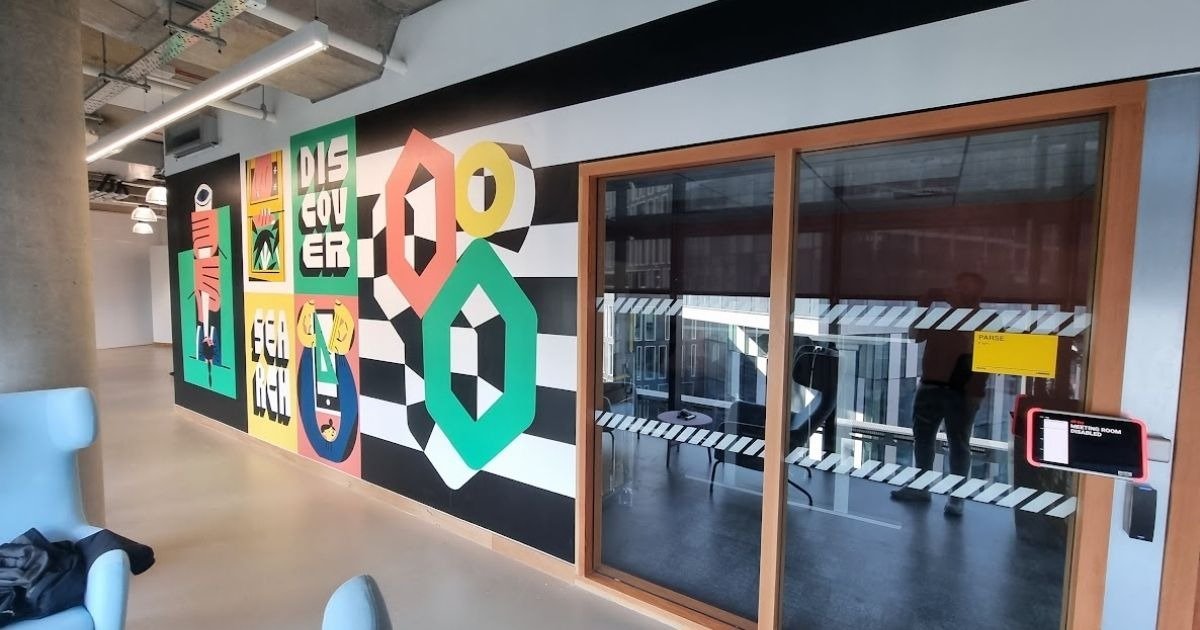
Across a large area, printed vinyl asks more of the substrate, so a fabric-backed covering tends to be the more forgiving choice. It stretches slightly during application, hides minor imperfections in the wall and peels off dry in full drops, with no residue and no steaming. It suits murals, breakout areas and any wall where an image runs floor to ceiling.
Print quality is excellent, though the finish is softer and less reflective than laminated film. In busy corridors and spaces with trolley traffic it scuffs more readily, so put it on walls people look at rather than walls people brush past on their way through.
3. Printed and Frosted Window Film
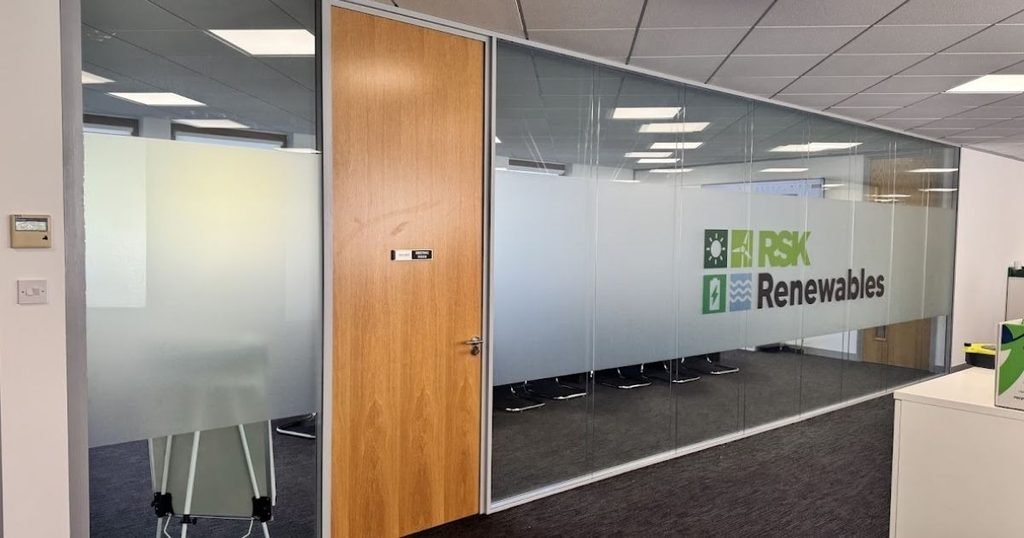
Glazing is often the largest untouched surface in a modern office and sits outside the walls debate entirely. Film applied to internal partitions and external windows handles branding, privacy, manifestation compliance and light control in one application, with a repeated icon logo doubling as the safety marking the regulations ask for.
Removal is straightforward, because the adhesive bonds to glass rather than paint, so the landlord’s finishes carry almost no risk. Meeting rooms gain twice over, picking up a branded surface and screening from the open-plan floor. Restrictive leases rarely object to glass, so approval tends to come quickly.
4. Tension-Frame Fabric Panels
A tension frame is an aluminium extrusion fixed to the wall or floor, holding a printed fabric skin stretched tight across it. The result reads as a clean, edge-to-edge graphic panel with a little physical depth to it. Fixings are minimal and easy to make good, and the frame stays useful long after the artwork stops being relevant.
Reprinting the skin costs a fraction of the original outlay, which suits campaign messaging, seasonal content or anything tied to figures that date quickly. Frames also come down in an afternoon and travel to your next premises intact.
5. Printed Acoustic Panels
Acoustic panels handle two problems at once, softening noise in hard-surfaced open-plan space while carrying a printed image or brand pattern. They arrive as wall-mounted tiles, ceiling rafts or freestanding screens, and the freestanding versions touch nothing at all.
Floors with concrete soffits, glass partitions and hard flooring gain the clearest benefit, since there is little else absorbing sound. Cost per square metre sits above film or vinyl, though the panels stay yours to keep and reinstall. In shared buildings, freestanding screens sidestep the landlord consent conversation completely.
6. Rail-Hung Printed Boards
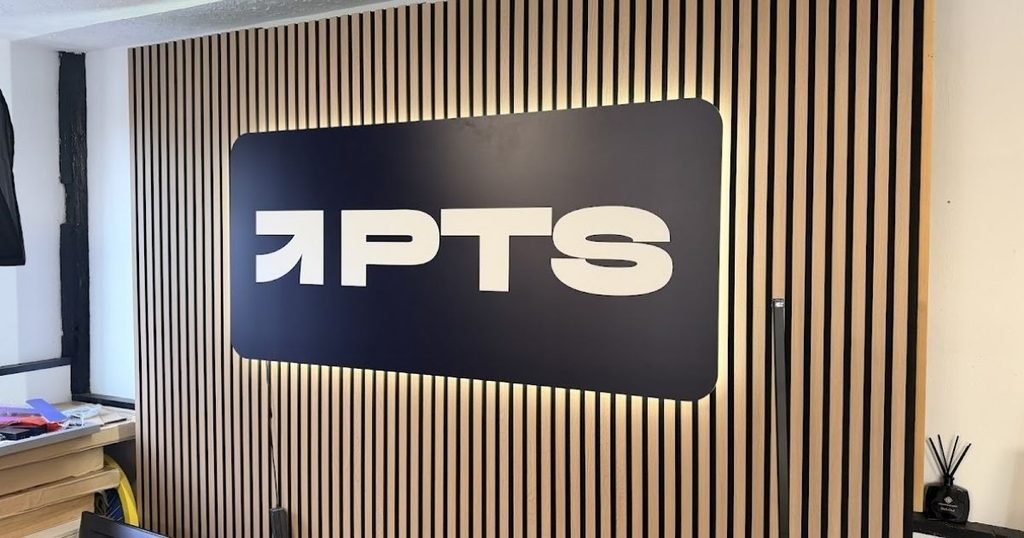
Aluminium composite or foamex boards suspended from a picture rail give you large-format graphics with a handful of fixings at high level. Everything below the rail sits clear of the wall, and the rail itself needs only filling and touching up at the end of the term.
Boards swap out in minutes without a fitter on site, which suits reception walls that change with new client wins or campaigns. The look leans gallery rather than mural, so choose it where a curated feel works better than an immersive wall-to-wall image.
Make the Space Yours While You Have It
A leased office does not have to look temporary for the length of the term. The constraint is rarely the lease itself, it is specifying a product built for permanence and then hoping it behaves differently on the way out.
Work through the surfaces you already have, the rules your building applies and the years left to run, and the shortlist narrows quickly. Short terms and cautious landlords point towards window film, tension frames and freestanding panels that touch very little. Longer terms with a cooperative landlord open up removable vinyl and fabric wallpaper across full walls, giving you scale and colour for as long as the space is yours.
About the Author