Homeowners who find a small, fast moving, silver grey insect in the bathroom often reach for the nearest label without examining it closely. In Nordic homes, two related species are regularly confused, and because they behave very differently, misidentification frequently leads to the wrong response and unnecessary expense.
The common silverfish, Lepisma saccharina, is the older resident of European buildings. It is smaller, typically eight to twelve millimetres, with a more uniformly silver appearance and shorter appendages. Critically, it depends on high humidity and is generally confined to consistently damp locations such as bathrooms, beneath sinks, or in cellars. Populations tend to stay small and localised.
The long tailed silverfish is noticeably larger, reaching nineteen millimetres, with proportionally longer antennae and tail bristles and a greyer, more mottled appearance. It tolerates much drier conditions, which allows it to colonise living rooms, bedrooms, bookshelves, and storage areas rather than remaining near water. That single difference in tolerance explains almost everything about why it has become the more serious household problem.
Behaviour offers a practical clue before any close inspection. An insect found repeatedly in a dry bedroom or among books at a distance from any water source is far more likely to be the long tailed species. One confined to a damp bathroom floor, particularly around a leaking pipe or poorly ventilated shower, is more likely to be the common silverfish and may disappear entirely once the moisture problem is corrected.
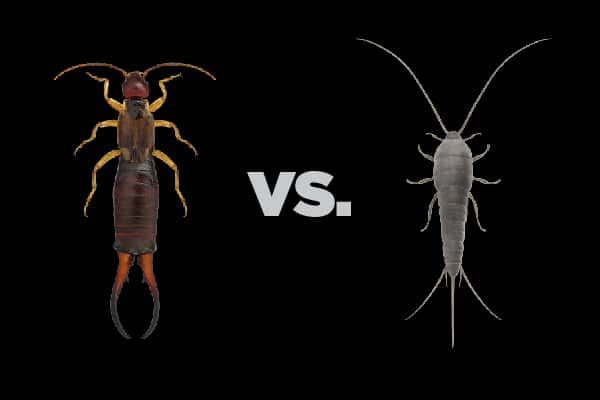
Population dynamics differ just as sharply. Common silverfish rarely reach large numbers and are often controlled by fixing ventilation and drying out the affected area. The long tailed species establishes larger, more persistent populations that spread through a dwelling and do not respond to moisture reduction alone. Comparative identification guidance covering skjeggkre vs sølvkre is available for readers who want to check the details against clear photographs before deciding what to do.
The practical consequence is that identification should precede action. Spending money on baiting and monitoring for what turns out to be a small damp related silverfish population is wasteful, while treating an established long tailed infestation as a simple ventilation issue allows it to expand for years. A magnifying glass, good light, and a captured specimen resolve the question in a few minutes.
Egg laying habits differ as well and affect how long control takes. Both species deposit eggs in cracks and crevices where they are protected and difficult to reach, but the long tailed species produces more eggs over a longer adult life. That is one of the main reasons an established population persists through treatments that would clear the common silverfish comfortably.
Ventilation improvements remain worthwhile in either case. Extracting moisture properly from bathrooms and kitchens, drying wet areas, and repairing leaks reduces the conditions that favour insects generally. For a damp related silverfish problem this may be the entire solution, while for the long tailed species it is a useful supporting measure that will not succeed on its own.
For anyone unsure, a sticky trap placed in the affected room for a week provides both an identifiable specimen and a rough indication of activity levels. That small amount of preparation is worth far more than a rapid purchase of whichever product is nearest to hand, because the correct treatment depends entirely on which species is actually present.