that's calling the kettle black
Language is full of expressions that make everyday conversations more interesting. Some phrases communicate a message directly, while others use humor, irony, or comparison to express an idea. One such expression is “that’s calling the kettle black.” It is commonly used when someone criticizes another person for a fault that they also have. The phrase highlights hypocrisy and reminds people to consider their own behavior before judging others.
Understanding the meaning of “that’s calling the kettle black” can help you recognize it in conversations, books, movies, and social media. It can also help you use the expression naturally when discussing disagreements, relationships, workplace behavior, and everyday situations.
In this article, we will explore the meaning, origin, examples, synonyms, and practical uses of this familiar English expression.
What Does That’s Calling the Kettle Black Mean?
The expression “that’s calling the kettle black” means that someone is criticizing another person for something they are guilty of doing themselves. In simple terms, it describes a situation in which a person points out another person’s weakness while ignoring their own similar weakness.
For example, imagine a person who frequently arrives late to meetings. One day, that same person complains that a colleague is always late. Someone might respond, “That’s calling the kettle black!” The response points out the contradiction between the person’s criticism and their own behavior.
The phrase is often used humorously, but it can also express frustration or disapproval. It suggests that people should examine their own actions before judging someone else.
The expression is closely related to the word hypocrisy. A hypocritical person applies one standard to others and a different standard to themselves. When someone behaves this way, the phrase “that’s calling the kettle black” can be an effective way to highlight the inconsistency.
Understanding the Meaning Behind the Expression
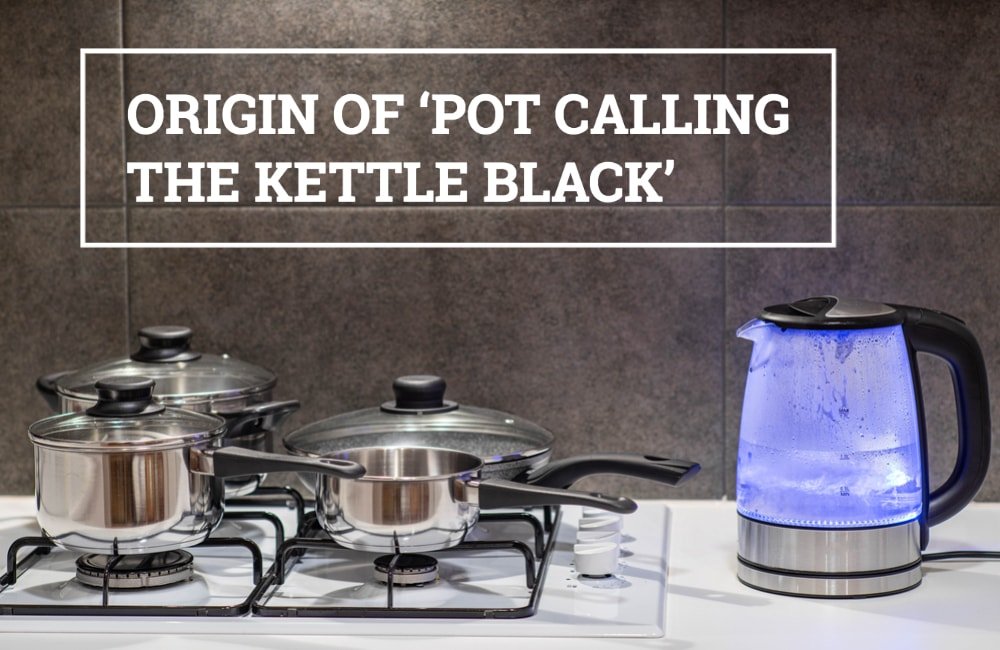
To understand this expression, it helps to think about the traditional image of a kettle used over a fire. In the past, kettles and cooking pots exposed to smoke could become blackened with soot. The image suggests that one blackened object is criticizing another object for being black.
The humor comes from the fact that the kettle making the criticism has the same characteristic it condemns. Rather than recognizing its own condition, it focuses on the supposed flaw of another object.
In human interactions, the kettle represents someone who criticizes others without acknowledging their own mistakes. The black color represents the shared fault or undesirable behavior.
Although the expression uses a simple image, its message is meaningful. It encourages self-awareness, fairness, and honesty. Before criticizing another person, it is worth considering whether we are guilty of the same behavior.
The Origin of That’s Calling the Kettle Black
The expression is associated with the older English proverb “the pot calling the kettle black.” It has been used for centuries to describe hypocrisy and unfair criticism.
One widely discussed historical reference appears in Thomas Shelton’s 1620 English translation of Miguel de Cervantes’ novel Don Quixote. The work contains a version of the saying, demonstrating that the expression was already familiar in early modern English.
The proverb developed from the appearance of cooking vessels that could become darkened by smoke and soot. Because both pots and kettles could acquire similar marks, the image provided a natural comparison for people who criticized others for faults they shared.
Over time, the wording became familiar in everyday English. People now use both “the pot calling the kettle black” and “that’s calling the kettle black.” The first is the traditional form of the proverb, while the second is a conversational variation used to comment on a particular situation.
The exact wording may vary, but the central idea remains the same: criticizing someone for a fault you also possess is inconsistent and potentially hypocritical.
Examples of That’s Calling the Kettle Black in Everyday Life
The best way to understand an idiom is to see how people use it in realistic situations. Here are several examples showing how the expression works in everyday conversation.
1. Being Late
Imagine that Daniel frequently arrives late to work. One morning, he complains that his colleague Emma is ten minutes late for a meeting.
Emma replies, “You were late three times last week. That’s calling the kettle black!”
Her response points out Daniel’s hypocrisy. He is criticizing a behavior that he regularly demonstrates himself.
2. Criticizing Someone’s Spending Habits
Suppose a person spends a large amount of money on unnecessary purchases but constantly criticizes a friend for buying expensive clothes.
A mutual friend might say, “You’re always buying things you don’t need, so criticizing her spending is calling the kettle black.”
This example shows that the expression can apply to financial decisions and personal habits.
3. Complaining About Dishonesty
Imagine that someone regularly exaggerates stories to make themselves appear more successful. However, they become angry when another person tells a small lie.
A listener might respond, “That’s calling the kettle black. You haven’t always been honest yourself.”
In this situation, the expression highlights a double standard involving honesty.
4. Social Media Arguments
Online discussions often involve people criticizing others for behavior they have displayed themselves. For example, a person might post angry comments about rude internet users while insulting everyone who disagrees with them.
Another user could say, “Calling other people rude while insulting them is calling the kettle black.”
This example demonstrates how the idiom remains relevant in digital communication.
5. Family Disagreements
A parent might complain that their teenager spends too much time looking at a phone, even though the parent frequently checks social media during family conversations.
The teenager might respond, “That’s calling the kettle black. You’re always on your phone, too.”
Although the response may sound defensive, it identifies an inconsistency that deserves attention.
6. Workplace Behavior
Consider a manager who frequently interrupts employees during meetings but criticizes a team member for interrupting a colleague.
Someone observing the situation might think, “That’s calling the kettle black.”
The expression is useful here because it draws attention to the difference between the manager’s expectations for others and their own conduct.
How to Use That’s Calling the Kettle Black in a Sentence
Using this expression correctly is relatively easy. It usually appears when someone notices that a person is criticizing another individual for a behavior they also display.
Here are several natural sentence examples:
- “You’re complaining about my messy desk, but yours is worse. That’s calling the kettle black.”
- “He accused his brother of being selfish, but he never helps anyone himself. That’s calling the kettle black.”
- “She criticized her friend for gossiping while spreading rumors about everyone else. Talk about calling the kettle black!”
- “If you tell people not to interrupt while constantly interrupting them, that’s calling the kettle black.”
- “You can’t accuse me of spending too much when you buy expensive gadgets every month. That’s calling the kettle black.”
The expression can appear at the beginning, middle, or end of a conversation, depending on how the speaker structures the sentence.
It is particularly effective when the contradiction is obvious. However, it is important to remember that the phrase is informal and can sound confrontational if used during a sensitive disagreement.
Is That’s Calling the Kettle Black the Same as Hypocrisy?
The expression and the word hypocrisy are closely connected, but they are not exactly the same.
Hypocrisy describes the broader behavior of claiming to follow certain principles while acting contrary to them. For example, someone who publicly promotes honesty but deliberately deceives others may be considered hypocritical.
“That’s calling the kettle black” describes a particular type of inconsistency: criticizing someone for a fault that the critic also has.
For instance, a person may behave hypocritically without criticizing anyone else. They might simply demand honesty from others while regularly lying themselves. The behavior is hypocritical, but the traditional kettle-and-pot expression becomes especially appropriate when they condemn someone else for lying.
Therefore, the phrase is a colorful way to point out a specific form of hypocrisy.
Common Synonyms and Similar Expressions
Several English expressions communicate ideas similar to “that’s calling the kettle black.” Although they are related, their meanings and appropriate uses can differ slightly.
1. The Pot Calling the Kettle Black
This is the traditional version of the proverb and is the closest equivalent.
Example: “He says his coworker is lazy, but he avoids every difficult task himself. That’s the pot calling the kettle black.”
2. Practice What You Preach
This expression means that people should behave according to the principles they recommend to others.
Example: “If you want everyone to arrive on time, you should arrive on time yourself. Practice what you preach.”
Unlike the kettle expression, it does not necessarily require someone to criticize another person for the same fault.
3. Look in the Mirror
This phrase encourages someone to examine their own behavior before judging another person.
Example: “Before calling your friend irresponsible, you should look in the mirror.”
It can communicate a similar message, although it is more direct and may sound challenging.
4. Double Standards
A double standard occurs when different rules are applied to people in similar situations.
Example: “He allows himself to make mistakes but punishes everyone else for making them. That’s a double standard.”
The concept overlaps with hypocrisy, but a double standard focuses specifically on unequal treatment.
5. People in Glass Houses Shouldn’t Throw Stones
This proverb advises people not to criticize others when they have their own weaknesses or faults.
Example: “You should not judge someone for their past mistakes when you have made similar mistakes. People in glass houses shouldn’t throw stones.”
This is a close alternative, although it emphasizes the risks of criticizing others rather than the specific contradiction captured by the kettle expression.
Why People Use This Expression
People use “that’s calling the kettle black” for several reasons. First, it allows them to point out hypocrisy without delivering a lengthy explanation. A short expression can communicate the entire problem.
Second, the phrase can add humor to a disagreement. Instead of directly accusing someone of being a hypocrite, a speaker can use the familiar proverb to make the contradiction more memorable.
Third, it encourages people to think about their own behavior. Everyone makes mistakes, and it is easy to notice another person’s shortcomings while overlooking personal weaknesses. The expression reminds us that self-awareness is an important part of fair judgment.
Finally, the phrase works in many contexts, including family discussions, friendships, workplaces, classrooms, and online conversations. Its meaning is widely understandable, making it a useful part of everyday English vocabulary.
Nevertheless, using the expression does not automatically resolve a disagreement. Sometimes, both people may have valid concerns even if one of them behaves inconsistently. A productive conversation should focus on the actual problem rather than using the idiom simply to dismiss another person’s criticism.
Is That’s Calling the Kettle Black Rude?
The expression is not inherently rude, but its effect depends on the situation and the speaker’s tone.
Among friends, it may be used playfully when one person points out another person’s obvious contradiction. For example, a friend who complains about eating too much dessert might receive a joking response if they have just finished a large slice of cake.
In a workplace or serious discussion, however, the same expression may sound accusatory. It suggests that the other person is being hypocritical and may cause them to become defensive.
If you want to communicate the same idea more politely, consider saying, “I think we should both try to follow the same standard,” or “I understand your concern, but I think this issue applies to both of us.”
These alternatives acknowledge the inconsistency without turning the conversation into a personal attack.
The best approach depends on your relationship with the other person, the seriousness of the disagreement, and your goal. If you want to encourage understanding, a respectful explanation is often more effective than a sharp remark.
Common Mistakes When Using the Phrase
Although this idiom is straightforward, learners of English sometimes misunderstand how it should be used.
Mistake 1: Using it for every kind of criticism.
The phrase is most appropriate when the person criticizing someone else has the same fault. If someone criticizes another person’s genuinely harmful behavior without sharing that fault, the expression may not fit.
Mistake 2: Confusing it with an ordinary disagreement.
Two people can disagree without either person being hypocritical. The idiom is about a specific contradiction, not simply a difference of opinion.
Mistake 3: Assuming the expression refers to actual kettles.
In ordinary conversation, the phrase is figurative. It does not usually describe cookware or its physical appearance.
Mistake 4: Ignoring the tone of the conversation.
The expression can be humorous, sarcastic, or confrontational. Choosing the right moment helps prevent unnecessary misunderstandings.
By understanding these distinctions, English learners can use the phrase more accurately and recognize its intended meaning when others use it.
What We Can Learn From That’s Calling the Kettle Black
Beyond its linguistic meaning, this expression offers a useful lesson about human behavior. People naturally notice the mistakes of others, but they do not always recognize their own weaknesses with the same clarity.
Before criticizing someone, it is helpful to pause and ask whether we follow the same standards we expect others to follow. This does not mean that people must be perfect before they can identify a genuine problem. Instead, it encourages fairness, consistency, and a willingness to acknowledge personal mistakes.
For example, a manager can reasonably expect employees to meet deadlines, even if the manager occasionally misses one. However, the manager should acknowledge their own shortcomings and apply workplace rules fairly rather than condemning employees for behavior they refuse to address in themselves.
Similarly, parents, teachers, friends, and partners can all benefit from examining their own conduct before offering criticism.
The expression also reminds us that acknowledging our faults can strengthen relationships. Admitting a mistake does not necessarily weaken a person’s position. In many situations, it demonstrates maturity and builds trust.
Conclusion
“That’s calling the kettle black” is a familiar English expression used when someone criticizes another person for a fault they also possess. Originating from the traditional proverb “the pot calling the kettle black,” it uses a simple image to communicate an important idea about hypocrisy, fairness, and self-awareness.
The phrase can be used in everyday conversations about lateness, spending habits, dishonesty, workplace behavior, family disagreements, and social media arguments. It is closely related to expressions such as “practice what you preach” and “people in glass houses shouldn’t throw stones,” although each has its own particular emphasis.
Understanding the meaning of “that’s calling the kettle black” helps English learners improve their vocabulary, interpret common idioms, and communicate more naturally. More importantly, the expression offers a timeless reminder: before judging another person’s mistakes, take a moment to consider your own.
Recognizing our weaknesses and applying consistent standards to ourselves and others can lead to more honest conversations, healthier relationships, and fairer judgments.
About the Author