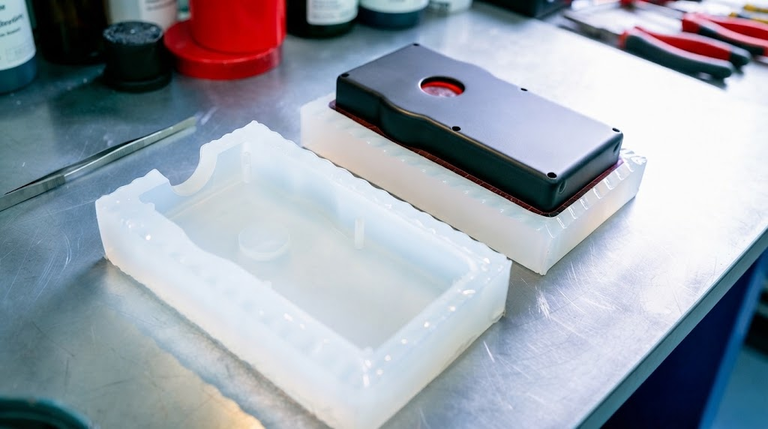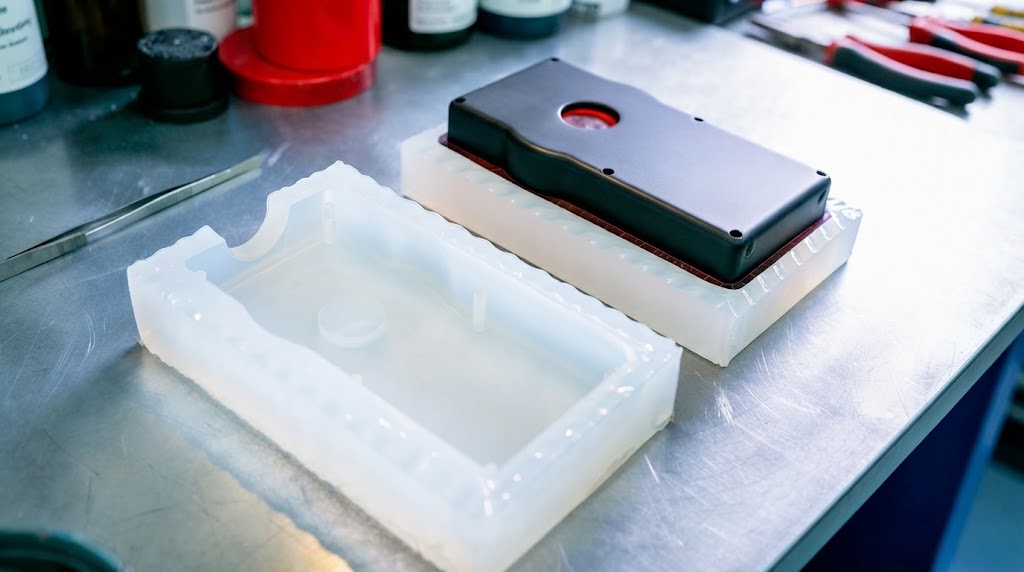
Not only is it necessary to reproduce the outer shape of a component to develop a complex prototype, but it is also necessary to replicate the inner structure of the component. When conventional tooling is costly, undercuts, recessed features, internal contours, and fine surface details can be a challenge for manufacturing. When precision polyurethane parts are needed, but the cost of a production mold is not feasible, a good option is to use a vacuum casting process. Carefully prepared master models and flexible silicone moulds can be used by manufacturers to produce accurate prototypes, test the functionality of the designs, and modify the complex geometry before going into production in larger quantities.
- Understanding Undercuts in Complex Prototype Design
Features that are recessed or overhanging that do not allow a component to be extracted from a normal rigid mold are called undercuts. These include snap-fit hooks, side grooves, recessed mounting points, curved retaining clips, and some internal cavities. These geometries may make tooling more difficult since rigid molds may involve the addition of slides, lifters, or even separate molds to ensure part removal.
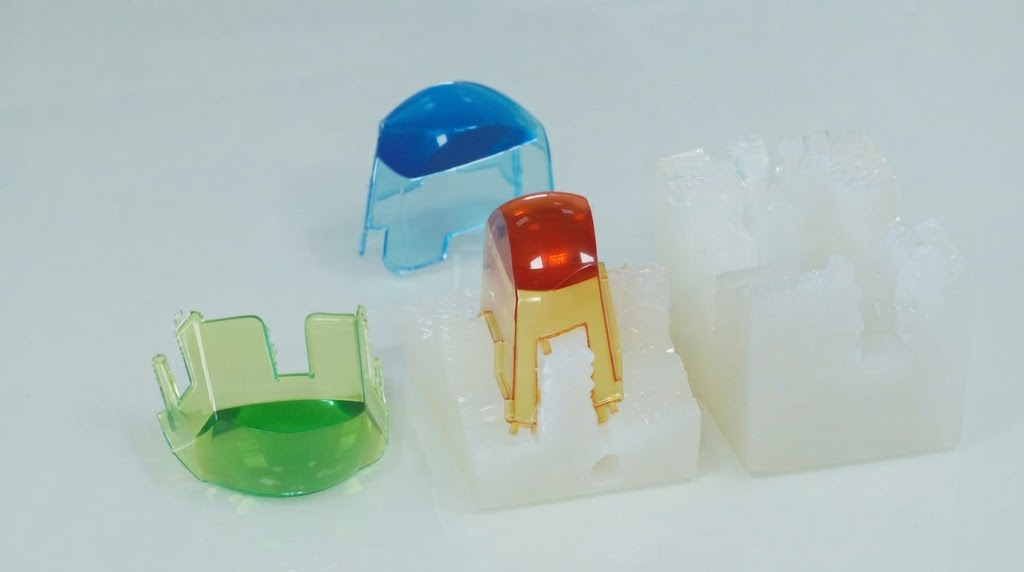
Vacuum casting is a solution to many of these issues with flexible silicone moulds. Silicone can be bent during the demolding process, and suitably designed undercuts can be released without harming delicate features. This versatility is perfect for complex prototypes having intricate geometries, without the need for costly injection molding tooling.
- Why Silicone Molds Support Intricate Geometries
One great benefit of silicone molds is when the prototype design has complicated surfaces and gentle surface changes. Unlike rigid tooling, flexible silicone can be slightly changed when the finished product is taken out. This property allows maintaining features that may be otherwise difficult to mold.
The geometry, material properties, and demoulding requirements for the component should still be considered in the design of the mould. Deep undercuts, narrow openings, and fragile protrusions may require carefully placed parting lines or cuts. All of these are considerations that mold makers consider before going into production, and for experienced mold makers, they must take into account the accuracy of the features, the durability of the mold, and repeatable removal of parts.
- How Urethane Casting Services Produce Detailed Prototypes
It begins with a master model that is CNC machined (or 3D printed) from CAD data. All successive casts are based on its size, surface texture, and shape. The master is then inspected and coated with liquid silicone and hardened to form a soft mold. The master is then taken out, creating a cavity that takes the form and surface texture of the master.
The cavity is subjected to vacuum during casting to reduce the chance of air and bubbles being trapped in the cast part. The component is then cured, cooled, and carefully demolded. Useful for complex prototypes, urethane casting services make this process possible, where the relatively cheap tooling is used for small-batch production and detailed reproduction. Depending on the design and material needs, the process can be adjusted to include components that have multiple materials and/or custom colors.
- Design Considerations for Successful Undercut Casting
The correct casting involves preparing the geometry for filling the mould and ensuring the casting is removed safely from the mould. While flexible silicone offers many undercuts, some shapes may not be repeatable without some modifications. The thickness, narrowness of the channels, depth of the walls, and potential tear points of the mold should be considered.
Several practical considerations help improve results:
- Wall thickness: A minimum thickness of approximately 0.75 mm may be possible, while around 1.5 mm generally supports more reliable filling.
- Parting lines: Position mold splits strategically to reduce visible seams and simplify demolding.
- Sharp features: Review thin hooks, delicate edges, and deep recesses for potential damage during removal.
- Air evacuation: Identify pockets where air could become trapped and interfere with surface quality.
- Dimensional expectations: Account for material behavior and the stated manufacturing tolerance during design validation.
These decisions should be assessed together rather than independently. A small geometry adjustment can improve mold filling, protect delicate features, and simplify subsequent assembly testing.
- Material Selection and Functional Evaluation
There are various formulations of polyurethane casting resins that can be used to make prototypes that are rigid, flexible, or a combination of both. Cast parts can be made to mimic hard plastic enclosures, soft plastic, or elastomer parts. You can also colour the resin using pigments, and there is the possibility of painting and texturing.
The material chosen should be representative of the material to be evaluated in the prototype. A rigid resin is suitable for enclosure size and mounting configuration evaluation, and a flexible resin is suitable for clips or deformable cover evaluation. But cast polyurethane does not necessarily provide all the characteristics of an injection-molded thermoplastic. Engineers should make comparisons with relevant mechanical and environmental characteristics, and not draw conclusions regarding final production performance.
- Benefits for Low-Volume Manufacturing
Vacuum casting is one of the available options for intermediate prototypes that is viable between one-off prototyping and investing in production tooling. Silicone molds are cheaper than traditional injection molds and are perfect for small quantity orders, design iterations, and initial market testing. A mold will typically last about 20 copies, depending on the type of casting material and the complexity of the mold.
In addition to CNC machining, injection molding, and other manufacturing services, 3ERP also offers vacuum casting. Lead time can be as short as 15 days or less for a typical order of 20 parts. In this way, teams can analyze the physical components, compare various designs, and create models for presentation prior to purchasing large manufacturing equipment.
- Applications Across Product Development
There are several functions for complex cast prototypes in the engineering and product development process—access and assembly, fit and appearance of enclosures and covers. Consumer product components can be concept reviewed, and complicated housings can be checked for mounting points and recessed interfaces for clearances.
Vacuum casting is also used for display models, investor presentations, trade show samples, and limited production runs. It can regenerate its surface, which is useful when appearance is of concern as well as dimensional consistency. But when the parts are designed for heavy mechanical loads, high temperature, or long service life, then the material must be tested accordingly before determining its suitability.
- Conclusion
Early product development need not be costly due to the need for rigid tooling for undercuts. Flexible silicone moulds, good master models, and the vacuum-assisted resin filling make complex prototypes more accessible. When designers take into account wall thickness, demolding, and material requirements, the vacuum casting process can be utilized to produce parts with detail for evaluation and in small quantities.
3ERP also possesses the know-how of vacuum casting along with other rapid manufacturing technologies to assist in the connection between design development and production planning. Secondly, choosing the right process at the outset of the design process allows engineering teams to experiment with different shapes and design issues and to optimize parts before moving on to more expensive tooling.