Between taking medication and undergoing surgery lies a category of treatments many patients have never heard of until a specialist mentions them. Interventional pain procedures use precisely targeted injections and minimally invasive techniques to diagnose and treat pain at its source. For patients who have exhausted conservative care but hope to avoid surgery, understanding this middle ground opens options they did not know existed.
The Diagnostic Value
One of the most useful features of these procedures is often overlooked: they help identify where pain actually originates. Imaging shows structure, not pain, and many people have findings on scans that cause no symptoms at all. When a specific joint or nerve is numbed and the pain temporarily disappears, that structure has been identified as the source, which allows treatment to be aimed precisely rather than broadly.
This diagnostic role is why a specialist may perform a temporary block before recommending a longer-lasting treatment.
Common Procedures Explained
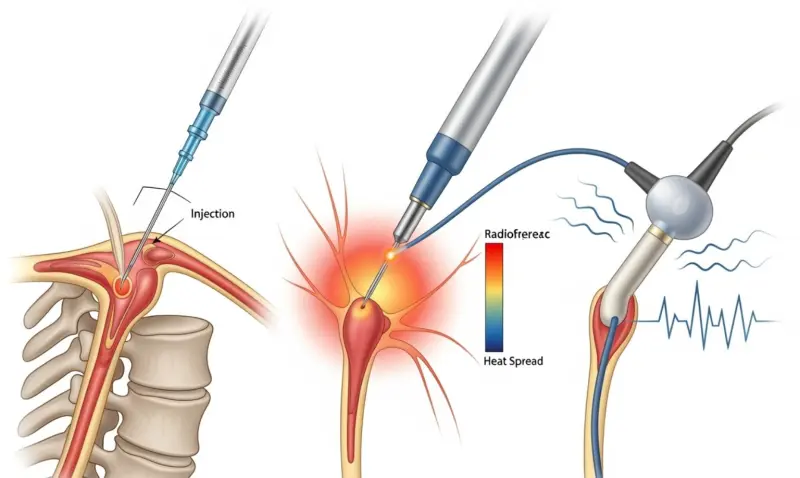
Epidural steroid injections deliver anti-inflammatory medication into the space around irritated spinal nerve roots, most commonly for radiating leg or arm pain from disc problems. Facet joint injections and medial branch blocks address the small joints along the spine that commonly develop arthritis. Sacroiliac joint injections target the joint connecting spine and pelvis, a frequently missed source of lower back pain.
Radiofrequency ablation follows successful diagnostic blocks. Using heat delivered through a precisely placed needle, it interrupts the specific small nerves carrying pain signals from an arthritic joint, often providing relief lasting many months to over a year, after which it can be repeated.
Trigger point injections address knotted, painful muscle areas, and various nerve blocks target specific nerves producing localized pain. Practices offering comprehensive Pain Management in Jacksonville typically provide this full range so treatment can be matched to diagnosis rather than the reverse.
What the Experience Involves
Most procedures are performed in an outpatient setting using imaging guidance such as fluoroscopy or ultrasound, which allows precise needle placement. Local anesthetic numbs the skin, and light sedation is available for many procedures. The procedure itself typically takes minutes rather than hours, and patients usually go home shortly afterward.
Expect some soreness at the injection site for a day or two. Depending on the treatment, relief may be immediate from local anesthetic, then return briefly before the longer-acting effect develops over several days.
Realistic Expectations
Honesty matters here. These procedures do not work for everyone or for every pain source, results vary in both degree and duration, and they are generally most effective as part of a broader plan that includes physical rehabilitation. A specialist who explains the probability of benefit for your specific situation, and what the plan is if a procedure does not help, is giving you the information you need.
Who Should Perform Them
These are medical procedures requiring precision near sensitive structures. Look for physicians with fellowship training in pain medicine, board certification, appropriate imaging guidance as standard practice, and clear explanations of risks alongside benefits. When performed by qualified specialists on well-selected patients, interventional procedures represent one of the most valuable middle options in modern pain care.
About the Author