Few cosmetic treatments are as widely discussed and as poorly understood as botulinum toxin injections. Patients often arrive believing the product fills wrinkles, freezes the entire face, or accumulates permanently in the body. None of those things are true, and understanding the actual mechanism makes it far easier to decide whether the treatment suits your goals.
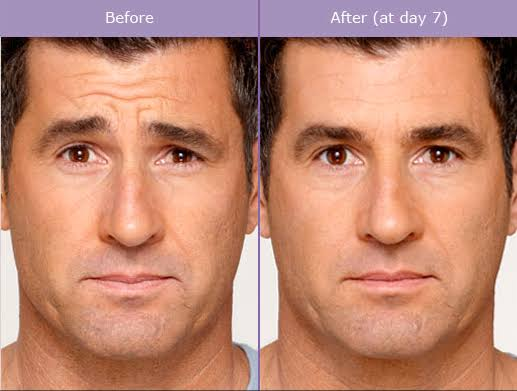
Botulinum toxin type A is a purified protein that temporarily blocks the chemical signal between a nerve ending and a muscle fibre. When that signal is interrupted, the treated muscle contracts less forcefully. Because many facial lines are created by repeated muscle movement rather than by lost volume, reducing that movement allows the overlying skin to smooth out. This is why the treatment works beautifully on frown lines, forehead creases, and crow’s feet, and why it does very little for the deep folds that run from the nose to the mouth.
The distinction between dynamic and static lines is the key to realistic expectations. Dynamic lines appear when you make an expression and disappear when your face is at rest. Those respond well. Static lines are etched into the skin and remain visible even when the muscles are relaxed. Those need a longer approach that may combine neuromodulators with resurfacing, microneedling, or filler, and a provider who explains that distinction honestly is worth keeping.
Onset is gradual rather than immediate. Most patients notice softening within three to five days, with the full effect visible at around two weeks. That timeline matters for planning, because booking treatment two days before a wedding or a photographed event leaves no room for a small refinement. Experienced injectors schedule a two week review specifically so minor asymmetries can be corrected while the result is still settling.
Duration varies with dose, muscle strength, metabolism, and how actively you exercise. Three to four months is typical, though strong muscles in the forehead and glabella sometimes return sooner in the first year of treatment. Patients who maintain a regular schedule often find that intervals lengthen over time, because muscles that contract less forcefully for months gradually lose some of their bulk.
Safety depends far more on injector skill than on the product itself. Placement, depth, dose, and an understanding of individual facial anatomy determine whether the result looks natural or heavy. A drooping eyelid or an eyebrow that sits at an odd angle almost always reflects technique rather than a defective vial. Anyone considering Botox Indialantic FL residents can rely on should confirm who is injecting, how long they have been doing it, and how they handle a result that needs adjusting.
Cost is usually quoted either per unit or per treatment area, and the two are not interchangeable. Per unit pricing is more transparent because it lets you see exactly how much product was used and compare that against future visits. Areas differ in typical dosing, with the frown complex generally requiring more units than crow’s feet, and a provider should be able to explain the plan in those terms before treatment begins.
Good candidates are healthy adults with realistic goals who want expression lines softened rather than erased. Pregnancy, breastfeeding, certain neuromuscular conditions, and active infection at the injection site are reasons to postpone. Beyond that, the decision comes down to preference. Treated well, the outcome should look like a rested version of your own face, not like someone else’s.