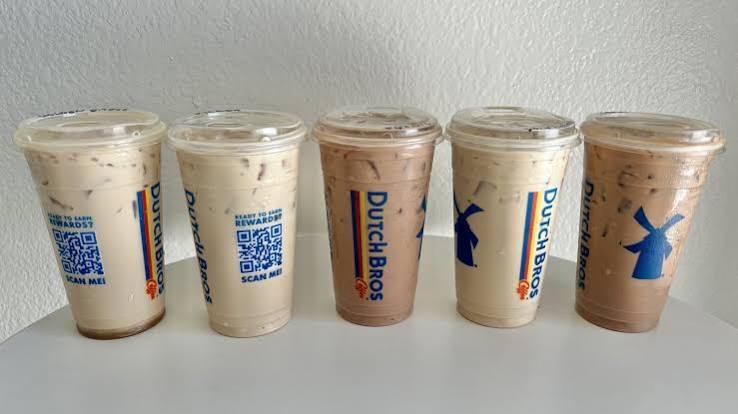
Protein has made its way into almost every part of the food and drink aisle, so seeing it added to coffee is no longer surprising.
Dutch Bros Protein Coffee is a good example.
Instead of simply adding espresso to regular milk, these drinks use protein milk to increase the amount of protein in the finished beverage. Depending on the drink and size, a Protein Coffee can provide more than 20 or even 30 grams of protein.
That sounds straightforward, but the word “protein” does not tell you everything about the drink.
Some Dutch Bros Protein Coffees contain considerably more sugar and calories than others. Size affects the numbers. Flavoring affects them too. Caffeine does not necessarily increase at the same rate as protein.
So, if you are ordering Protein Coffee because you care about nutrition, it helps to look beyond the name.
Here is what the current numbers actually mean.
What Is Dutch Bros Protein Coffee?
Dutch Bros Protein Coffee combines espresso with a higher protein milk instead of using the standard milk or half-and-half found in some other coffee drinks.
The simplest version is the Build Your Own Protein Latte.
It contains espresso and protein milk before any optional flavors or toppings are added.
Dutch Bros currently lists the iced Build Your Own Protein Latte at:
Small, 16 oz: 140 calories, 16 grams protein, 9 grams sugar, 95 mg caffeine
Medium, 24 oz: 220 calories, 26 grams protein, 15 grams sugar, 95 mg caffeine
Large, 32 oz: 280 calories, 32 grams protein, 19 grams sugar, 190 mg caffeine
These figures are for the standard base configuration. Dutch Bros states that the nutrition values do not reflect changes or additions made during customization.
That point becomes important as soon as flavors, sauces, toppings, or other modifications enter the order.
How Much Protein Is in Dutch Bros Protein Coffee?
The exact amount depends on the drink and size.
A plain iced Protein Latte currently ranges from 16 grams of protein in a small to 32 grams in a large.
Flavored versions can be different.
For example, the current iced Golden Eagle Protein contains:
Small: 13 grams protein
Medium: 23 grams protein
Large: 29 grams protein
The Vanilla Protein Latte uses the same protein amounts of 13 grams, 23 grams, and 29 grams for the small, medium, and large sizes.
This creates an interesting question.
Why can the plain Protein Latte contain more protein than some flavored versions?
The finished recipe is what matters. A flavored ingredient can replace some of the volume that would otherwise be occupied by protein milk.
That means you should not assume that adding Protein Coffee to a drink produces the same protein amount in every recipe.
Is 20 to 30 Grams of Protein a Lot?
It can be a meaningful amount, but the answer depends on the person.
Protein needs vary according to factors such as body size, activity level, age, goals, and overall diet.
Someone who weighs less and has relatively modest protein needs may view 20 to 30 grams as a substantial contribution to the day.
Someone who is larger, highly active, or deliberately following a higher protein eating pattern may need considerably more protein across all meals and snacks.
Instead of assuming that everyone needs the same amount, you can estimate your own daily needs using a protein calculator.
Once you have a general daily target, it becomes easier to decide whether 16, 23, 26, or 32 grams from a coffee is meaningful within your overall eating pattern.
The goal is not to consume as much protein as possible. It is to understand how the drink fits into what you already eat.
Protein Coffee Is Not the Same as a Protein Shake
This distinction is easy to miss.
A Protein Coffee contains more protein than a standard coffee drink, but it is still a coffee beverage.
A traditional protein shake is usually designed primarily around delivering protein. Coffee drinks have additional priorities, including flavor, sweetness, milk texture, caffeine, and the overall coffee experience.
That means Protein Coffee may contain:
Protein
Carbohydrates
Naturally occurring milk sugar
Added flavors
Sauces
Caffeine
Fat
Other toppings or mix-ins
You should therefore compare the complete nutrition profile rather than judging the drink only by the protein number.
How Many Calories Are in Dutch Bros Protein Coffee?
There is no single calorie number for Protein Coffee.
The drink and size matter.
The plain iced Build Your Own Protein Latte currently contains:
140 calories in a small
220 calories in a medium
280 calories in a large
Now compare that with the iced Golden Eagle Protein.
It currently contains:
250 calories in a small
330 calories in a medium
380 calories in a large
The medium Golden Eagle Protein therefore contains the same listed 23 grams of protein as the medium Vanilla Protein Latte, but its total calories differ from simpler Protein Coffee options.
This shows why comparing drinks by protein alone can be misleading.
Compare the Plain and Flavored Protein Lattes
The medium size provides a useful comparison.
A medium iced Build Your Own Protein Latte currently contains 220 calories and 26 grams of protein.
A medium iced Vanilla Protein Latte contains 280 calories and 23 grams of protein.
A medium iced Golden Eagle Protein contains 330 calories and 23 grams of protein.
The difference is not because protein suddenly contains more calories.
It comes from the complete recipe.
Vanilla, caramel, drizzle, and other ingredients contribute additional calories and carbohydrates while also changing how much protein milk fits into the drink.
If maximizing protein for a certain calorie amount matters to you, a simpler Protein Latte can therefore be easier to understand.
If flavor matters more, you may prefer one of the specialty versions.
Neither choice needs to be labeled good or bad.
They simply serve different preferences.
Does Dutch Bros Protein Coffee Contain Sugar?
Yes.
This surprises some people because “protein” is sometimes mentally associated with low sugar foods.
Protein content and sugar content are separate nutritional measurements.
The plain iced Build Your Own Protein Latte currently contains 9 grams of sugar in a small, 15 grams in a medium, and 19 grams in a large.
The Vanilla Protein Latte contains considerably more:
Small: 27 grams sugar
Medium: 34 grams sugar
Large: 37 grams sugar
The Golden Eagle Protein currently contains:
Small: 38 grams sugar
Medium: 44 grams sugar
Large: 47 grams sugar
Again, the protein milk is only part of the recipe.
Flavoring and other ingredients matter.
What About Zero Sugar Added Protein Coffee?
Dutch Bros also offers Zero Sugar Added Protein Coffee options.
These can make a substantial difference in total sugar, but the wording needs to be understood correctly.
Zero Sugar Added does not mean zero sugar.
For example, Dutch Bros currently lists its iced Vanilla Zero Sugar Added Protein Latte at:
Small: 120 calories, 13 grams protein, 8 grams sugar
Medium: 200 calories, 23 grams protein, 14 grams sugar
Large: 260 calories, 29 grams protein, 17 grams sugar
The drink can still contain sugar naturally present in ingredients such as milk.
This is why “zero sugar added” and “zero grams of sugar” are not interchangeable statements.
Regular Vanilla Versus Zero Sugar Added Vanilla
This is one of the clearest comparisons on the menu.
A medium iced Vanilla Protein Latte currently contains:
280 calories
23 grams protein
34 grams sugar
95 mg caffeine
The medium iced Vanilla Zero Sugar Added Protein Latte contains:
200 calories
23 grams protein
14 grams sugar
95 mg caffeine
The protein and caffeine are the same in these current standard configurations, while calories and sugar differ.
That makes the comparison useful for someone who enjoys vanilla but wants to understand what changing the sweetener does to the rest of the nutrition profile.
It does not mean everyone needs the Zero Sugar Added version.
Some people prefer regular flavor. Others may not enjoy the taste of sugar-free flavorings.
Nutrition information helps you understand the tradeoff. Taste still matters.
Zero Sugar Added Does Not Mean Zero Calories
This rule applies across more than Protein Coffee.
Ingredients such as protein milk still contain energy.
Even when added sugar is reduced, the milk, fat, carbohydrates, protein, and other components of the drink still contribute calories.
For example, the current large Vanilla Zero Sugar Added Protein Latte contains 260 calories despite being labeled Zero Sugar Added.
That is not a contradiction.
It simply reflects the difference between sugar and calories.
Calories can come from protein, carbohydrates, and fat.
Removing or reducing one source of sugar does not remove every calorie from the drink.
What About the Hopscotch Protein Latte?
The current Dutch Bros nutrition guide also includes Hopscotch Protein Latte options.
The standard version can contain substantially more sugar than the Zero Sugar Added version.
For example, Dutch Bros currently lists the iced medium Hopscotch Zero Sugar Added Protein Latte at 290 calories, 21 grams of protein, 13 grams of sugar, and 95 mg of caffeine.
This provides another reminder that the flavor name alone does not tell you the nutrition.
You need to know which version you are ordering.
How Much Caffeine Is in Dutch Bros Protein Coffee?
Protein does not determine caffeine.
The caffeine comes primarily from the coffee component of the drink.
Several current iced Protein Coffee options list approximately:
95 mg caffeine in a small
95 mg caffeine in a medium
190 mg caffeine in a large
That pattern may initially look strange.
Why does a medium contain the same listed caffeine as a small?
Because cup size and espresso quantity do not always increase proportionally.
A larger drink can contain more milk and other ingredients without automatically receiving proportionally more espresso.
In these standard drinks, the large includes a higher listed caffeine amount.
This is another reason not to estimate caffeine simply from cup size.
Higher Protein Does Not Mean Higher Caffeine
A drink can contain a lot of protein but relatively moderate caffeine.
Another drink can contain almost no protein but considerably more caffeine.
The two numbers answer completely different questions.
Protein tells you about one macronutrient.
Caffeine tells you about a stimulant naturally present in coffee and added through espresso or other caffeinated ingredients.
If you are sensitive to caffeine, check the caffeine number separately.
Do not assume a drink is mild simply because it contains protein milk.
Which Dutch Bros Protein Coffee Has the Most Protein?
Among the simple iced examples discussed here, the large Build Your Own Protein Latte currently provides 32 grams of protein.
The large Vanilla Protein Latte and Golden Eagle Protein each list 29 grams.
However, “most protein” is not necessarily the only useful way to compare drinks.
You may also want to know:
How many calories accompany that protein?
How much sugar is present?
How large is the drink?
How much caffeine does it contain?
Does it contain flavors or toppings you actually enjoy?
Looking at all of these together gives you a more useful answer.
Protein Per Calorie Can Be a Helpful Comparison
Suppose your goal is simply to choose a drink that provides a useful amount of protein without adding many other ingredients.
In that situation, comparing protein relative to total calories can help.
Consider the medium versions.
The plain Protein Latte currently provides 26 grams of protein for 220 calories.
The Vanilla Protein Latte provides 23 grams for 280 calories.
The Golden Eagle Protein provides 23 grams for 330 calories.
The flavored drinks are not “worse.”
They simply allocate more of their calories to ingredients that provide flavor and sweetness rather than additional protein.
This is useful information if protein is the main reason you chose the drink.
If taste is the main reason, the comparison may matter much less to you.
What Changes When You Customize Protein Coffee?
This is where nutrition calculations become harder.
Dutch Bros allows customers to change several parts of an order.
Depending on the drink, you may be able to modify:
Size
Flavor
Sweetness
Milk
Espresso
Toppings
Soft Top
Sweeteners
Drizzles
Other mix-ins
Once you change the standard recipe, the published standard nutrition value may no longer describe your drink.
Dutch Bros specifically states that the nutrition facts shown on its menu pages do not reflect changes or additions to the base configuration.
This explains why people sometimes get different estimates for customized Protein Coffee orders.
Why Soft Top Can Matter
A common example is adding Soft Top to an otherwise relatively simple Protein Latte.
Someone may calculate the milk, coffee, and flavor correctly, then forget that the topping is another part of the drink.
If you are tracking calories or macros closely, everything that goes into the cup counts.
That includes toppings.
It does not mean you need to remove them.
You may decide that Soft Top is the part you enjoy most and keep it.
The important thing is simply to include it when estimating the complete drink.
How to Compare Dutch Bros Protein Coffees More Easily
Trying to remember every current menu value becomes difficult quickly.
A simpler approach is to compare the drinks together.
The Dutch Bros nutrition calculator from Macro & Meals can be used to look through Dutch Bros items and compare calories, protein, carbohydrates, and fat.
For example, you can compare a regular coffee with its Protein Coffee counterpart or look at several sizes before deciding which one fits what you are looking for.
A calculator is most useful as a comparison tool.
Restaurant drinks are individually prepared, and customized orders can differ from the standard nutrition listing.
Is Protein Coffee a Meal Replacement?
It is better not to assume that a drink becomes a complete meal simply because it contains 20 or 30 grams of protein.
Protein is only one nutritional component.
A balanced meal can also provide foods with fiber, essential fatty acids, vitamins, minerals, and a range of other nutrients.
Some Protein Coffees can certainly contribute a meaningful number of calories and protein.
Whether that is enough for a particular eating occasion depends on the person and what else they consume.
For some people, Protein Coffee may accompany breakfast.
Someone else might drink it between meals.
Another person may simply order it because they prefer the texture or taste.
There is no need to give the drink a role it was not specifically designed to fill.
Can Protein Coffee Help You Reach a Daily Protein Target?
It can contribute.
Suppose someone has a daily protein target and usually struggles to reach it.
A drink containing 23 or 26 grams of protein could account for part of that total.
However, the rest of the day’s food still matters.
If you want to understand your approximate protein needs first, a protein calculator can give you a personalized starting estimate based on factors such as body weight and activity.
Then you can view the protein from coffee in context.
For example, 26 grams has much more meaning when you know whether your approximate daily target is closer to 70 grams, 100 grams, 140 grams, or another amount.
Protein Coffee Versus a Regular Golden Eagle
The Golden Eagle provides an interesting comparison because both a regular and Protein version are available.
Dutch Bros currently lists a medium iced regular Golden Eagle at 460 calories, 39 grams of sugar, and 10 grams of protein.
The medium iced Golden Eagle Protein is currently listed at 330 calories, 44 grams of sugar, and 23 grams of protein.
This comparison demonstrates why it is risky to make assumptions from names alone.
The Protein version has more than twice the listed protein in this comparison and fewer total calories, but it also has a slightly higher listed sugar amount.
Different nutrients can move in different directions.
There is rarely one number that describes the entire drink.
Do You Need the Highest Protein Option?
Not necessarily.
More is not automatically better.
If your normal meals already provide enough protein for your needs, you may not need to choose coffee based on protein at all.
On the other hand, if breakfast tends to contain very little protein, a Protein Latte might make your morning intake more substantial.
Your complete diet matters more than maximizing a single nutrient in one beverage.
This is why having some idea of your personal needs is more useful than following a rule such as “always choose the drink with the most protein.”
Who Might Find Protein Coffee Useful?
Protein Coffee may appeal to people who already enjoy milk-based coffee and would prefer their drink to contribute more protein.
That might include someone who:
Has a busy morning
Normally chooses a latte anyway
Tracks protein intake
Exercises regularly
Prefers drinking some of their protein
Wants to compare a standard latte with a protein milk version
These are practical reasons.
They do not mean Protein Coffee is necessary for health, fitness, or muscle growth.
You can obtain protein from many ordinary foods.
Coffee is simply one possible source when protein milk is used.
Do Not Forget About Allergens
Dutch Bros Protein Coffee uses milk.
Current menu listings for drinks such as the Build Your Own Protein Latte, Vanilla Protein Latte, and Golden Eagle Protein identify milk as an allergen.
Some flavored drinks can include additional allergens depending on ingredients and customizations.
Anyone with a food allergy should use the restaurant’s current allergen information and speak directly with staff when necessary.
Nutrition calculators are useful for comparing nutrients, but they should not replace restaurant allergen procedures for someone with a medically significant allergy.
Five Questions to Ask Before Ordering
You can make Protein Coffee much easier to understand by asking five simple questions.
1. What size am I ordering?
Protein, calories, sugar, and caffeine can all change with size.
2. Is this the plain or flavored version?
Flavoring can substantially change calories and sugar.
3. Am I ordering regular or Zero Sugar Added flavor?
These versions can have very different nutrition profiles.
4. Am I adding toppings or additional ingredients?
Soft Top, sauces, drizzles, and other additions count too.
5. What number actually matters to me?
Maybe you care mostly about protein.
Maybe you track calories.
Maybe sugar matters.
Maybe caffeine is the main concern.
Looking for the one “best” drink makes less sense than deciding what information is relevant to you.
Current Menu Numbers Can Change
Restaurant nutrition information changes over time.
Recipes are updated.
Seasonal drinks come and go.
Ingredients can change.
New Protein Coffee combinations can appear.
For that reason, older TikTok videos, Reddit posts, screenshots, and nutrition lists may not match the current menu.
Use current official information when an exact figure matters.
That is especially important if you heavily customize the drink.
The Bottom Line
Dutch Bros Protein Coffee can provide a meaningful amount of protein.
A standard iced Build Your Own Protein Latte currently contains between 16 and 32 grams depending on size, while several flavored Protein Coffees provide roughly 13 to 29 grams.
But protein is only part of the picture.
Calories, sugar, caffeine, serving size, flavors, and toppings can vary significantly from one drink to another.
A plain Protein Latte and a Golden Eagle Protein may both be called Protein Coffee, but they do not have identical nutrition profiles.
The easiest approach is to decide what you care about first.
If protein is your priority, compare the protein amount with total calories.
If sugar matters, compare the regular and Zero Sugar Added versions.
If caffeine matters, check it separately.
If you customize your drink, remember that the standard menu numbers may no longer apply exactly.
Protein Coffee does not need to be treated as a health product or a perfect meal.
It is simply another coffee option with more protein than many standard coffee drinks.
Understanding the complete nutrition information allows you to decide whether it fits your preferences and your overall eating pattern.