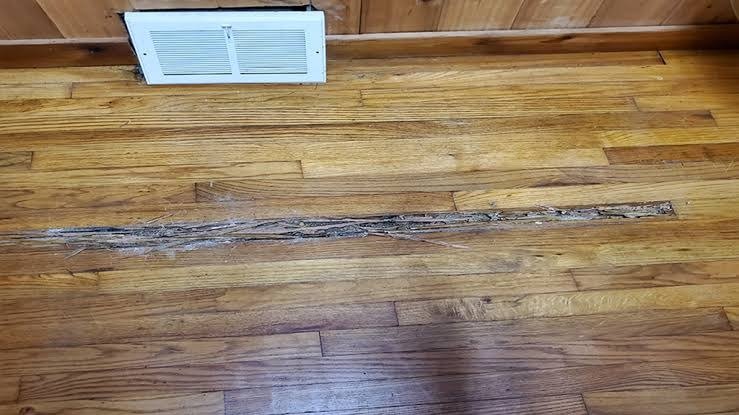
Finding termite damage is unsettling enough. Working out what to do about it is harder, because the timber in front of you gives very little away. A skirting board with a few holes might be fine. A floor joist that looks almost untouched might be close to hollow. Homeowners are left guessing whether they are facing a weekend repair or a structural job, and guessing is the expensive option.
How termites affect timber
Termites work from the inside out. They follow the softer grain within a piece of timber and leave the outer surface intact, because that surface protects them from light and air. The result is a member that can look sound while most of its interior has been eaten away into galleries.
This is why visible damage rarely reflects the real extent of it. A few pinholes, a blistered paint surface, or a section that sounds hollow when tapped can sit above significant internal loss. Structural strength depends on how much solid cross-section remains, not on how the outside looks.
When termite-damaged timber can be repaired
Repair is realistic when the damage is limited, and enough sound timber remains to do the job it was installed for.
Non-structural timber such as skirting, architraves and trim is simply replaced or patched at low cost. Where a structural member has localised damage, a builder can often cut out the affected section and splice in new timber, or bolt a new member alongside the existing one to carry the load. For heritage or decorative elements, resin consolidation systems can rebuild lost sections while preserving the original character. Steel reinforcement is another option where full replacement would mean dismantling far more of the building than the damage warrants.
When timber needs to be replaced
Replacement becomes the safer option when strength has genuinely gone.
The signs include timber that crumbles or gives way under moderate probing, extensive galleries running along the length of a member rather than in one spot, substantial loss of cross-section, and fungal decay present alongside the termite damage. Primary structural members where the internal extent cannot be confirmed usually fall into this group as well.
If floors have dropped, doors have stopped closing properly or roof lines have shifted, the building has already responded to the damage. That is a structural repair, not a patch, and filling voids with wood filler restores no strength at all.
Why treating the termite problem comes first
None of this matters if the colony is still active. New timber installed alongside a live infestation becomes the next food source, and repairs completed before treatment are money spent twice.
Arranging termite pest control Sydney homeowners can rely on should come before any carpentry begins. A professional assessment establishes whether activity is current, identifies the species involved and determines the treatment approach, whether that is a chemical barrier, a baiting system or a combination. Repairs start once treatment is in place and confirmed.
What happens during a professional assessment
A thorough inspection covers considerably more than the damaged timber itself.
The technician examines the affected area, then works outwards through the subfloor, wall cavities, roof void, garden beds, fences and any timber in contact with soil, looking for the nest and the paths back to it. Moisture readings matter too, since termites follow water and damp timber is easier for them to attack.
The assessment also records conducive conditions: leaking taps, blocked weep holes, poor subfloor ventilation, mulch banked against walls, stored timber. These are what made the property attractive in the first place, and leaving them unchanged invites a repeat.
Repair or replacement: making the right decision
The decision rests on three things: how far the damage extends, what condition the remaining timber is in, and whether the component is structural.
Localised damage in non-structural timber is straightforward. Significant loss in a bearer, joist, stud or roof member belongs with a builder, and often a structural engineer. The pest technician deals with the colony, the builder deals with the structure, and confusing those two roles is how people end up with a treated house that still isn’t safe.
Frequently asked questions
Will home insurance cover this?
Generally no. Australian policies treat termite damage as a maintenance issue rather than a sudden event, so the cost usually sits with the owner.
Can I assess the damage myself?
You can identify obvious signs, but the internal extent needs probing and experience to judge. Anything structural should be assessed professionally.
What stops it happening again?
A termite management system suited to the property, fixing the moisture and conducive conditions, and annual inspections.
About the Author