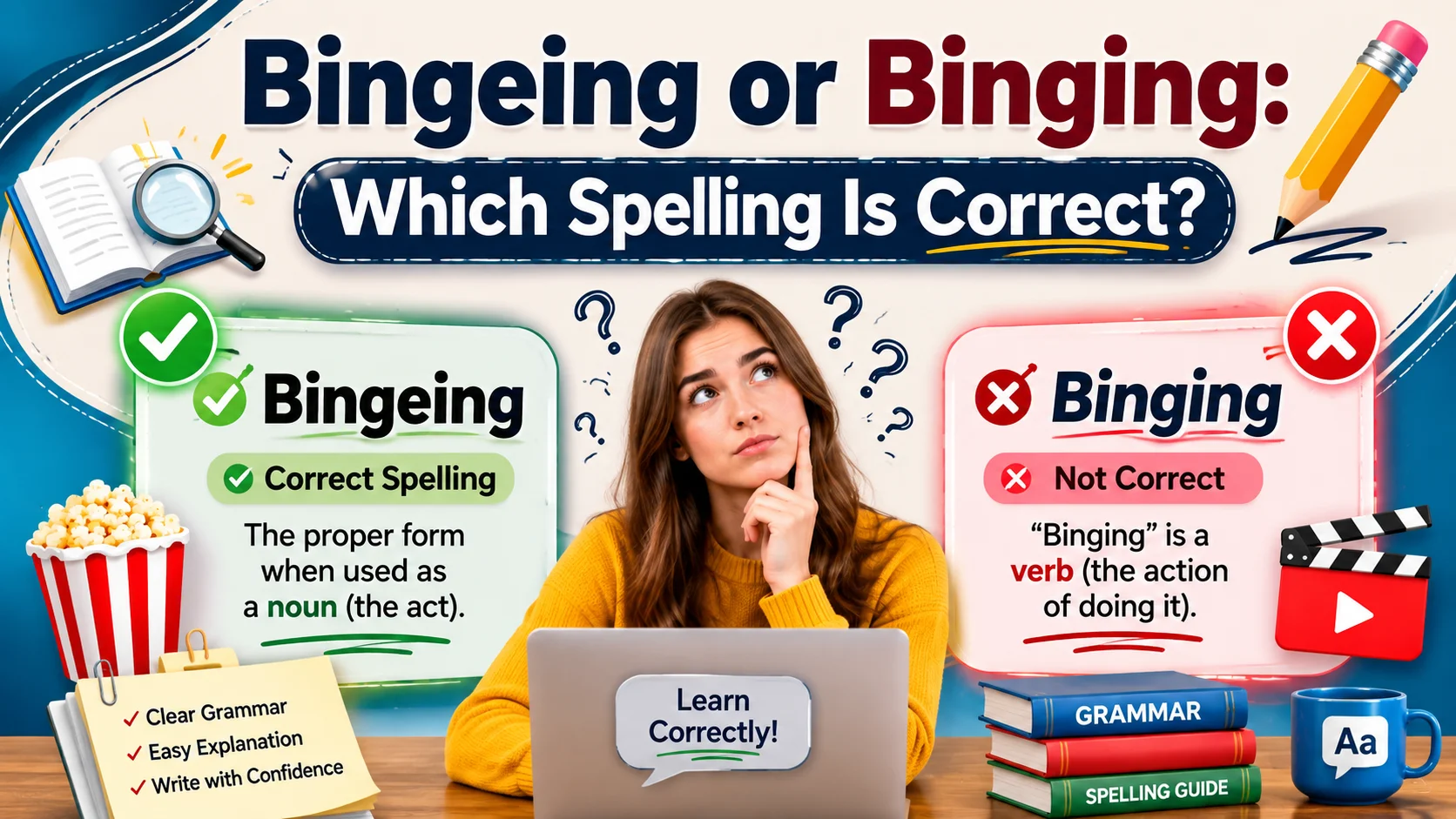
Bingeing or Binging can describe watching several episodes, eating a large amount of food, or doing something excessively in a short period. Both forms have the same meaning, so choosing one doesn’t usually change what you’re trying to say. Bingeing keeps the original spelling more visible, while binging follows the common English spelling pattern of dropping a final silent e before adding -ing. This difference can make the two spellings look different, even though they sound similar and refer to the same action. In my experience, this is why careful writers often check the dictionary before choosing a form.
The difference between the two forms also reflects language evolution and changing usage. Bingeing has long-standing dictionary support and was traditionally considered the correct form for indulging excessively. Over time, however, binging became an acceptable variant and grew more popular, especially in informal contexts and online discussions. Today, both terms are commonly used interchangeably, although binging may appear more often in casual writing. Your choice can depend on personal preference or the style guide you follow when writing professionally.
This small spelling variation is part of a wider English pattern that can challenge native speakers. The language is peppered with pairs that create confusion, especially when two forms look different but share a meaning. Understanding the nuances of bingeing and binging can help you feel more confident in your language skills and understand what sets them apart. Once you know that both forms have dictionary support and are accepted in modern English, the choice becomes much less of a mix-up.
Quick Answer: Bingeing or Binging?
Bingeing and binging are both correct spellings. They are present participle and gerund forms of the verb binge, and they generally have the same meaning.
For example:
- She is bingeing her favorite show.
- She is binging her favorite show.
Both sentences mean that she is watching a large amount of the show, usually over a relatively short period.
Major dictionaries recognize both forms. Oxford lists bingeing and binging, while Merriam-Webster also gives both as forms of binge.
| Spelling | Correct? | Meaning | Example |
| Bingeing | Yes | Doing something excessively or continuously | We’re bingeing a new series. |
| Binging | Yes | Same meaning | We’re binging a new series. |
If you need a simple default for careful writing, bingeing is a good choice because it keeps the connection to the base word binge obvious. However, binging isn’t a mistake.
What Does “Binge” Mean?
To understand bingeing or binging, start with the base word binge.
As a noun, binge refers to a short period of excessive activity or consumption. The activity could involve food, alcohol, entertainment, shopping, or something else.
For example:
- He went on a shopping binge.
- She had a weekend movie binge.
- They went on a food binge.
As a verb, binge means to do something excessively or continuously for a period of time.
You might say:
- I binge on documentaries.
- She binged the entire series.
- They binge on snacks while watching movies.
The word has become especially common because of streaming entertainment. People now regularly talk about binge-watching entire seasons rather than waiting for one episode each week.
Why Are There Two Spellings?
The difference between bingeing and binging comes from spelling conventions.
When many English verbs ending in silent e take -ing, they drop the final e:
- make → making
- write → writing
- take → taking
- hope → hoping
Following that pattern gives us:
binge → binging
However, English spelling doesn’t always follow one perfectly consistent rule. The form bingeing also developed and remains a standard dictionary-listed form.
So you may encounter:
binge + ing = bingeing
and:
binge + ing = binging
Both forms refer to the same action.
This is a useful reminder that spelling rules describe common patterns rather than controlling every English word with absolute precision.
Bingeing: Meaning and Usage
Bingeing is the spelling that retains the final e from binge.
It’s a well-established form and works naturally in both formal and informal writing.
Consider these examples:
- She spent the evening bingeing television shows.
- He was bingeing on snacks during the game.
- They stayed home bingeing their favorite comedy.
- I spent the weekend bingeing old movies.
The spelling makes the relationship between bingeing and binge easy to see.
For writers who prefer a more traditional-looking form, bingeing can be a comfortable choice. It also avoids any momentary visual confusion with the separate word Bing.
Binging: Meaning and Usage
Binging drops the final e before adding -ing.
Although some people initially assume it’s incorrect, major dictionaries recognize it as a legitimate form.
Examples include:
- We’re binging a new series tonight.
- She was binging on chocolate.
- He spent the afternoon binging movies.
- They were binging videos online.
The meaning doesn’t change when you replace bingeing with binging.
That’s the key point.
If a sentence works with bingeing, it will generally work with binging as well.
Bingeing or Binging: Is There a Difference in Meaning?
No meaningful difference exists between the two forms when they come from the verb binge.
Compare:
She is bingeing on mystery shows.
and:
She is binging on mystery shows.
Both sentences describe the same behavior.
The difference is simply the spelling of the present participle or gerund.
This means you shouldn’t write an article suggesting that bingeing refers to television while binging refers to food. That’s not how the words work.
Both forms can describe many different activities.
Examples of interchangeable usage
Entertainment:
- We’re bingeing a comedy series.
- We’re binging a comedy series.
Food:
- He was bingeing on cookies.
- He was binging on cookies.
Books:
- She spent Sunday bingeing mystery novels.
- She spent Sunday binging mystery novels.
Videos:
- They were bingeing online videos.
- They were binging online videos.
The context tells readers what kind of activity you’re describing.
Which Is Correct: Bingeing or Binging?
The most accurate answer is both.
This distinction matters because many spelling articles incorrectly treat one form as completely wrong. Major dictionaries don’t support that claim.
Oxford lists bingeing and binging as forms of binge. Merriam-Webster also recognizes binging as an alternative form.
Therefore:
Bingeing = correct
Binging = correct
What matters most in professional writing is consistency.
If you begin an article using bingeing, don’t randomly switch to binging halfway through unless you’re discussing the two spellings themselves.
Bingeing or Binging in American English
Both forms appear in American English.
American writers may encounter bingeing in dictionaries, edited publications, educational material, and general prose. Binging also appears frequently, especially in informal digital writing.
This variation isn’t the same as obvious American-British spelling pairs such as:
- color / colour
- center / centre
- favorite / favourite
Bingeing and binging aren’t simply an American-versus-British distinction.
Both spellings can appear in American English.
If you’re writing for a US audience, either form can work. Choose the one that fits your preferred style and use it consistently.
Bingeing or Binging in British English
British English also uses both forms.
That means you shouldn’t assume that bingeing is British and binging is American or vice versa.
English speakers in different regions may develop preferences based on dictionaries, publications, education, and personal habits. Modern digital communication also spreads spelling variants quickly across national boundaries.
For a British audience, both forms can therefore be understood and used correctly.
How to Use “Binge” as a Verb
Knowing the complete verb forms helps you use bingeing or binging correctly.
| Verb form | Function | Example |
| binge | Base form | I binge on documentaries. |
| binges | Third-person singular | She binges on reality shows. |
| binged | Past tense | We binged the series yesterday. |
| bingeing | Present participle | They are bingeing the show. |
| binging | Alternative present participle | They are binging the show. |
The past tense deserves special attention.
You should write:
I binged the entire series.
Not:
I binge the entire series yesterday.
The word yesterday places the action in the past, so binged is required.
Bingeing vs. Binging vs. Binged
These three forms have different grammatical functions.
Bingeing and binging describe an ongoing activity or act as gerunds.
Binged describes a completed past action.
Compare these sentences:
- I binge shows every weekend.
- She binges crime dramas.
- We binged the entire season.
- They are bingeing a new show.
- They are binging a new show.
The final two sentences demonstrate the spelling variation directly.
Both are grammatically valid.
Binge-Watching and Modern Usage
One reason bingeing and binging appear so often today is the popularity of streaming.
Traditional television schedules encouraged viewers to watch one episode at a time. Streaming services changed that habit by making multiple episodes available immediately.
That shift helped popularize terms such as:
- binge-watch
- binge-watching
- bingeable
- bingeing
- binging
For example:
We planned to watch one episode, but we ended up bingeing the whole season.
The sentence captures a common modern use of binge: consuming a large amount of entertainment in one concentrated stretch.
Bingeing or Binging With “On”
The expression binge on is particularly common when you want to identify what someone is consuming.
Examples:
- She bingeed on chocolate.
- He was bingeing on television.
- They were binging on snacks.
- I sometimes binge on mystery novels.
You can also use binge directly with certain objects:
- We binged the entire series.
- She binged the show over the weekend.
The exact construction depends on what you’re trying to express.
Common Mistakes With Bingeing and Binging
This section highlights common errors learners make when using “bingeing” and “binging,” including confusion about spelling, meaning, and correct usage.
Mistake 1: Calling “binging” incorrect
This is the most common misconception.
Binging is recognized as an English word when it functions as the present participle of binge.
So don’t automatically correct it.
Mistake 2: Claiming “bingeing” is outdated
That’s also inaccurate.
Bingeing remains a recognized spelling.
It’s not an obsolete form that modern English has abandoned.
Mistake 3: Giving the two spellings different meanings
There’s no standard meaning difference between the two forms.
The spelling changes. The underlying verb doesn’t.
Mistake 4: Mixing spellings without reason
A polished article should generally choose one spelling.
For example, this looks inconsistent:
She was bingeing television shows. Later, she started binging movies.
Unless the writer intentionally wants to demonstrate both spellings, there’s little reason to switch.
Mistake 5: Confusing “binging” with Bing
The spelling binging can visually resemble the name Bing, but the two aren’t related in this context.
In “They were binging movies,” the word comes from binge.
How to Choose Between Bingeing and Binging
When both forms are correct, how should you choose?
Use these practical guidelines:
- Choose “bingeing” if you want to preserve the base word’s spelling.
- Choose “binging” if that form fits your established style.
- Follow a specific house style when you’re writing for a publication.
- Follow your instructor’s required dictionary or style guide when applicable.
- Keep the spelling consistent throughout the article.
- Don’t label binging as a spelling mistake without checking the context.
For general US English writing, bingeing is a safe default. However, binging is also entirely acceptable.
Easy Trick to Remember Bingeing or Binging
If spelling variations make your brain do a little backflip, use the base word as your anchor.
Start with:
BINGE
Then remember that the two accepted forms are:
BINGEING
and
BINGING
The first keeps the e.
The second removes it.
Neither changes the meaning.
That distinction is much more useful than trying to memorize a complicated rule.
Bingeing or Binging: Examples in Everyday Sentences
Here are several natural examples:
Entertainment
- We spent Friday night bingeing a detective series.
- We spent Friday night binging a detective series.
Food
- He was bingeing on snacks during the movie.
- He was binging on snacks during the movie.
Reading
- She spent the weekend bingeing mystery novels.
- She spent the weekend binging mystery novels.
Online videos
- They stayed up late bingeing videos.
- They stayed up late binging videos.
Past activity
- We binged the entire season last weekend.
Notice that binged doesn’t have the same spelling variation. The main question applies to the -ing form.
Bingeing or Binging: Side-by-Side Comparison
| Feature | Bingeing | Binging |
| Base word | Binge | Binge |
| Grammatical form | Present participle/gerund | Present participle/gerund |
| Meaning | Excessive or continuous activity | Same |
| Final e | Retained | Dropped |
| Pronunciation | Generally the same | Generally the same |
| Dictionary recognition | Yes | Yes |
| US English | Correct | Correct |
| British English | Correct | Correct |
| Meaning difference | None | None |
| Best writing practice | Use consistently | Use consistently |
Conclusion
Both bingeing and binging are accepted spellings with the same basic meaning. Bingeing is the traditional form, while binging has become common in modern, especially informal, English. You can use either form, but if you’re following a specific style guide, check its preferred spelling.
FAQs
Q1. Is “bingeing” or “binging” correct?
Both bingeing and binging are correct spellings. They have the same meaning and can be used to describe doing something excessively over a short period.
Q2. Which spelling is more common, bingeing or binging?
Binging has become increasingly common, particularly in informal writing and online discussions. However, bingeing remains a standard and widely recognized spelling.
Q3. What does bingeing mean?
Bingeing means doing or consuming something excessively within a relatively short period. For example, you might talk about bingeing on TV shows or food.
Q4. Why are there two spellings of bingeing?
The two spellings come from different approaches to adding -ing. Bingeing keeps the final e, while binging follows the pattern of dropping the silent e before adding the ending.
Q5. Can I use “binging” in formal writing?
Yes. Binging is an accepted spelling, but formal writers may prefer bingeing depending on their style guide or editorial preference.
About the Author