A tree doesn’t get sick overnight. Long before the leaves start browning or the bark begins to split, something has already gone wrong beneath the surface. By the time most homeowners notice a problem, the disease has usually had weeks, sometimes months, to settle in.
That delay matters. Trees are slow to show distress, but once symptoms appear, the clock starts moving fast. A single untreated fungal infection can spread from one branch to an entire canopy in a season. A pest infestation left unchecked can hollow out a trunk before anyone realizes the tree is structurally unsound.
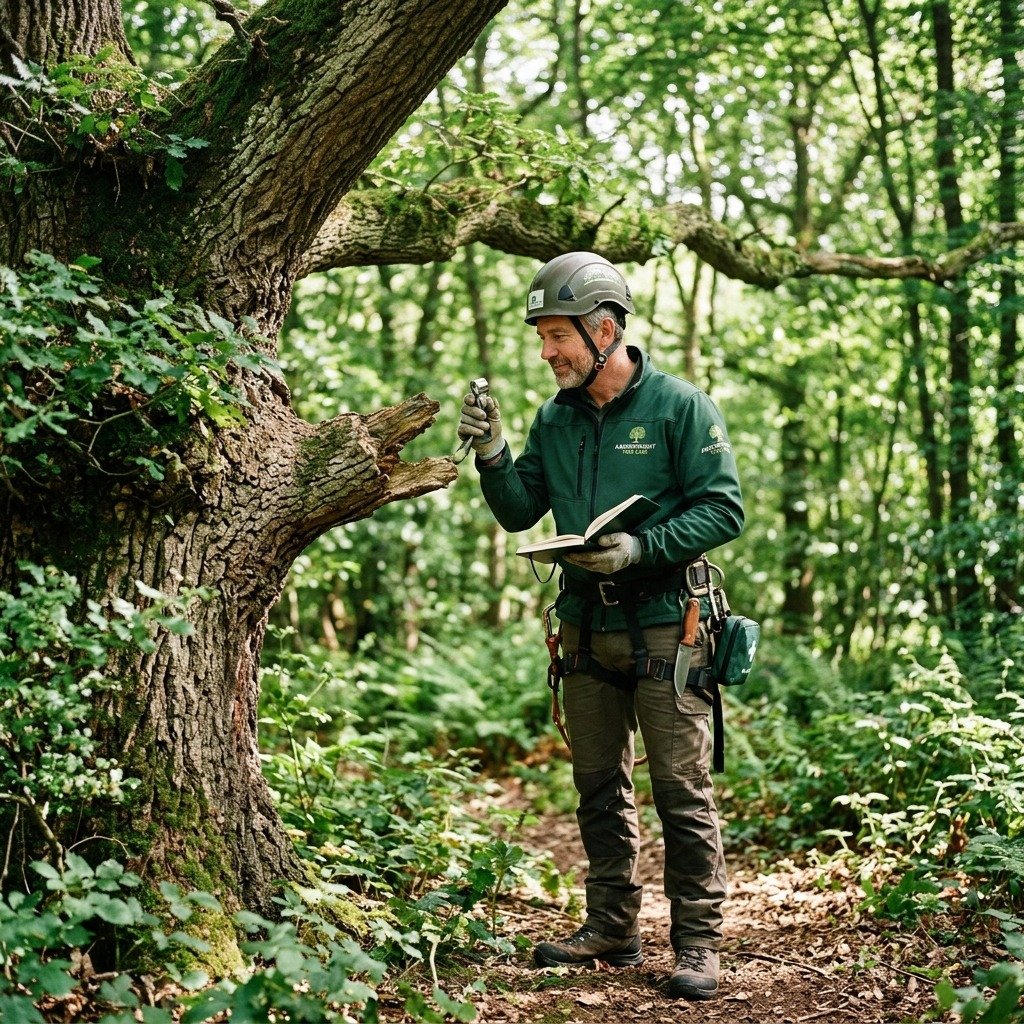
This is where a little know-how goes a long way. Understanding what’s actually wrong with a tree, and what to do about it, can mean the difference between saving a decades-old oak and watching it come down in pieces. At Arborwright Tree Care, we spend our days doing exactly that: diagnosing problems early and building treatment plans that give trees a real shot at recovery.
How do you know if a tree is actually diseased?
Trees rarely announce their problems clearly. Instead, they whisper through subtle changes that are easy to miss if you’re not looking closely.
Some of the most common warning signs include:
- Discolored or wilting leaves that appear out of season
- Cankers or sunken lesions on the bark
- Unusual growths, such as fungal conks or mushrooms at the base
- Premature leaf drop, especially when it’s isolated to one side of the tree
- Dieback in the upper canopy, where branches lose leaves from the tip inward
- Oozing sap or discoloration seeping from the trunk
Any one of these on its own might not mean much. But a tree showing two or three of these signs at once is usually telling you something is wrong, and it’s worth a closer look.
What are the most common tree diseases homeowners deal with?
While every region has its own set of pathogens to worry about, a handful of tree diseases show up again and again across residential landscapes.
Fungal infections are the most frequent culprits. Diseases like anthracnose, powdery mildew, and root rot thrive in damp, poorly drained soil or areas with limited air circulation. They tend to spread through spores carried by wind, water, or even garden tools.
Bacterial diseases, such as fire blight, move quickly through susceptible species like apple and pear trees, often entering through wounds or blossoms before spreading into the branches.
Vascular diseases, including Dutch elm disease and oak wilt, are particularly dangerous because they attack a tree’s internal water-delivery system. Once the vascular tissue is compromised, the tree effectively starves from the inside, even if the roots are drawing plenty of water.
Each of these requires a different approach. Treating a fungal problem the way you’d treat a bacterial one usually does little good, and can sometimes make things worse by delaying the correct treatment.
Why timing changes everything when treating a sick tree
Tree diseases rarely stay contained. What starts as a small patch of discoloration on one branch can, within a matter of weeks, work its way into the trunk and root system. At that point, options narrow considerably.
Early-stage diseases often respond well to targeted treatments: pruning out infected material, applying fungicides or bactericides, or adjusting soil and watering conditions to remove the environment the pathogen needs to thrive. These interventions are relatively low-cost and highly effective when applied promptly.
Late-stage infections are a different story. Once a disease has spread through a significant portion of the tree’s vascular system or root structure, treatment options shrink to damage control, and in some cases, removal becomes the only responsible choice for protecting nearby trees and property.
This is exactly why routine inspections matter so much. A tree that looks perfectly healthy from the sidewalk can be hiding early symptoms that only a trained eye would catch.
Can a sick tree actually be saved?
In many cases, yes. Trees are remarkably resilient organisms, and plenty of infections can be managed successfully with the right combination of treatments.
Recovery depends on a few key factors:
- How early the disease was caught. Trees diagnosed in the early stages have significantly better recovery odds.
- The species involved. Some trees, like elms and oaks, are more vulnerable to specific pathogens and require faster intervention.
- The overall health of the tree beforehand. A tree already stressed by drought, poor soil, or root damage has fewer reserves to fight off infection.
- The treatment approach used. Generic, one-size-fits-all treatments tend to underperform compared to plans built around the specific disease and tree species involved.
This is why a proper diagnosis matters just as much as the treatment itself. Misidentifying a disease, or guessing at a fix, wastes valuable time the tree may not have.
What should you look for in a tree care plan?
Tree disease treatment built around real diagnosis, not guesswork, is what actually protects the long-term health of your trees. That’s the philosophy behind every service Arborwright Tree Care provides. Rather than applying blanket treatments, our certified arborists start by identifying exactly what’s affecting a tree, whether that’s a fungal pathogen, a bacterial infection, or an underlying environmental stressor, before recommending a course of action.
From there, treatment might involve targeted fungicide or bactericide applications, structural pruning to remove infected limbs, soil amendments to correct nutrient deficiencies, or ongoing monitoring to track how the tree responds over time. Every plan is tailored to the specific tree, its species, its environment, and the stage of the disease.
Beyond treatment, Arborwright Tree Care also emphasizes prevention. Regular inspections, proper mulching, correct pruning techniques, and appropriate watering schedules all reduce the chances of disease taking hold in the first place. A little preventive care goes a long way toward avoiding the costlier, more urgent interventions that come with advanced infections.
Give your trees the chance they deserve
A tree that’s been part of your property for twenty, thirty, or fifty years is worth protecting properly. Catching a problem early, understanding what’s actually causing it, and applying the right treatment can make the difference between losing a mature tree and watching it recover fully.
If something about your trees looks off, whether it’s discolored leaves, unusual growths, or branches that seem to be dying back, it’s worth getting a professional opinion sooner rather than later. Arborwright Tree Care offers thorough tree health assessments and customized treatment plans designed to catch problems early and give your trees the best possible chance at recovery. Reach out today to schedule an inspection and take the first step toward healthier, stronger trees.
About the Author