
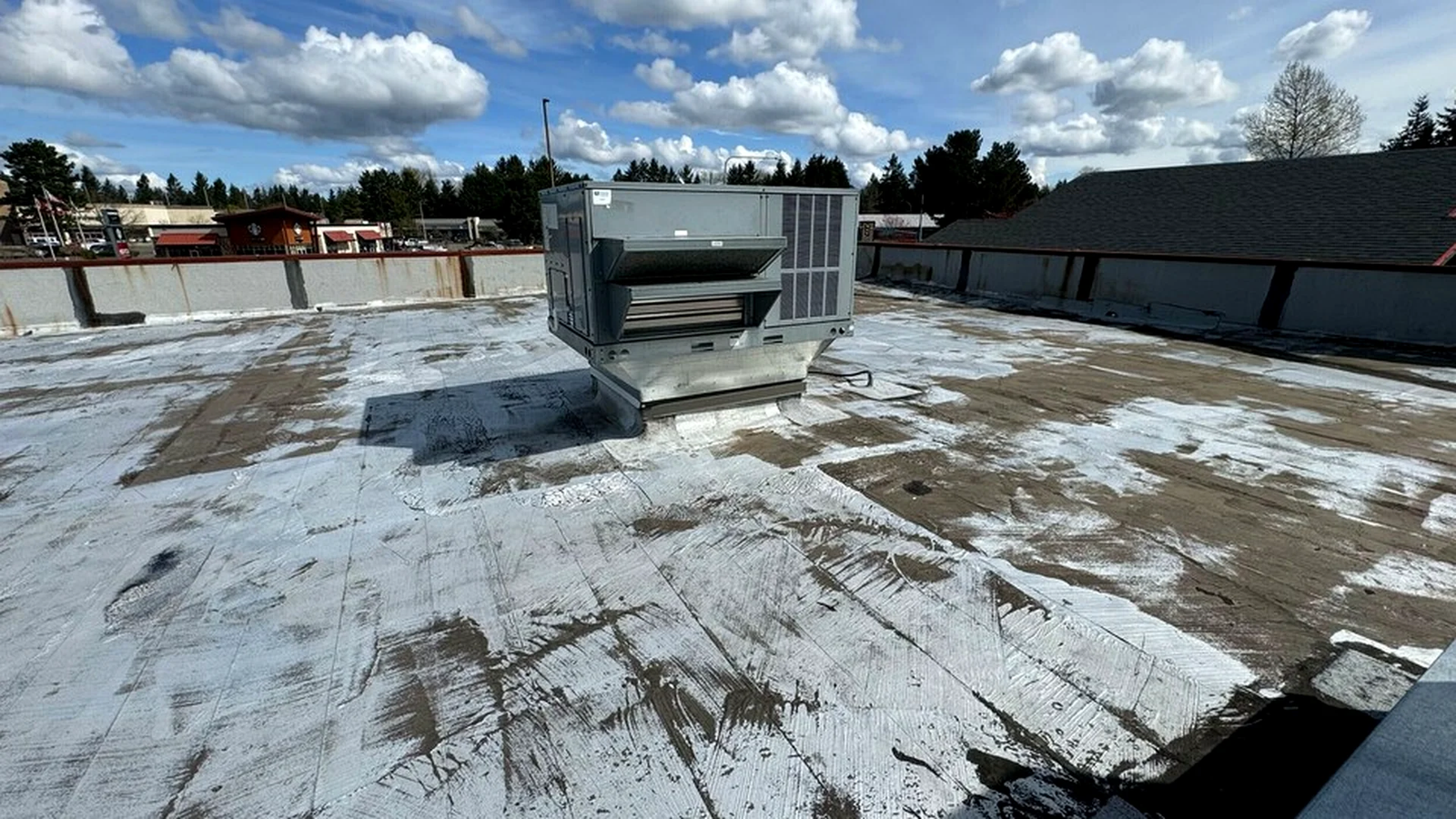
The first sign of trouble may be a damp ceiling tile in a back office, a brown ring around a light fixture, or water dripping down a wall after a long rainfall. Someone finds a damaged spot on the roof, patches it, and the dripping stops. For a while, the problem seems settled. Then another storm arrives, and the same ceiling tile turns dark again.
Recurring leaks are among the most frustrating reasons to arrange flat roof repair. The visible damage can be small even when the route water takes is complicated. Property owners discussing the problem with Emerald Roofing and Siding should be ready to explain what happened before the first patch, what was repaired, and what changed afterward. That history may be more useful than the size of the latest stain.
A repeat leak does not automatically mean the previous work was careless. There may be more than one opening, water may have remained inside the roof assembly, or conditions may have changed since the repair. Finding the reason requires examining the entire affected area rather than assuming the newest wet spot marks the entry point.
A Ceiling Stain Is Not a Map of the Leak
Water can enter a low-slope roof through a membrane seam, a flashing joint, or a puncture, then travel across the deck or along a layer within the assembly. It may finally appear indoors at a light fixture or structural connection some distance from the opening. This is why repeated patching directly above a ceiling stain can miss the source.
Different weather patterns provide clues. A leak that appears during wind-driven rain may involve an exposed transition or wall junction. Water that enters only after prolonged rainfall may point toward an area that drains slowly. Neither observation proves the cause, but together they help narrow the investigation.
Keep the Sequence of Events
Write down when each leak appeared, how long the rain lasted, and whether the water stopped immediately when the storm ended. If a repair was completed, preserve the invoice and any photographs showing the exact location. A simple record can help the next inspector distinguish a failed patch from a separate problem that looks similar indoors.
Moisture Can Stay Hidden Beneath a Successful Patch
A membrane patch may stop new water from entering through a particular opening while moisture already trapped below remains. Depending on the roof construction, wet insulation can lose some of its insulating performance, deteriorate, or hold water against other materials. Later dripping can even be mistaken for proof that the patched opening is still leaking.
This is one reason the scope of flat roof repair in Rockland County matters. A contractor may need to assess whether moisture has moved beyond the visibly damaged area. That assessment could involve carefully selected test openings or appropriate moisture investigation methods. No single tool identifies every wet layer reliably, so findings should be interpreted alongside the roof’s construction and observed condition.
Covering a wet assembly without addressing the affected material can leave a problem concealed. The correct response depends on how much moisture is present, where it has travelled, and whether the underlying components remain sound.
Small Seam Defects Can Sit Beside a Larger Patch
A membrane is only as watertight as its details. Field seams, corners, and connections to parapet walls or equipment curbs must accommodate temperature changes and building movement. If a short section of seam has separated, water may find its way beneath an otherwise intact surface.
A patch placed over one visible defect will not necessarily address another opening a few feet away. Likewise, a repaired puncture can be surrounded by older material that has become brittle or poorly bonded. A useful inspection therefore looks at neighboring seams and transitions, not just the precise spot where someone previously worked.
Materials Must Work Together
Different low-slope systems use different repair products and procedures. A material suitable for one membrane may not bond properly to another without the right preparation or may not be approved by the manufacturer. Dirt, residual moisture, and temperature conditions can also affect the finished bond.
For an owner reviewing recurring leaks with Emerald Roofing and Siding, one worthwhile question is whether the previous patch was compatible with the installed membrane. Another is whether the surrounding surface was sound enough to support a lasting repair. Those questions are more informative than judging workmanship by how neat the patch looks.
Water That Cannot Drain Creates More Opportunities for Trouble
Low-slope does not mean that a roof should hold standing water indefinitely. Drains can become restricted, strainers can fill with debris, and localized depressions can develop as components settle or deteriorate. Water that remains around a seam or penetration for long periods increases the demands on a vulnerable detail.
Consider a roof with a drain near an equipment platform. A patch stops one leak, but the platform still diverts runoff into a shallow area nearby. During the next prolonged storm, water reaches an aging flashing joint that was never part of the first repair. The result looks like the same leak even though the entry point has changed.
Check the Drainage System, Not Just the Surface
An inspector should look at drain locations, outlet conditions, debris, and places where water collects. Solutions vary. Clearing an obstruction may be enough in one case; another roof may need a more involved drainage correction designed for its structure. Adding sealant to the lowest visible area does not fix the reason water gathers there.
A drainage assessment involving Emerald Roofing and Siding should establish whether standing water relates to a blocked outlet, an uneven surface, or a more substantial design concern. Owners should avoid climbing onto a wet roof to investigate ponding. Photographs taken safely from a suitable interior vantage point or by trained personnel can document conditions without introducing a fall hazard.
A New Leak May Be Connected to Work Done by Another Trade
Rooftops are used for more than keeping rain out. HVAC technicians, electricians, and other workers may cross the membrane or access equipment mounted on it. A dropped tool, sharp support, or poorly sealed new penetration can introduce damage after the original repair was completed.
If leaking resumes after equipment service, tell the roofing inspector. It does not establish that another contractor caused the problem, but the timing is worth investigating. Photographs before and after rooftop work, along with records of new openings, can help identify changes without turning an inspection into a guessing game.
Know When Another Patch Is Not Enough
A localized repair can be appropriate when the surrounding roof is sound and the source is clearly identified. Repeated leaks over a wider area call for a different conversation. The inspection may reveal extensive wet insulation, widespread seam problems, deteriorated flashing, or an underlying drainage issue that requires more than another surface patch.
Before authorizing further flat roof repair, ask what evidence supports the proposed solution. Will the work address the known entry point? Is there reason to suspect hidden moisture? Which nearby details were checked? A proposal that explains these findings gives an owner a better basis for deciding between a targeted repair, a larger restoration, or replacement of an affected section.
The costliest choice is not always the most extensive repair. Sometimes it is paying for several small attempts that never reach the underlying cause. Still, replacement should follow evidence about the condition of the roof, not frustration alone.
Give the Next Repair a Fair Chance to Last
After work is finished, retain photographs, a description of the repaired components, and any instructions for follow-up inspection. Ask what conditions should prompt another call and whether the contractor identified any nearby areas to monitor. If ceiling materials were wet, they may also need assessment and proper drying before cosmetic repairs begin.
The real goal of flat roof repair is to stop water from entering and to deal with damage already present, not simply to make the next stain disappear. Emerald Roofing and Siding can be part of a careful review of recurring symptoms, with the findings guiding what happens next. A repair is more likely to hold when the reason for the leak is understood, the surrounding assembly is checked, and drainage and maintenance issues are not left unresolved.
About the Author