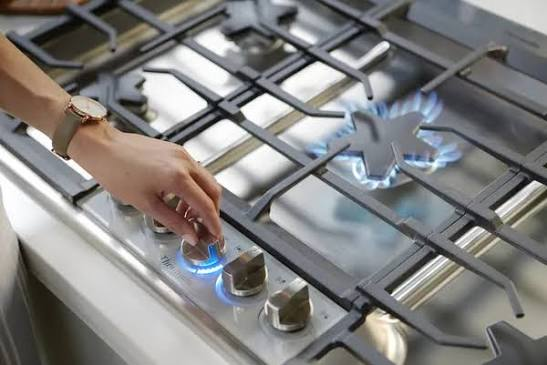
You turn the burner knob, hear the familiar rapid clicking, and the flame appears. Normally, the clicking should stop. But this time it doesn’t. The burner is lit, dinner is waiting, and your range sounds like it’s still desperately trying to start.
Persistent clicking is one of those appliance problems that’s easy to ignore at first. After all, the burner still works. But the sound is usually telling you that something in the ignition system isn’t behaving as it should.
The good news is that the cause isn’t always a failed part. Sometimes it’s something surprisingly simple.
Why the Clicking Happens in the First Place
A gas range uses an electric spark to ignite gas flowing through the burner. That rapid tick-tick-tick you hear when turning the knob is the igniter creating those sparks.
Once the burner lights properly, the ignition process should settle down. If sparking continues, something may be interfering with the burner or ignition system.
Before assuming an expensive component has failed, pay attention to when the problem started. Did you recently clean the cooktop? Was there a boil-over? Is only one burner affected?
Those details can narrow things down quickly.
Moisture Is Often the First Suspect
If the clicking started after cleaning the range or spilling liquid near a burner, moisture is a logical place to start.
Water can collect around the burner components and igniter. Even when the cooktop looks dry from above, small amounts of moisture may remain around the electrode or underneath removable burner pieces.
Turn everything off and allow the appliance to cool completely before checking anything. Remove only the burner components intended for routine cleaning, following the appliance’s instructions, and make sure they’re thoroughly dry before putting them back.
Don’t rush the drying process. Moisture can remain in small spaces longer than you’d expect.
If the clicking disappears once everything is completely dry, you’ve probably found the problem.
Check How the Burner Cap Is Sitting
A burner cap that’s slightly out of position can create surprisingly annoying symptoms.
It doesn’t need to be obviously crooked. Even a small alignment problem may affect how gas reaches the ignition area or how the flame forms around the burner.
This is especially worth checking if the problem appeared immediately after cleaning.
Once the burner is cool, inspect the removable cap and make sure it’s seated correctly. It should sit flat and stable rather than rocking or appearing noticeably higher on one side.
While you’re there, look for crumbs, grease, or dried food around the burner.
Grease and Food Can Interfere With Ignition
Cooktops live a hard life.
Oil splatters. Sauces boil over. Tiny pieces of food fall between burner components. Over time, that buildup can affect burner ports or collect near the igniter.
You may notice other clues alongside the clicking, such as delayed ignition or an uneven flame.
Clean the accessible burner components according to the manufacturer’s care instructions. Avoid poking around internal electrical components or taking apart sections that aren’t intended for routine cleaning.
If you’re repeatedly cleaning the same burner and the problem keeps returning, there’s probably something else going on.
Pay Attention to Which Burners Are Clicking
The pattern can tell you quite a bit.
Suppose one burner consistently causes trouble while the others work normally. That points your attention toward components associated with that burner, such as its electrode, burner assembly, or related wiring.
If several burners suddenly begin clicking, the issue may involve a shared part of the ignition system.
Clicking while every knob is completely off deserves particular attention. That’s different from a burner simply taking too long to ignite and can indicate a problem with an ignition switch, moisture inside the switch area, or another electrical fault.
At that stage, repeatedly turning knobs back and forth isn’t much of a diagnostic strategy.
When the Electrode May Be the Problem
The electrode is the small component that produces the spark.
Its ceramic insulation can become dirty, damaged, or cracked. A spark may then jump somewhere it shouldn’t instead of behaving normally at the burner.
You might see a spark and assume the electrode must be fine. That’s not necessarily true. An electrode can still spark while having a grounding or insulation problem.
Visible cracking, unusual arcing, or a problem that stubbornly remains on one burner after cleaning and drying are good reasons to stop troubleshooting at the surface level.
This is where professional diagnosis starts making more sense.
What If Cleaning and Drying Don’t Work?
If the obvious causes have been ruled out, the problem can move deeper into the ignition system.
Depending on the model and symptoms, a technician may need to inspect the ignition switches, electrodes, wiring, grounding, or spark module.
This is also why replacing a random part based solely on the clicking sound can get expensive. Different faults can produce nearly identical symptoms.
For homeowners looking for Thermador repair Santa Barbara, professional diagnosis can be particularly useful when persistent clicking remains after the basic cleaning, drying, and burner-position checks have been exhausted.
A technician can determine whether you’re dealing with a relatively minor burner issue or an electrical component that actually needs replacement.
Don’t Ignore a Gas Smell
Clicking by itself can be irritating. Clicking combined with the smell of gas is a different situation.
If you smell gas, stop using the appliance. Don’t keep trying to ignite the burner to see whether the problem clears itself.
Follow the safety instructions for your appliance and gas supplier, and have the problem evaluated before using the range again.
The same applies if a burner takes an unusually long time to ignite. Gas shouldn’t be allowed to accumulate while you’re waiting for a flame.
A Little Prevention Goes a Long Way
You can’t prevent every ignition problem, but everyday habits can reduce the chances of recurring clicking.
Clean spills after the cooktop has cooled instead of letting residue harden around the burners. After washing removable burner parts, let them dry completely before reinstalling them.
It’s also worth taking a quick look at how each burner cap sits after cleaning. That ten-second check can save you from wondering why the range suddenly sounds like a mechanical typewriter.
And if a burner starts behaving differently, don’t wait months before investigating it. Small ignition problems are generally easier to deal with when you catch them early.
Know When the Simple Fixes Are Finished
A Thermador range that keeps clicking after ignition doesn’t automatically mean you’re facing a major repair. Moisture, residue, and a poorly seated burner cap can all create symptoms that look more serious than they are.
Start with the simple observations. Think about what happened immediately before the clicking began. Check that the burner is clean, dry, and correctly assembled.
If those steps don’t change anything, or if the range clicks with the controls off, shows unusual sparking, fails to ignite reliably, or produces a gas odor, that’s the point to stop experimenting and have the ignition system properly diagnosed.
The clicking may sound like a small annoyance, but it’s also useful information. Your range is telling you something isn’t quite right. Paying attention early can make the difference between a quick correction and a problem that becomes much harder to ignore.
About the Author