
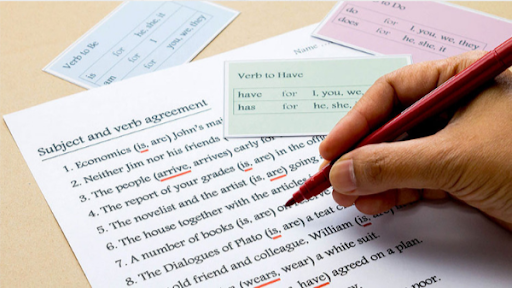
Professional writing is judged quickly. A reader may spend only a few seconds looking at an email, report, proposal, or business page before deciding whether the writer sounds reliable. Grammar and punctuation quietly shape that first impression. When sentences are clear, readers can follow the message without stopping to figure out what the writer meant.
Good writing does not mean stuffing every sentence with complicated words. Quite the opposite. Simple language can sound polished when the grammar is sound and the punctuation is placed where readers expect it.
Grammar Gives Professional Writing Its Structure
Grammar provides a basic framework for expressing ideas. It helps readers understand who is doing something, what happened, and why a particular point matters. A sentence with poor grammar can force the reader to guess.
Consider a workplace email that says, “We have discussed the proposal and need your feedback.” The meaning is understandable, but the grammar makes the writer look careless. Changing it to “We have discussed the proposal and need your feedback” takes only a few seconds, yet the sentence feels far more dependable.
This matters in many forms of professional communication. A consultant preparing a report needs precise sentences. Someone involved in book writing needs consistency across hundreds of pages. Even a short business message can lose credibility when basic grammar mistakes appear again and again.
Grammar also helps writers control tone. A formal sentence can sound respectful without becoming stiff. A casual sentence can remain friendly without appearing sloppy. That balance takes practice, but strong grammar gives the writer more control over it.
Punctuation Controls Meaning
Punctuation tells readers how a sentence should be read. A comma can create a pause, separate information, or prevent confusion. A period tells the reader that one thought has finished. A question mark changes the purpose of a sentence completely.
Take this example:
“Let’s discuss the proposal, Sarah.”
The comma tells us that Sarah is being addressed. Without it, the sentence could briefly confuse the reader. Small marks can carry surprising weight.
Commas are often troublesome in professional writing because writers either scatter them everywhere or avoid them altogether. Neither approach works well. A useful habit is to read the sentence aloud and check where the meaning naturally shifts. Then look at the grammar rules before making the final choice.
Semicolons, colons, parentheses, and quotation marks have their own jobs too. They should not be added simply because a sentence looks more professional with extra punctuation. Sometimes a plain full stop is the better choice.
Clear Sentences Make Business Messages Easier to Read
Professional readers are busy. They usually want the point without digging through a maze of words. Long sentences are not automatically bad, but sentences carrying too many ideas can become exhausting.
For example, imagine a manager writing:
“We reviewed the campaign results last week, and because several areas performed below expectations, we believe that some changes should be made before the next phase begins, which is why we are asking everyone involved to send their suggestions by Friday.”
The sentence is grammatically acceptable, yet it carries too much information in one stretch. Breaking it up gives each idea more breathing room:
“We reviewed the campaign results last week. Several areas performed below expectations, so some changes are needed before the next phase. Please send your suggestions by Friday.”
Much easier.
Professional writing often improves when writers remove unnecessary wording rather than adding more. A clear sentence gives the reader somewhere to stand.
Grammar Errors Can Affect Credibility
A spelling mistake may be forgiven. A repeated grammar problem can be harder to overlook, especially when the document represents a company or professional service.
Imagine receiving a proposal containing phrases such as “your company have a great opportunity” or “we was impressed with your results.” The reader may start questioning the writer’s attention to detail. The proposal itself could contain excellent ideas, but those ideas now have to compete with avoidable errors.
According to our analysts, readers often judge written material before considering its deeper message. That does not mean every typo damages a reputation. People make mistakes. Still, repeated errors suggest that nobody checked the final copy.
This becomes even more relevant when writing is sent to clients, employers, investors, or business partners. For instance, if you are writing email marketing content for a client, a clean document tells readers that your business pays attention to detail and values quality.
Punctuation Helps Create the Right Tone
Tone is easy to misread in written communication. There is no facial expression or voice to explain what the writer intended. Punctuation can help fill that gap.
Compare these two messages:
“Can you send the report.”
“Can you send the report?”
The first looks like a statement wearing the wrong clothes. The second clearly asks for something.
Exclamation marks can create energy, but too many may make a professional email feel childish or overly excited. Capital letters can also cause problems. Writing “PLEASE SEND THIS TODAY” can look aggressive even when the writer is simply in a hurry.
Periods, commas, and question marks seem ordinary because we see them constantly. Their effect becomes obvious when they are missing.
Editing Should Be Part of the Writing Process
Strong professional writing rarely appears perfectly on the first attempt. Editing gives writers a chance to catch errors that are almost invisible during drafting.
A useful editing routine starts with meaning. Read the document and ask whether each sentence says what you intended. Then check grammar. After that, look closely at punctuation and spelling.
Reading the text slowly can reveal awkward sentences. Reading it aloud can reveal missing words or strange pauses. A second pair of eyes helps too, especially with longer documents.
Grammar tools can catch many mistakes, but they are not perfect. Software may suggest a technically correct change that does not fit the intended meaning. Human judgment still matters.
Maybe the simplest trick is to leave the document alone for a little while. Come back later. Fresh eyes catch things that tired eyes happily ignore.
Professional Writing Sounds Natural When Grammar Works Quietly
The best professional writing rarely draws attention to its grammar. Readers simply understand it. They move through the message without stopping to decode awkward sentences or wonder where one idea ends and another begins.
That is the real value of grammar and punctuation. They make communication smoother without demanding attention for themselves.
A well-written email can build confidence. A carefully edited report can make research easier to trust. A polished proposal can make a business appear more prepared. Even a short message gains strength when every sentence has been checked.
We think professional writing becomes more effective when writers treat grammar as part of the message rather than an afterthought. The words carry the idea, but grammar gives those words shape. Punctuation guides the reader through them.
Sometimes one comma changes the meaning. Sometimes one missing verb makes an entire sentence look careless. Small details, really, but professional communication is often judged through small details.
About the Author