Every autumn, homeowners across New Jersey climb up their ladders, scoop out soggy leaves, and dread the moment they’ll have to do it all again in a few weeks. It’s a chore nobody looks forward to, and one that carries real risk—falls from ladders send thousands of people to the emergency room every year. There’s a smarter way to protect your home without the recurring hassle.
NJ Garage and Gutters has spent years helping homeowners move past the endless cycle of gutter cleaning. The solution isn’t a better rake or a sturdier ladder. It’s preventing debris from piling up in the first place. That shift in thinking has changed how families in New Jersey think about home maintenance altogether.
This post breaks down what’s actually clogging your gutters, why the traditional fixes fall short, and how a permanent upgrade can save you time, money, and a few Saturday mornings you’ll never get back.
Why Do Gutters Clog So Quickly in New Jersey?
New Jersey’s mix of dense tree cover and four distinct seasons makes gutters work overtime. Oak leaves, maple seeds, pine needles, and wind-blown debris all funnel into open gutter channels, especially on properties near wooded lots or mature landscaping.
Once debris settles, it doesn’t just sit there. It absorbs rainwater, forms a dense mat, and creates the perfect environment for mold, mildew, and even small plants to take root. That buildup blocks water flow, which is the entire point of having gutters in the first place.
When water can’t drain properly, it has to go somewhere. Often, that means overflowing straight down your siding, pooling near your foundation, or seeping into your fascia boards. None of those outcomes are cheap to fix.
What Happens When Gutters Are Left Unprotected?
Ignoring gutter maintenance doesn’t just mean more yardwork later. It sets off a chain reaction that can affect nearly every part of your home’s exterior.
Foundation damage. Water that overflows near your home’s base can seep into the soil surrounding your foundation, leading to cracks and long-term structural issues.
Roof and fascia rot. Standing water and trapped debris create moisture that eats away at wood fascia boards and can work its way under roof shingles.
Pest infestations. Clogged gutters filled with decaying leaves are an open invitation for mosquitoes, birds, and rodents looking for a place to nest.
Basement flooding. Overflow near the foundation often finds its way into basements and crawl spaces, especially during heavy spring storms.
Landscape erosion. Water dumping over the sides of a clogged gutter can wash out flower beds, mulch, and even small sections of lawn.
Each of these problems tends to compound. A minor clog today can turn into a costly repair bill within a year or two if it’s left unaddressed.
Is Cleaning Your Gutters Yourself Really Worth the Risk?
Most homeowners default to DIY cleaning because it feels like the cheapest option. But the real cost adds up fast when you account for the time, physical strain, and safety risks involved.
According to the U.S. Consumer Product Safety Commission, ladder-related injuries send more than 160,000 people to emergency rooms in the United States every year, and gutter cleaning is one of the most common reasons homeowners end up on a ladder. Add in the fact that most gutters need cleaning at least twice a year—more often if your property has heavy tree coverage—and the “free” DIY option starts costing quite a bit of time and risk.
Hiring a professional crew for seasonal cleanings avoids the ladder risk, but it’s a recurring expense that never actually solves the underlying problem. You’re paying to manage the symptom, not eliminate it.
How Do Gutter Guards Actually Solve the Problem?
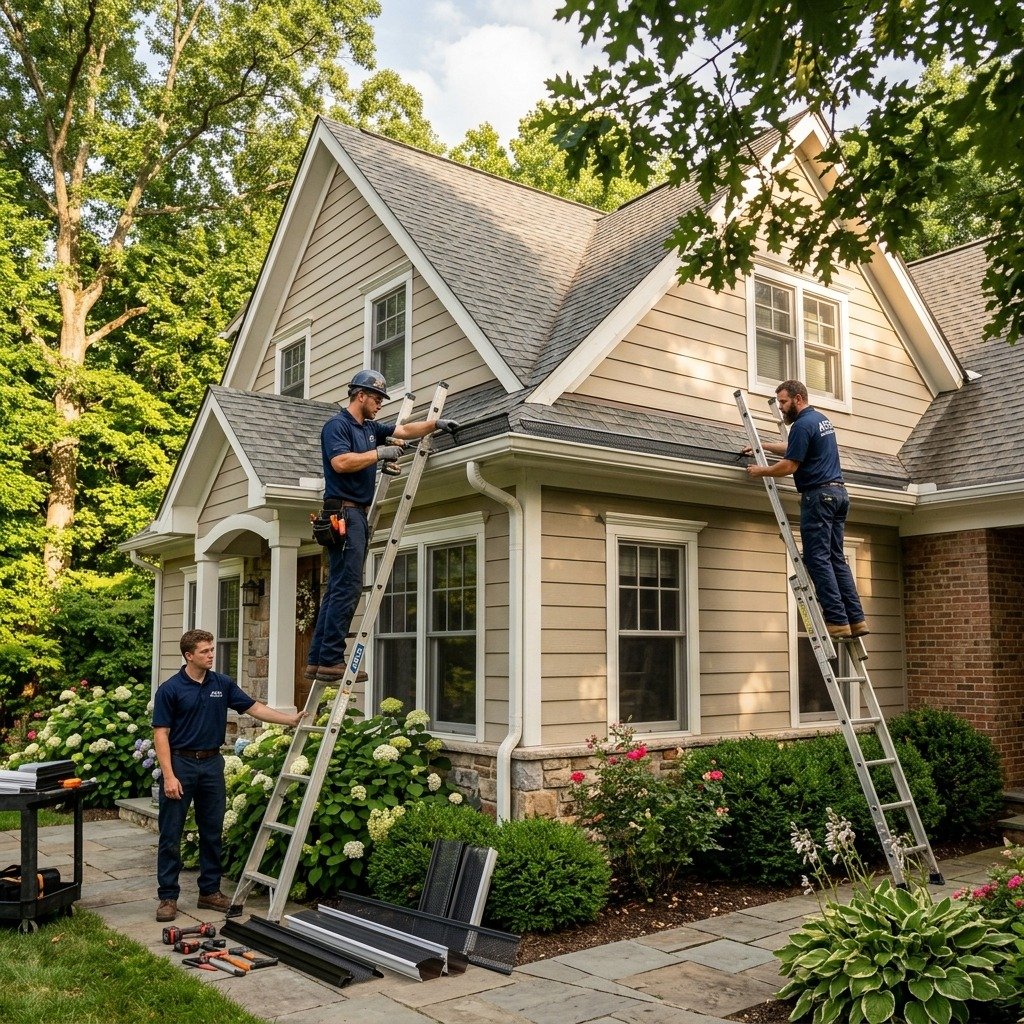
Gutter guards that let rainwater flow freely while blocking leaves, seeds, and debris are the most effective long-term fix for chronic clogging, and they’re exactly what NJ Garage and Gutters installs for homeowners tired of the seasonal cleanout routine. Instead of relying on manual maintenance, a properly fitted guard system does the filtering work automatically, year-round.
The technology behind modern gutter protection has come a long way. Rather than flimsy mesh screens that clog just as easily as unprotected gutters, today’s systems use engineered covers designed to handle heavy rainfall while keeping organic debris out entirely. Water flows in; everything else stays out.
For homeowners, that translates into fewer ladder trips, less risk of water damage, and gutters that actually function the way they’re supposed to during every season, not just when they’re freshly cleaned.
What Should You Look for in a Gutter Protection System?
Not all gutter guards are built the same, and the right choice depends on your home’s specific conditions.
Choose a heavy-duty mesh system if your property has a lot of pine trees, since fine needles tend to slip through wider-gapped guards.
Choose a solid-cover, surface-tension style if you want maximum protection against small debris and don’t mind a slightly higher upfront cost.
Choose a reinforced guard rated for heavy snow load if your home sees regular winter accumulation, since some lighter-weight guards can buckle under the weight of ice and snow.
A professional installer can assess your roofline, tree coverage, and gutter angle to recommend the system that fits your home rather than a one-size-fits-all product.
Protect Your Home Without the Seasonal Hassle
Clogged gutters are more than an inconvenience. They’re a slow-moving threat to your foundation, roof, siding, and landscaping, all of which cost far more to repair than they do to prevent. NJ Garage and Gutters helps homeowners break the cycle of constant cleanouts by installing protection systems built to handle whatever the New Jersey seasons bring.
If you’re ready to stop thinking about your gutters every time it rains, reach out to NJ Garage and Gutters for an assessment. A quick conversation now could save you a very expensive repair bill later.
About the Author