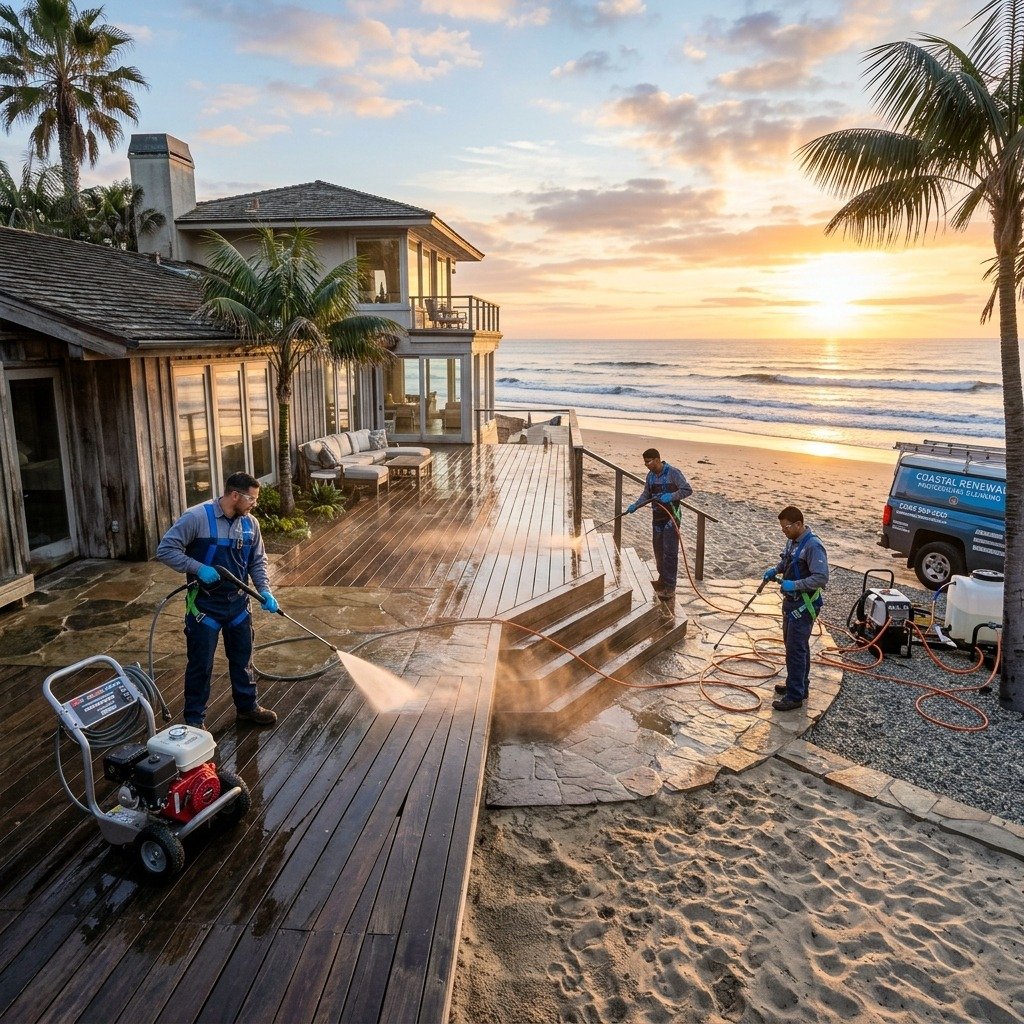
Pressure washing has its place—but blast the wrong surface with too much force, and you’re looking at cracked render, stripped paint, and water forced behind your cladding. Soft washing takes a different approach, and for many surfaces around your home, it’s the one that actually works.
At Reef Pressure Washing, soft washing is one of our most in-demand services. Homeowners across the area are discovering that a gentler method doesn’t mean a weaker result—quite the opposite.
What Makes Soft Washing Different from Pressure Washing?
The core difference comes down to pressure and chemistry. Standard pressure washing relies on high-force water to physically blast dirt away. Soft washing uses low-pressure water combined with specially formulated cleaning solutions to break down and eliminate the source of the problem—mold, algae, lichen, and bacteria—rather than just masking it.
Those dark streaks on your roof? That green film on your driveway? They’re not just dirt. They’re living organisms. High-pressure washing can remove the visible layer, but soft washing kills them at the root, which means the results last significantly longer.
Which Surfaces Benefit Most from Soft Washing?
Soft washing shines on surfaces that can’t handle high-pressure treatment without risk of damage. These include:
- Roof tiles and shingles — Excessive pressure can dislodge or crack tiles and strip granules from asphalt shingles
- Rendered and painted walls — High pressure can chip paint and force water into the render
- Timber decking and fencing — Wood fibers can be damaged or raised by pressure washing
- Fascias, soffits, and gutters — These plastic and aluminum elements are better cleaned at low pressure
- Solar panels — A high-pressure stream can damage the panel surface or the mounting system
For surfaces like concrete driveways and brick pathways, a combination approach often works best—soft washing for organic growth, followed by controlled pressure for embedded grime.
What Does the Soft Washing Process Actually Involve?
When the Reef Pressure Washing team arrives at your property, the process is methodical and thorough.
First, the area is assessed to identify the type of growth or contamination present. The right cleaning solution is then selected based on the surface material and the severity of the buildup. The solution is applied at low pressure and given time to work—breaking down organic matter, killing mold spores, and loosening grime at a molecular level.
After the dwell time, the surface is rinsed clean. What’s left behind is a surface that’s genuinely clean, not just visually cleaner.
Is the Cleaning Solution Safe for Plants and Pets?
This is one of the most common questions homeowners ask, and it’s a fair one. The solutions used in professional soft washing are diluted to effective but responsible concentrations. Before any application near garden beds, lawns, or landscaping, the surrounding vegetation is pre-wetted and protected where necessary. Once the rinse is complete and the solution has dispersed, the area is safe.
That said, it’s always best to keep pets inside during the service and for a short period afterward—just as a precaution.
Why Soft Washing Delivers Results That Actually Last
One of the biggest frustrations homeowners have with exterior cleaning is how quickly things seem to go green again. When the underlying cause—algae, mold, and bacteria—isn’t fully eliminated, regrowth is fast.
Soft washing is a professional exterior cleaning method that uses low-pressure water and biodegradable treatment solutions to eliminate mold, algae, and biological growth from the surface down, leaving your home cleaner for longer and protecting the structural integrity of your roof, walls, and cladding in the process.
Because the biological matter is killed rather than displaced, treated surfaces stay cleaner for much longer. Many homeowners find that a professional soft wash keeps their roof and exterior looking fresh for two to three years, compared to the short-term results of a basic pressure wash.
What to Expect When You Book with Reef Pressure Washing
Booking a soft washing service with Reef Pressure Washing is straightforward. Here’s what the experience typically looks like:
- Initial consultation — You describe what you need cleaned and we provide an honest assessment and quote
- Scheduling — We work around your availability and confirm the appointment
- The service — Our team arrives on time, protects surrounding areas, and completes the work efficiently
- Post-clean walkthrough — We go over the results with you before we leave
There’s no mess left behind, no damage to worry about, and no unanswered questions about what was done or why.
Frequently Asked Questions About Soft Washing
How long does a soft wash treatment take?
Most residential soft washing jobs are completed within two to four hours, depending on the size of the property and the number of surfaces being treated.
How often should I have my home soft washed?
For most homes, every two to three years is sufficient. Homes in high-humidity areas or surrounded by trees may benefit from more frequent treatments.
Will soft washing remove all stains?
Soft washing is highly effective against organic staining—algae, mold, lichen, and moss. Some mineral or rust stains may require additional treatment, which the Reef Pressure Washing team can advise on.
Can soft washing damage my roof?
No. When performed correctly by trained professionals, soft washing is safe for all common roofing materials, including terracotta, concrete tile, colorbond, and asphalt shingles.
Is soft washing worth the cost compared to DIY cleaning?
DIY cleaning products available at hardware stores rarely contain the professional-grade biocides used in commercial soft washing. The results tend to be shorter-lived and, on sensitive surfaces, there’s a higher risk of accidental damage.
About the Author