Modern industrial machinery, surgical robotics, and aerospace hardware operate under extreme physical demands. Ensuring peak accuracy requires component-level awareness of load, torque, and pressure in real time. Standard measurement components often struggle when subjected to high heat, high voltage, or strong electromagnetic noise. Meeting these tough operating environments takes specialized engineering built around immunity to harsh conditions.
LILIKOI Innovation, a California based engineering firm founded in 2023, focuses directly on these critical sensing challenges. By manufacturing advanced strain gauges, load cells, and Fiber Bragg Grating (FBG) optical devices, the team provides real time physical feedback where standard devices fail.
The Power of Fiber Bragg Grating Technology
Fiber Bragg Grating technology shifts physical measurements from electrical resistance signals to light waves transmitted through optical fibers. Conventional electrical strain gauges use conductive traces that register small shifts in voltage. That design works fine in controlled factory settings, but electrical noise or stray radio frequencies easily corrupt those signals.
By contrast, optical FBG devices reflect specific wavelengths of light based on microscopic physical grid spacing within the fiber core. When mechanical tension stretches or compresses the element, the reflected light shift provides an exact reading of dynamic force.
Choosing a dedicated force sensor manufacturer that masters optical methods opens up huge operating advantages across mission-critical systems:
- Complete Electrical Noise Immunity: RF noise in surgical rooms or heavy EMI near high-power motors does not affect light signals.
- Thermal Drift Compensation: Integrated dual-FBG elements automatically correct for thermal shifts, maintaining accuracy above 200 degrees Celsius.
- Overvoltage Protection: Sudden electrical spikes or insulation breaches cannot destroy passive optical fiber lines.
- Environmental Submersion: Sealed optical assemblies withstand prolonged liquid submersion without performance loss.
- Radiation Resistance: Optical glass fibers retain structural and signal integrity inside high radiation zones like aerospace test cells or nuclear power facilities.
Smart Brackets for Modular Automation Systems
Engineers designing industrial automation frameworks often rely on standardized T-slotted aluminum extrusions. Retrofitting traditional force measurement gear onto these frames usually requires custom metal brackets, mounting adapters, and complex external wiring harnesses.
LILIKOI solves this structural integration problem with its Smart Bracket series, including models like the SB20 and SB30. These drop-in components mount directly into standard T-slot profiles while acting as full force transducers.
By putting load tracking straight into the structural frame, automation builders gain direct feedback without adding bulk or redesigning base frames. This structural load data feeds directly into machine learning pipelines and real time safety systems, allowing automated machinery to sense overload risks and adapt instantly.
Enhancing Tactile Precision in Surgical and Industrial Robotics
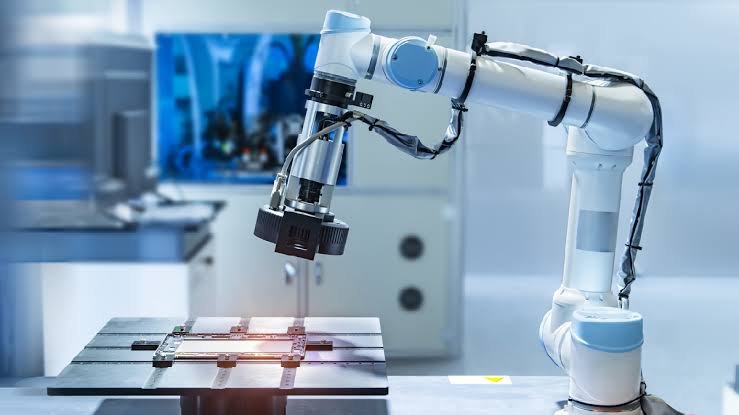
Robotic arms and automated grippers perform some of the delicate tasks in modern production and healthcare, from picking thin microchips to handling delicate biological tissue during laparoscopic surgery. Operating without precise force feedback risks crushing fragile items or dropping parts during transfer.
Working with an experienced force sensor manufacturer allows robotics builders to embed micro-sized tactile sensors right at the gripping tips. LILIKOI manufactures compact strain gauge and FBG optical elements built for robotic fingers, enabling precise closed-loop force control.
These tactile units let laparoscopic surgical tools deliver subtle haptic feedback to surgeons during robotic procedures. In industrial cleanrooms, tactile grippers safely handle delicate electronics without surface damage or unwanted static discharge.
Compact In-Line Load Cells for Tight Mechanical Spaces
When space constraints prevent the use of bulky external load cells, compact in-line sensors provide an ideal measurement solution. Micro-scale inline load cells fit directly into mechanical pushrods, cable assemblies, and tight motor linkages.
Despite their tiny footprint, these miniature sensors deliver wide dynamic ranges and high fatigue resistance. In battery pack manufacturing and EV battery management testing, inline arrays measure swelling pressures across cells during fast-charging cycles. This constant pressure data helps test engineers spot physical flaws and prevent thermal runaway risks long before battery packs hit production.
Partnering with a specialized force sensor manufacturer ensures that lightweight inline sensors stay fully accurate over millions of load cycles without physical drift or structural yield.
Flexible Custom Engineering for Extreme Application Demands
Every industrial setup brings unique mechanical constraints, mounting patterns, and temperature profiles. Off-the-shelf sensors cannot fit every custom bracket or specialized surgical tool head.
LILIKOI bridges this gap through rapid custom development programs. The engineering team crafts tailored torque transducers, multiaxis pressure arrays, and high-temperature probes built around clear customer specifications. Rapid prototype turnarounds help development teams move from early testing to field-ready hardware without long design delays.
Working alongside an agile force sensor manufacturer speeds up product development cycles for complex aerospace rigs, semiconductor vacuum chambers, and deep-submersion marine sub-assemblies. Custom fiber geometry, specialized connector housing, and tailored software integration ensure that every sensor unit fits into its host machine seamlessly.
Setting New Standards in Dynamic Force Measurement
As industrial automation, autonomous robotics, and medical equipment push toward higher speed and greater precision, the demand for clear, noise-free physical measurement keeps rising. Moving away from legacy electrical transducers toward optical FBG technology and structural Smart Brackets opens up new levels of system safety and physical control.
LILIKOI Innovation continues to drive progress in force measurement technology. By combining deep optical engineering, compact strain gauge designs, and rugged hardware builds, they supply the foundational sensing tech that keeps complex automated systems running safely, accurately, and reliably.