Apartment nights rarely fail for one reason alone. A fridge hum can sit under the floor all evening, upstairs footsteps can arrive in short bursts, and a slammed door can cut through just as you start to drift. Nighttime environmental noise is associated with adverse effects on sleep, which is why sorting overnight exposure matters before you buy. [Source: WHO Environmental Noise Guidelines for the European Region] Those sounds also ask different things from noise cancelling sleep earbuds, so treating every disturbance as the same problem usually leads to the wrong buy.
This guide keeps the focus on decisions about sleep earbuds for apartment noise. You will sort continuous hum from intermittent steps and sudden impacts, see where ANC (active noise cancellation), passive isolation, and masking help or fall short, match each pattern to a first tool, and check overnight wear before you purchase. The aim is a clearer buying path for sleep earbuds, not a promise of total silence.
Note: This content is for informational purposes only and is not intended as medical advice. Individual results may vary. If you experience chronic sleep issues, consult a healthcare professional.
Why Apartment Noise Makes Sleep Earbuds Harder to Choose
Apartment noise is a mix, not a single tone. Before you compare noise cancelling earbuds for sleeping, separate what you hear into steadier background sound, short impacts, and vibration that travels through the building. That split explains why one pair can soften a hum yet still leave footsteps noticeable.
Steady Background Versus Short Impacts
Steady low-frequency hum from HVAC, elevators, or distant traffic tends to stay predictable. Short impacts such as footsteps, dropped objects, or a slammed door rise and fall too quickly for the same expectation. A continuous rumble gives noise control more time to work. A sharp hit asks your ears to notice a sudden change, so the same setup often feels less effective even when overall volume is lower.
Structure-Borne Vibration Versus Airborne Sound
Some upstairs noise reaches you through air. Other parts travel through floors, joists, and walls as vibration that your body and pillow can still register. Ear tips and ANC mainly address sound that enters the ear canal. They do less against structure-borne vibration. When footsteps feel heavy in the mattress as well as in the air, lower your expectation of what any in-ear seal can remove.
How Noise Cancelling Sleep Earbuds Use ANC, Isolation, and Masking
Purpose-built noise cancelling sleep earbuds usually lean on three jobs. Passive isolation reduces what gets through the tip seal. ANC counters parts of incoming sound with opposing signals. Masking adds a steadier sound so leftover noise draws less attention. Each tool has a lane. None of them is a full apartment mute button.
| Mechanism | What it does | Strongest against | Weakest against |
| Passive isolation | Physical seal from tip shape, wing support, and in-ear seat | Bedding noise and sharper edges of room sound when the seal holds | Leakage from the wrong tip size, poor angle, or pillow shift |
| ANC | Mics and processing that counter parts of incoming sound | Steady low-frequency background such as traffic rumble or appliance hum | Irregular peaks and structure-borne vibration |
| Masking | Added audio that makes residual noise less conspicuous | Leftover hum and attention pull after isolation and ANC do part of the work | Sudden impacts; overly loud masking that becomes another distraction |
A seal problem weakens the other two tools, so tip fit is a prerequisite rather than a tie-breaker. Save the shopping sequence for the next section: which lever comes first for hum, footsteps, slams, or mixed nights.
Matching Sleep Earbuds to Apartment Hum, Footsteps, and Slams
Use one pass: identify the dominant pattern, pick a primary lever, add a secondary lever only if needed, then set a pass line you can judge after a few nights.
| If this is your main noise | Start with | Add next only if needed | Success looks like |
| Steady hum from AC, appliances, or distant traffic | Get a secure tip seal, then turn on sleep-focused ANC | Low masking audio if a soft drone is still noticeable | The room feels quieter in the background. It will not feel empty. |
| Upstairs footsteps that come and go | Keep the seal first; use ANC for any steady rumble under the steps | Low masking so each step grabs less attention | You startle less often. You will still hear or feel some steps. |
| Door slams or other sharp bangs | Focus on fit and passive isolation | Low masking to soften the after-jolt | The hit feels less harsh and fades faster. Full blocking is not the goal. |
| A mix of hum, footsteps, and occasional slams | Use isolation, ANC, and masking together in one bedtime routine | Recheck the seal after you roll onto your side | One routine still works after pillow pressure. Do not hunt for one hero feature. |
Continuous Low-Frequency Hum
This is the easiest apartment pattern for sleep earbuds. If night one only works at high volume, change tip size before you blame ANC.
Intermittent Footsteps Overhead
Put a hand on the mattress when someone walks upstairs. If you feel the thump as clearly as you hear it, treat vibration as the main problem: keep a light seal for the airborne part, and do not expect earbuds to fix the floor. If you mostly hear the steps and barely feel them, tip seal plus ANC is the better first spend.
Sudden Door Slams and Sharp Impacts
Judge this pattern on harshness and recovery time, not silence. If the whole room still jumps after fit work, that is usually the building, not a missing setting.
Mixed Apartment Nights
Build one bedtime stack, then retest after you roll. A pillow shift can weaken isolation, ANC, and masking at the same time.
What to Check Before Buying Noise Cancelling Earbuds for Sleeping
Noise-cancelling sleep earbuds only help if you can wear them comfortably through the night. Use these checks in shopping and the return window:
- Fit and side pressure: Sit for a baseline seal, then lie on each side for about 10 minutes on your usual pillow. No sharp dig on the outer ear, and the seal should still feel light after you roll. Prefer multi-size tips and optional wings so left and right can differ.
- Battery in real modes: Confirm the “up to” claim covers your typical sleep window in the modes you leave on after lights out. If you need about 7 to 9 hours in bed, check overnight or default-mode conditions, not only headline hours.
- Playback level: Start masking or wind-down audio at the lowest level that softens contrast. If volume keeps climbing, fix tip seal or ANC settings before buying more volume.
- Alerts, care, and returns: Make sure critical household alarms stay noticeable, and treat any awareness feature as support only, not a smoke or fire replacement. Plan 2 to 3 side-sleep nights inside the return window, and check cleaning plus replacement-tip access.
If side-sleeping comfort is your main concern, compare purpose-built earbuds for side sleepers.
Where Anker soundcore Sleep Earbuds 4 Fits for Apartment Noise
Anker soundcore Sleep Earbuds 4 shows how the layered path above can look in one sleep-focused pair. It fits best when continuous low-to-mid background noise leads the night. Footsteps and door slams still follow the harder-case limits from earlier.
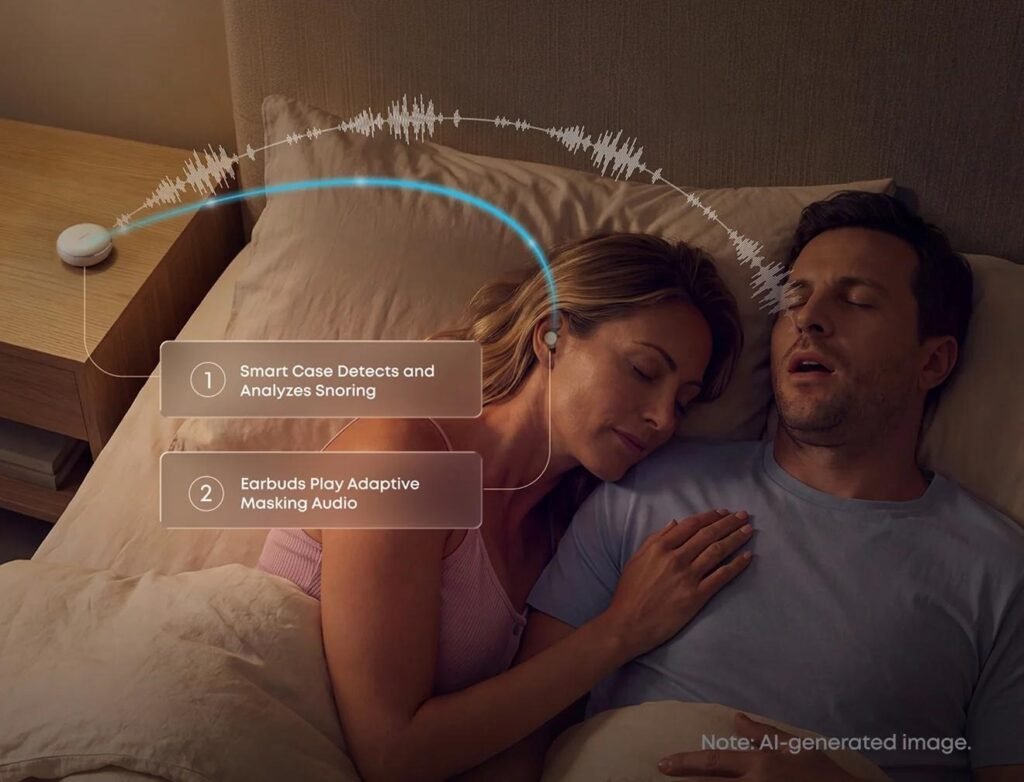
A secure seal still comes first, because passive isolation softens bedding noise and the sharper edges of room sound before any processing starts. Enhanced Mid-Range Reduction then adds a 3 to 5 dB improvement aimed at sleep-disrupting mid-range noise, which helps settle steadier traffic rumble, neighbor noise, and appliance hum. If a partner snores, Adaptive Snore Masking takes a different route: the Smart Case detects and analyzes the snoring, then tells the earbuds to play adaptive soothing audio. Place the case within about 2 m and point its microphone toward the sleeper. Reserve that path for snoring. It is not a real-time fix for upstairs footsteps or door slams.
Side sleep is where many apartment setups fail, so fit gets equal weight here. Upgraded Layered Design reduces the contact area by 20%, so the bud can sit lower against pressure points when your ear meets the pillow. The contour is meant to ease strain through the night rather than rely on bulk alone.
Conclusion
Apartment sleepers get better results when they sort hum, footsteps, and sudden impacts first, then match those patterns to isolation, ANC, and masking without expecting total silence. Keep overnight fit, seal stability, and real-mode battery life in the same decision as the noise features.
If you want one sleep-focused option that follows that layered path, explore Anker soundcore Sleep Earbuds 4 and see whether its seal options and noise tools match the apartment nights you actually have.
Frequently Asked Questions (FAQ)
Do noise-cancelling sleep earbuds block upstairs footsteps?
No, not as a shopping promise. If footsteps also shake the bed frame, treat leftover awareness as normal and shop for fewer startles from the airborne part, not for a silent ceiling. When a listing leads with “blocks upstairs noise,” move on.
Is ANC or sound masking better for apartment noise?
Depends on what still bothers you after the seal is stable. Run one quiet test night with seal only, then add ANC if a continuous hum remains, then add masking if leftover sound still pulls attention. The better tool is the one that removes the wake-up you still have, not the one with the louder marketing claim.
Can sleep earbuds stop door slams?
No. After you finish tip and wing fitting, judge a slam by whether the hit feels less harsh and the after-jolt fades faster. If the whole room still jumps, that is usually building structure, not a missing earbud setting.
What should side sleepers check before buying?
Ask whether the return window lets you fail upright comfort and still test on your real pillow. Keep the tip and wing pair that survives rolling without pinch, and reject a model that only feels fine while you sit. Battery mode labels matter here too: overnight claims only count in the mode you will actually leave on.
Where does Anker soundcore Sleep Earbuds 4 fit?
Choose it when your priority night is steady apartment hum, optional partner snoring, and side-sleep seal retention in one layered routine. Skip it as a primary pick if your only problem is structure-borne footsteps or door slams and you need a promise of silence those patterns cannot deliver.
About the Author