A kitchen extractor can have an impressive extraction rate on paper and still struggle to keep cooking fumes, steam, and odors under control. When that happens, it is tempting to assume the appliance is underpowered or simply not working properly. However, the problem may have more to do with how the extractor has been installed than with the extractor itself.
The route that air takes from the cooking surface to the outside can have a major effect on real-world performance. Duct length, bends, positioning, connections, kitchen layout, and even surrounding airflow can influence how effectively fumes are captured and removed. Understanding these factors can help homeowners make better installation decisions and avoid replacing an otherwise suitable extractor unnecessarily.
Why Extractor Power Isn’t the Whole Story
An extractor’s advertised extraction capacity is useful when comparing appliances, but it does not tell the complete story about how the system will perform in a particular kitchen. The stated figure generally describes the appliance’s airflow capability under defined conditions. Once the extractor is connected to ducting and installed in a real kitchen, the conditions can change considerably.
Air has to travel through the entire extraction pathway. If that pathway contains restrictions, unnecessary bends, unsuitable ducting, or poorly connected sections, the system may encounter greater resistance. As a result, the airflow available at the cooking area may not be the same as the figure suggested by the appliance specification.
There is also an important difference between moving air and capturing cooking fumes effectively. An extractor can move a substantial volume of air while still struggling to capture steam or smoke that has already spread beyond its effective capture area. Positioning therefore matters just as much as raw airflow when evaluating kitchen extractor performance.
This is why choosing an extractor should not be treated as a simple matter of selecting the highest extraction number. The appliance, ducting, installation, and kitchen environment need to work together as one system.
How Ducting Can Make or Break Extractor Performance
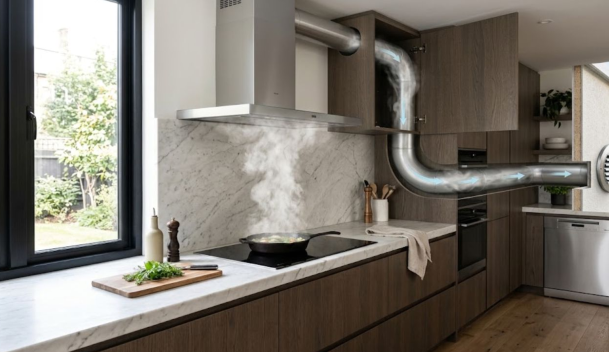
Ducting is one of the most important parts of a ducted extraction system because it determines how easily air can travel from the extractor to the external outlet. A poorly planned route can introduce unnecessary resistance, limiting how effectively the extractor moves air.
Duct length is one consideration. A longer route generally creates more opportunity for airflow resistance, particularly when combined with other restrictions. This does not mean that every long duct run will automatically cause poor performance, but it does mean that the route should be planned carefully rather than treated as an afterthought.
The number and shape of bends also matter. A duct that takes several sharp turns can create a less efficient airflow path than one with a shorter, more direct route. Where the building allows it, keeping the route reasonably direct can make installation simpler and reduce unnecessary restrictions.
Duct diameter should also be appropriate for the extractor and the installation design. Reducing the duct size without considering the manufacturer’s requirements can create an avoidable restriction. Similarly, flexible ducting that is excessively compressed, twisted, or poorly supported may not provide the same airflow conditions as a properly installed route.
Common ducting problems include:
- Unnecessarily long or complicated routes
- Multiple sharp bends
- Incorrect or reduced duct diameter
- Compressed or poorly positioned flexible ducting
The external outlet should not be overlooked either. Air still has to leave the building once it reaches the end of the duct. A poorly planned termination can create another restriction, making the entire extraction pathway less effective. For this reason, ducting should be considered during the initial kitchen design rather than fitted only after the extractor has been selected.
Extractor Positioning Matters More Than You Think
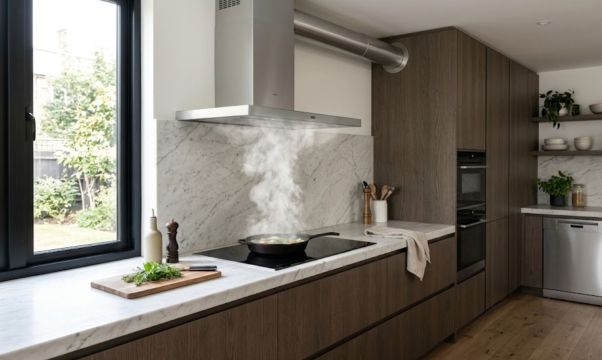
Even a well-designed duct route cannot compensate completely for poor extractor positioning. The extractor needs to be located where it can effectively capture the air and cooking fumes rising from the main cooking area.
The distance between the extractor and hob is particularly important. Installing the appliance too high can increase the distance that steam and fumes travel before reaching the capture area. Installing it too low may create other practical or safety concerns, so the manufacturer’s installation requirements should always take priority.
Extractor width also deserves attention. If the cooking area extends significantly beyond the effective capture area, fumes may escape around the sides before they can be drawn into the extractor. The surrounding cabinets, ceiling height, and shape of the cooking zone can further influence how air moves.
For kitchens where cooking and extraction need to be integrated differently, an induction hob with built in extractor can provide an alternative approach by combining two functions within the cooking area. However, the same principle still applies: the overall ventilation design and installation conditions need to suit the kitchen.
The goal is not simply to place an extractor somewhere above the cooking surface. It is to position the extraction system so that it can capture cooking fumes effectively before they spread throughout the room.
How Kitchen Layout Affects Extraction
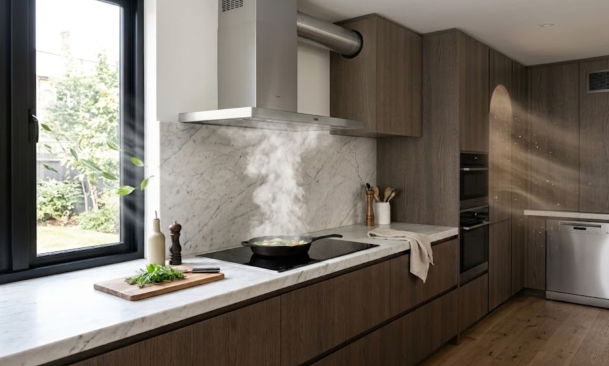
Kitchen layout can change the way cooking fumes move before they reach an extractor. A compact enclosed kitchen may have different airflow characteristics from a large open-plan space, while an island cooking area can behave differently from a wall-mounted cooking zone.
Windows and doors are another consideration. Strong air movement from an open window, nearby door, ventilation system, or other source can push steam and cooking fumes away from the extractor’s capture area. In some kitchens, this can make an extractor appear less effective even when the appliance and ducting are functioning normally.
Cabinet placement can influence the available space around the extractor as well. Surrounding structures may affect how cooking fumes rise and spread, particularly when the extractor is tightly integrated into a run of cabinets.
The key concept is capture. Cooking produces a rising plume of warm air carrying moisture, odors, grease, and other airborne particles. If that plume spreads widely before reaching the extractor, the appliance has a harder job to do. A thoughtful kitchen layout helps keep the cooking plume within the effective capture zone for as long as possible.
Sealing, Connections and Other Installation Details
Major design choices are not the only factors that matter. Small installation details can also affect the performance of an extraction system. Duct sections need to connect securely, and joints should be appropriately sealed so that the intended airflow follows the planned route.
Loose connections or poorly fitted adapters can create unwanted leakage or restrictions. Unnecessary transitions between different duct sizes can also complicate the airflow path. These issues may seem minor individually, but several poorly executed connections can contribute to a less efficient installation.
Installation quality is therefore about more than attaching a duct to the back of an extractor. The complete route should be considered, including how sections connect, how bends are formed, where the duct passes through cabinets or walls, and how the external outlet is configured.
Following the extractor manufacturer’s installation instructions is particularly important because recommended clearances, duct sizes, connection methods, and installation conditions can vary between models. A technically suitable extractor can still perform differently when installed in different environments.
Ducted vs Recirculating Extraction: Why Installation Changes the Result
Ducted and recirculating extractors use different approaches to managing cooking air, so their installation and maintenance requirements are not identical.
A ducted extractor sends air through a duct and out of the building. This can provide an effective way of removing cooking air from the kitchen, but it requires a suitable route to an external outlet. The available building structure can therefore play a major role in determining whether this configuration is practical.
A recirculating extractor, by contrast, filters the air and returns it to the kitchen. This can be useful where creating an external duct route is impractical. However, filter condition becomes particularly important because the filtration system is responsible for treating the returning air.
Neither approach should automatically be considered the best choice for every kitchen. The appropriate option depends on the building, kitchen design, available installation space, cooking habits, and maintenance requirements.
For either configuration, installation still matters. A ducted system needs a sensible airflow route, while a recirculating system needs correctly fitted and maintained filters. Understanding those differences before installation can prevent unrealistic expectations about performance.
Think About the Entire Cooking Setup, Not Just the Extractor
An extractor does not operate independently from the rest of the cooking area. Its position should be considered alongside the hob, oven, cabinets, worktops, and available ventilation routes. A well-planned cooking zone makes it easier for each appliance to perform its intended function without creating unnecessary layout conflicts.
For example, the position of an oven such as the Ciarra Nosh Oven can be considered alongside the hob and extractor when planning the wider cooking area. The goal is not to promote one particular appliance arrangement, but to make sure the appliances work together within the available space.
This becomes especially important in smaller kitchens, where moving one appliance can affect several others. Planning the cooking zone as a complete system can help avoid situations where an extractor is installed in a location that looks convenient but creates poor airflow or awkward access.
Thinking about the complete kitchen before installation also makes it easier to identify practical issues such as duct routes, cabinet clearances, electrical access, and maintenance space.
Common Installation Problems to Check Before Replacing Your Extractor
When an extractor appears to be underperforming, replacing it immediately may not always be the most sensible first step. The installation should be checked for basic problems that could be limiting airflow or reducing capture effectiveness.
Some common areas to inspect include:
- Excessive duct bends: A complicated route can introduce additional airflow resistance.
- Incorrect duct size: A restrictive duct may prevent the system from operating as intended.
- Long or poorly planned duct routes: Greater distance and unnecessary restrictions can affect airflow.
- Poorly sealed connections: Loose or poorly fitted joints can affect the intended airflow path.
- Incorrect extractor positioning: The appliance may not effectively capture fumes from the cooking area.
- Dirty filters: Accumulated grease and debris can affect the performance of systems that rely on filtration.
It is also worth considering whether the kitchen’s surrounding airflow is influencing the problem. Strong drafts from windows, doors, or other ventilation sources may redirect cooking fumes before they reach the extractor.
If the appliance is otherwise functioning normally, identifying an installation or maintenance issue may be more useful than immediately purchasing a replacement. Where changes involve electrical connections, structural work, or complex ducting, qualified professional assistance can also be appropriate.
Conclusion
Kitchen extractor performance is not determined by appliance power alone. The ducting route, extractor position, kitchen layout, connections, extraction method, and maintenance all contribute to how effectively cooking fumes are captured and managed.
This is why installation should be considered before judging an extractor solely by its advertised airflow capacity. A well-matched appliance can deliver very different real-world results depending on the conditions around it. Likewise, an apparently weak extractor may sometimes have an installation or maintenance problem rather than a fundamental appliance problem.
For anyone planning a new cooking area or upgrading an existing one, considering the entire ventilation system from the beginning can prevent many avoidable issues. Those comparing kitchen appliances and planning a practical cooking setup can also explore the wider range of solutions available from Ciarra Appliances.
Frequently Asked Questions
1. Does extractor installation affect performance?
Yes. Duct length, bends, duct diameter, positioning, connections and the external outlet can all influence how effectively an extractor moves and captures cooking air.
2. Why is my kitchen extractor not removing steam properly?
Poor positioning, restrictive ducting, excessive bends, dirty filters or strong cross-drafts can all contribute to weak steam capture. The installation should be checked before replacing the appliance.
3. Does a longer extractor duct reduce airflow?
A longer duct route can increase airflow resistance, particularly when it also contains multiple bends or other restrictions. A well-planned, appropriately sized route is generally preferable.
4. Is ducted extraction better than recirculating extraction?
Neither is automatically better for every kitchen. Ducted extraction removes air outside but requires a suitable external route, while recirculating systems filter and return air to the room.
5. How should I improve kitchen extractor performance?
Start by checking the extractor’s position, duct route, duct size, bends, connections and filters. Also consider whether windows, doors or other airflow sources are pushing cooking fumes away from the capture area.
About the Author