
Leather and suede pieces often stay in a wardrobe for years because they do not behave like ordinary fabric. A good jacket, pair of gloves, handbag, or pair of shoes can develop character over time, but that same material can also be unforgiving when it is cleaned the wrong way. Water spots, stiff patches, fading, and changes in texture are difficult to hide once they appear.
That is why leather & suede cleaning needs a different mindset from routine laundry. Instead of treating every mark with soap, water, or a household stain remover, it helps to understand how these materials react before taking action. Ians Cleaners is one example of a garment-care provider that handles specialty items where surface texture and finish matter just as much as removing visible dirt.
The biggest mistakes usually happen when someone tries to fix a small problem quickly. A few minutes of scrubbing or direct heat can create damage that lasts much longer than the original stain.
Mistake 1: Treating Leather Like Regular Fabric
The first mistake is assuming leather can be washed the same way as cotton, denim, or synthetic clothing.
Leather is skin. Even after tanning and finishing, it still reacts to moisture, oils, heat, and cleaning agents differently from woven fabric. Soaking it can affect shape and flexibility, while harsh products may strip away surface finishes.
A leather jacket may look durable, but that does not mean it is safe to put in a washing machine. The combination of water, detergent, agitation, and spinning can leave the material stiff, uneven, or misshapen.
The safest starting point is always the care label. If the item is made from genuine leather, suede, nubuck, or a mixed construction, home washing should not be treated as the default option.
Mistake 2: Scrubbing Suede When a Stain Appears
Suede has a soft, raised surface called a nap. That texture is part of what makes the material attractive, but it also means aggressive rubbing can leave visible marks.
A wet spill can make people panic. The instinct is often to grab a cloth and scrub until the mark disappears. Instead, hard rubbing may flatten the nap, spread the stain, or create a darker patch around the area.
Gentle blotting is usually a better first response for a fresh spill. The goal is to lift moisture without forcing it deeper into the material.
Once the area is dry, brushing may sometimes help restore the surface, but the correct method depends on the type of suede and the nature of the stain. Leather & suede cleaning in Austin becomes especially important when oil, grease, dye, or unknown substances are involved because random home treatments can permanently change the appearance.
Mistake 3: Using Household Cleaners Without Testing Them
Dish soap, laundry detergent, disinfectant wipes, alcohol, and general-purpose cleaners are designed for other surfaces. They may be effective elsewhere in the home, but leather and suede can react badly to them.
Some products remove natural oils along with the stain. Others affect dyes or leave behind a pale ring. A cleaner that seems harmless on one item may discolor another because the finish and treatment are different.
Even plain water can create problems on certain materials.
This is one reason specialty garments need more careful evaluation. At Ians Cleaners, the practical value of professional attention is the ability to assess the material before choosing a treatment rather than starting with whatever cleaning product happens to be nearby.
If a person does decide to use a product approved for leather or suede, testing it in a hidden area first is a sensible precaution.
Mistake 4: Drying Wet Leather With Direct Heat
Rain, snow, and spills happen. The real problem often begins afterward.
Placing wet leather near a radiator, using a hair dryer, or setting it close to a heater may seem like a quick solution, but rapid drying can pull moisture out too aggressively. The result can be stiffness, cracking, or changes in shape.
A gentler approach is usually better. Remove excess moisture with a soft cloth and allow the item to dry naturally in a well-ventilated area away from direct heat.
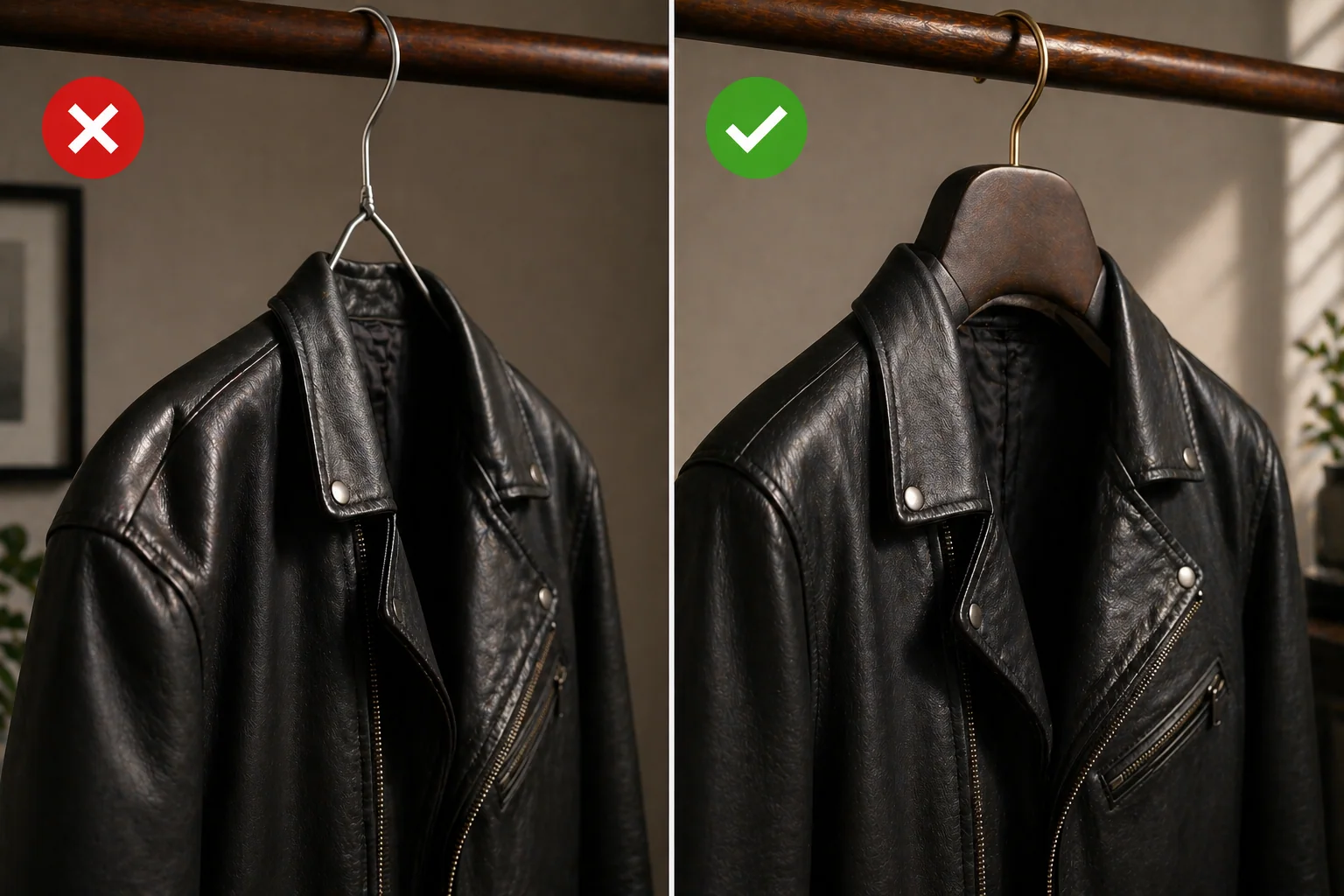
Shoes and bags may benefit from being lightly supported so they hold their shape while drying. Jackets should hang on a suitable hanger rather than being folded while damp.
If drying has already left the material stiff, uneven, or marked, leather & suede cleaning may be more appropriate than trying several conditioning products without knowing how the finish will react.
Once completely dry, some leather items may need conditioning, but the correct product depends on the finish. Suede should not be treated with a standard leather conditioner unless the product is specifically intended for that material.
Mistake 5: Ignoring Small Stains for Too Long
The opposite of overreacting is ignoring the stain entirely.
A small oil mark on a sleeve or collar may not seem urgent, but oily residue can darken leather and attract additional dirt. Body oils are particularly common around cuffs, collars, and areas frequently handled by the wearer.
Suede can also hold onto dust and grime in a way that gradually changes its appearance. Because the surface is textured, the change may happen slowly enough that the owner does not notice until one area looks much darker than another.
Routine observation helps. Check high-contact areas from time to time instead of waiting until the garment looks obviously dirty.
Mistake 6: Storing Specialty Materials in Plastic for Long Periods
Storage can damage leather even when the item is perfectly clean.
Plastic bags can trap moisture and restrict airflow. If an item is stored for months in a damp environment, the material may develop odor, mildew, or surface changes.
A cool, dry closet with reasonable airflow is generally a better choice. Leather jackets should be hung on sturdy hangers that support the shoulders. Suede pieces should not be crushed tightly between heavier garments.
Direct sunlight is another concern. Repeated exposure can affect color, especially if one side of the item receives more light than the other.
Before long-term storage, make sure the piece is fully dry. Storing it while damp creates conditions that can lead to far more serious problems than a little dust.
Mistake 7: Forgetting That Different Leather Finishes Need Different Care
Not all leather is the same.
Smooth leather, suede, nubuck, patent leather, and coated finishes respond differently to cleaning and conditioning. A product that works well on a smooth leather boot may be completely wrong for a suede jacket.
Color matters too. Dark leather can hide some changes that would be obvious on a pale or brightly colored item.
That is why generic advice should always be treated carefully. If the garment is expensive, unusual, sentimental, or difficult to replace, guessing is rarely worth the risk.
For those pieces, Ians Cleaners can be considered when the owner wants the material assessed before any aggressive treatment is attempted. The important part is matching the care method to the actual surface, not just to the word “leather” on the label.
Mistake 8: Waiting Until Damage Becomes Obvious
Cleaning is only one part of protecting specialty materials. Regular care also means noticing changes early.
A suede jacket that begins looking shiny at the elbows, a leather coat that feels drier than usual, or a handbag with darkened handles may be showing gradual wear rather than one sudden problem.
Early attention gives the owner more options. It may involve gentle brushing, proper storage, conditioning when appropriate, or professional treatment if the change is beyond routine maintenance.
The worst time to start caring for a specialty garment is after the surface has already cracked, faded badly, or lost its texture.
Treat the Material, Not Just the Stain
Leather and suede can last for years, but only if their care matches the material. The biggest risks usually come from treating them like ordinary fabric, using unsuitable cleaners, applying too much heat, or waiting too long to address visible changes.
For items that need more than simple maintenance, leather & suede cleaning can provide a safer path than experimenting at home. Ians Cleaners may be useful for specialty garments where preserving texture, color, and overall condition is just as important as removing dirt.
A small stain is frustrating, but permanent damage is worse. Slowing down, checking the material, and choosing the right care method gives leather and suede a much better chance of staying wearable for years.
About the Author