Landing Page
Visitors can be driven to your website in a jiffy by running paid ads. However, what happens if they click? Many businesses miss out on potential customers at this point.
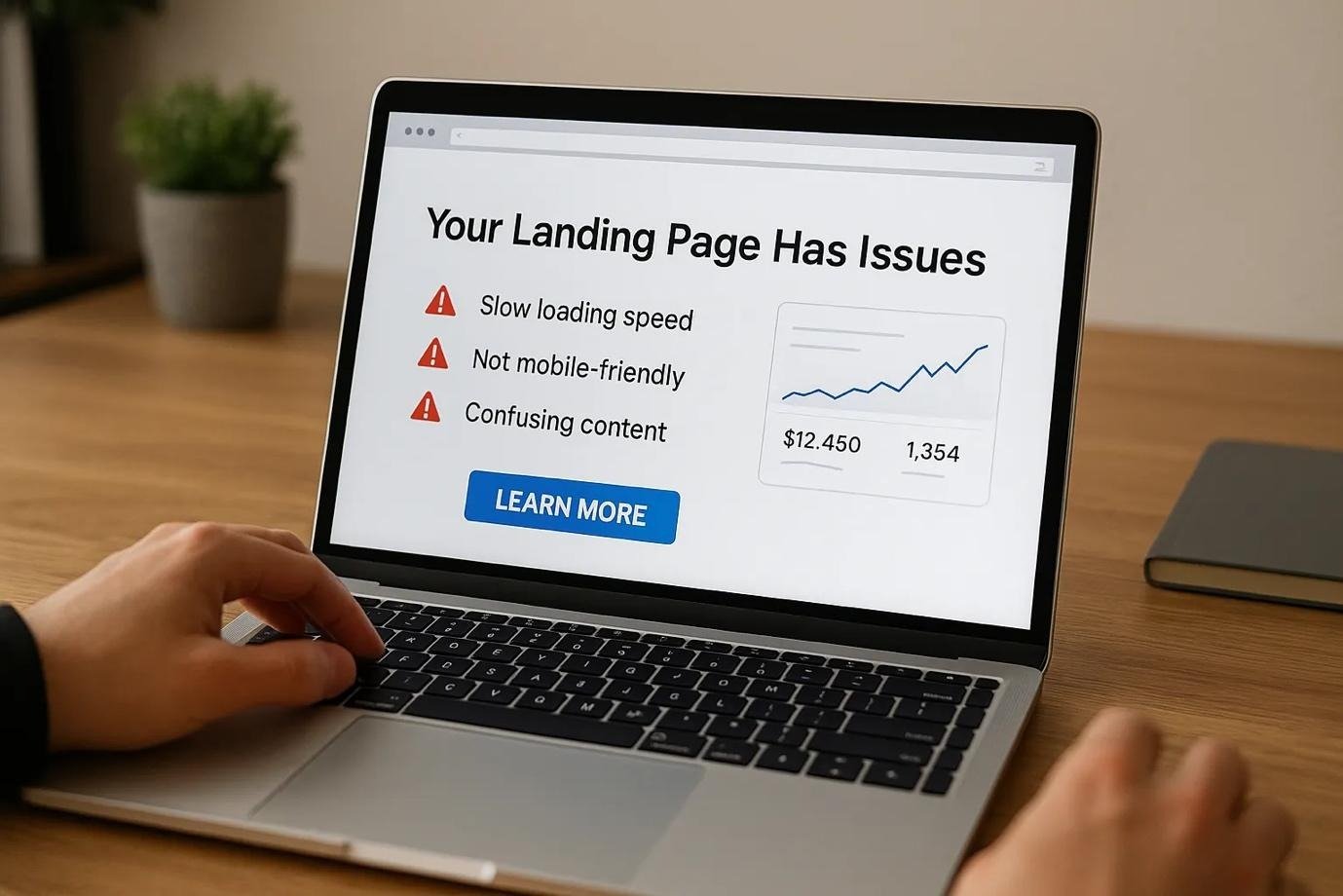
You could be doing everything right, have a fantastic ad, target the right audience, and offer them a great deal, but still not see the conversions you’re looking for. Why? In some cases, it is not the ads themselves that are the issue. It’s the landing page!
This is easy to do, but it wastes a lot of resources.It’s convenient to have one landing page per paid ad, but it’s a big waste of resources. Why make multiple pages, when there’s one already? But, different ads can appeal to individuals who have different requirements, inquiries and expectations. When they aren’t brought to the correct landing page, they may just walk away.
Different Ads Attract Different People
Consider what it is that you are advertising. Is it the same customer they’re all going for?
Probably not.
A campaign could focus on those who are familiar with your brand and another campaign can focus on those who are just discovering your product for the first time. These two ads can advertise a discount and a specific feature of the product.
These are the folks who have various expectations. If they’re all directed to the same page, it can be disjointed.
A landing page is intended to carry on the process of a given advertisement.
The ad and page should match
Suppose you click on an advertisement which offers 20% off on a particular item. You are not directed to that product and offered immediately, but instead directed to a general homepage which has dozens of products.
Annoying, right?
The visitor has to now look for the search he/she looked for initially. Some may remain but most will just walk away.
That’s why it is important to have message matching. Your headline, offer, visuals and call to action on your landing page should flow well from the ad that got the person there.
Personalization Can Improve The Experience
Not all paid campaigns are for the same intention.
A brand awareness ad can be a way to introduce your business to new customers. A retargeting ad could be a reminder to those who have previously seen a product for its availability. It is possible to create a promotion campaign that is primarily based on a limited time offer. An LLM advertising platform can support more personalized advertising experiences by adapting messaging to different audiences and customer intent.
One Page Can Make Testing Difficult
If you’re a first-time visitor to your brand, you need to introduce yourself. If you’re already on your visitor’s website, you need something more convincing for him or her to make the purchase.
Having landing pages for particular campaigns enables you to communicate directly with every target market.
This will enhance the experience with personalization.
Match The Landing Page To The Customer Journey
Suppose, for instance you are selling running shoes. One of the ads is aimed at people who are new to running and wish to find a comfortable shoe, another is aimed at the more advanced runner who may be interested in performance.
Does the landing page resonate with both audiences?
Probably not.
For the beginner, comfort, cost, and quality of the product might be factors of concern. The seasoned runner might wish to know what cushioning, weight, materials, and performance characteristics to look for.
A distinctive landing page provides every audience with the information that’s truly of interest to them. Use an AI landing page generator to create landing pages tailored to different campaigns.
One Page Can Make Testing Difficult
The entire reason for paid advertising is to test.
You may perform testing on various headlines, pictures, viewers, offers and calls to action. However, when all of the campaigns funnel traffic to the same landing page, it will be more difficult to determine which campaigns are responsible for the actual conversions.
You can have individual landing pages to make it easier to compare various messages and offers.
Match up The Landing Page To The Customer Journey
Not all visitors are in a position to make an instant purchase.
If your brand is new, someone might need to see your brand for the first time and get product information and answers to some common questions. A prior customer of your brand might just require a straightforward offer, and a clear checkout route.
The landing page should be in line with the customer’s journey.
The aim is not to overload the visitors with information. It’s meant to provide them with the correct info at the proper time.
Final Thoughts
Sometimes it’s better to spend time on one landing page, but it’s not always the case with paid ads.
The different ads are aimed at different audiences, offer different deals and respond to different needs. The landing page is tailored to the message of each campaign, providing a more relevant and consistent experience for visitors.
The first step is to determine what your biggest campaigns are. Make pages that are specific to the audiences, offers, and/or intent that make them worth having. After that, try testing them and then making adjustments based on that.
Your advert is now clicked. Your landing page must merit the next step.
About the Author