Science in the primary years is not only about remembering facts. Children also need to observe carefully, ask questions, identify patterns, interpret information, and explain what they understand. A suitable primary science book can support these habits by giving learners structured opportunities to connect classroom concepts with practical examples and guided activities.
Singapore’s Primary Science Curriculum places strong emphasis on developing students as inquirers. The 2023 syllabus encourages learners to ask questions, investigate phenomena, use evidence, communicate explanations, and connect scientific ideas with authentic contexts. The current PSLE Science assessment objectives likewise include knowledge and understanding, application of knowledge, scientific inquiry, interpretation and analysis of information, evaluation, and communication of reasoning.
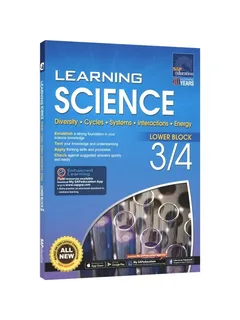
SAP’s current primary science collection spans different primary levels and includes resources that focus on science learning, inquiry, process skills, and revision. Used thoughtfully, such resources can become part of a learning process that develops skills alongside subject knowledge.
Build Observation Skills Through Guided Exploration
Observation is one of the first skills children use when learning science. Before they can explain why something happens, they need to notice what is happening in the first place.
A well-structured science resource can encourage children to pay attention to details such as colour, shape, movement, texture, growth, temperature, or changes over time. This is especially useful when the activity moves beyond simple fact recall and asks the learner to identify what is different or what pattern can be seen.
Singapore’s Primary Science Curriculum highlights observing, collecting evidence, reasoning, and communicating as important parts of scientific learning.
Encourage Careful Looking
Parents can turn ordinary practice questions into observation exercises by asking children to describe what they see before asking for an answer.
For example, a child studying plants could be encouraged to notice differences in leaves, roots, growth conditions, or visible changes over time. The child is then practising a science process rather than simply memorising the name of a plant part.
Simple prompts can help:
- What do you notice first?
- What has changed?
- What looks similar?
- What looks different?
- What pattern can you see?
- Which detail supports your answer?
These questions encourage children to slow down and examine information carefully.
Move from Observation to Evidence
Observation becomes more meaningful when children learn to distinguish what they actually observe from what they assume.
Suppose two objects are placed in different conditions and only one changes. A child can describe the visible change first and then begin thinking about what may have caused it.
That transition from “I saw this” to “What evidence supports this idea?” is an important foundation for scientific reasoning.
Develop Questioning and Scientific Thinking
Curiosity is central to science. Young learners often ask spontaneous questions about animals, weather, materials, light, sound, plants, and everyday objects. Structured learning materials can help turn that curiosity into purposeful investigation.
The Singapore Primary Science Curriculum explicitly seeks to nurture students as inquirers by giving them opportunities to pose questions, engage with phenomena, discuss issues, and solve problems.
Turn Curiosity into Better Questions
Not every question has the same investigative value.
Compare:
“Why is the ice melting?”
with:
“Does the temperature of the surrounding environment affect how quickly ice melts?”
The second question gives the child a clearer direction for investigation. It also introduces the idea that scientific questions can be explored by comparing conditions and gathering evidence.
A science resource can help children become more comfortable with this progression from curiosity to investigation.
Introduce Prediction Before Explanation
Prediction adds another layer of thinking.
Before seeing the result of an activity, children can be asked what they think will happen and why. The purpose is not to reward a correct guess. It is to encourage them to connect existing knowledge with a new situation.
Afterwards, they can compare their prediction with the actual observation.
This creates a useful learning sequence:
Question → Prediction → Observation → Evidence → Explanation
Repeated exposure to this sequence can make scientific thinking more natural.
Encourage Children to Explain “Why”
A correct answer is useful, but the reasoning behind it often reveals deeper understanding.
Parents can ask a child to explain:
- What caused the change?
- What evidence supports the answer?
- Why did one object behave differently?
- What would happen if the condition changed?
- How does this connect with something learned earlier?
These questions encourage learners to use concepts rather than simply recognise familiar phrases.
Strengthen Concept Understanding Through Connections
Children understand science more deeply when they see relationships between ideas. A topic becomes more memorable when it connects with something they already know or something they experience in daily life.
Singapore’s Primary Science Curriculum encourages authentic contexts and connections between science learning and everyday life, society, and the environment.
Connect New Ideas with Familiar Experiences
Consider the topic of energy.
Instead of learning the definition in isolation, children can think about where energy is used at home, why appliances need electricity, and how living things obtain energy.
Similarly, a topic about materials can be linked to objects that children use every day. A lesson about forces can be connected with pushing doors, riding bicycles, or moving toys.
These connections give abstract ideas a context.
Build Concept Maps
A simple concept map can help children organise information.
For example:
Living things → need energy → obtain energy from food → use energy for growth and activity
Or:
Light source → light travels → object blocks light → shadow forms
The goal is not to create complicated diagrams. The goal is to help children see how one idea leads to another.
Revisit Ideas in Different Contexts
A child may understand a concept when it appears in a familiar example but struggle when the context changes.
That is why it is useful to revisit the same idea through different situations.
A question about heat could involve cooking, sunlight, or everyday materials. The scientific principle remains connected even though the surface details change.
This kind of variation can strengthen conceptual flexibility.
Improve Application and Data Interpretation Skills
As students progress, science questions increasingly require them to apply what they know rather than simply recall definitions.
The current PSLE Science assessment objectives specifically include applying scientific facts, concepts, and principles, as well as interpreting and analysing information and evaluating observations, information, and methods.
Practise Applying Concepts to New Situations
A student may know what evaporation means but still need practice applying the concept to an unfamiliar scenario.
For example, a question could describe two wet materials placed under different conditions and ask which one dries faster. The learner must identify the relevant idea and use the information provided.
This is where well-designed practice can make a difference. Questions should encourage students to decide which knowledge is relevant instead of giving them the answer structure immediately.
Work with Tables, Graphs, and Diagrams
Science learning also involves interpreting information presented visually.
Students can practise:
- Reading values in a table
- Identifying trends in a graph
- Comparing measurements
- Reading labels on a diagram
- Identifying variables
- Drawing conclusions from evidence
A child who learns to move comfortably between words, numbers, diagrams, and observations is developing a broader scientific skill set.
Use a Simple Evidence Table
One practical study method is to organise information in a small table.
| What Was Observed | What It Suggests | Evidence |
| Plant A grew taller | Growth may have been affected by its condition | Height increased over time |
| Object B moved faster | A different force or condition may be involved | Recorded movement changed |
| Liquid level decreased | Some liquid may have evaporated | Volume reduced after exposure |
The purpose is not to make every lesson complicated. A small table can simply teach children to separate observation from interpretation.
Develop Clear Scientific Communication
Science knowledge becomes more useful when students can communicate what they have discovered. They may need to describe observations, explain relationships, interpret information, or justify a conclusion.
The PSLE Science assessment objectives include communicating explanations and reasoning, showing that scientific communication is part of the broader skill set being assessed.
Teach Complete Explanations
A child may know the correct conclusion but provide too little reasoning.
Instead of writing:
“The plant grew better.”
the learner can be encouraged to explain:
“The plant showed more growth under the conditions that provided a suitable amount of light.”
The second response communicates both the observation and the relevant relationship.
Use Scientific Vocabulary Naturally
Science books can introduce subject-specific terms while placing them within understandable contexts.
Children can gradually become comfortable using words such as:
- Absorb
- Reflect
- Dissolve
- Evaporate
- Reproduce
- Habitat
- Force
- Energy
- Temperature
- Structure
Vocabulary becomes more meaningful when students use it in explanations instead of memorising definitions alone.
Practise Explaining Visual Information
Diagrams, tables, and graphs can also become communication exercises.
Parents can ask a child to describe what a graph shows in one or two sentences. They can also ask the child to explain why a particular diagram supports a conclusion.
This develops precision and encourages students to communicate evidence clearly.
Turn Practice into a Complete Science Learning Cycle
The greatest value of a science resource often comes from how it is used. Instead of treating every page as an isolated worksheet, parents can connect activities into a continuous learning cycle.
Follow the Five-Part Science Cycle
A simple home-learning model is:
Explore: Examine a concept, image, situation, or phenomenon.
Question: Ask what needs to be understood or investigated.
Apply: Use scientific knowledge to answer related questions.
Explain: Describe the reasoning behind the answer.
Review: Check mistakes and identify what should be revisited.
This approach makes practice more active.
Combine Book Practice with Everyday Exploration
A science resource becomes more engaging when children can connect it to their surroundings.
For example, after studying materials, they can look at objects around the house and classify them according to properties. After studying light, they can observe shadows at different times of day. After learning about forces, they can identify examples of pushing and pulling in daily activities.
Singapore’s science curriculum encourages learning experiences that connect scientific ideas with authentic contexts, including the learner’s everyday environment.
Use Different Resources for Different Purposes
Not every learning resource needs to serve the same role.
One book may provide structured topic practice, another may offer process-skill activities, while another may focus on revision or exam-style questions. SAP’s current science catalogue includes resources ranging from Primary 1/2 science materials to inquiry-focused and process-skills resources for upper primary learners.
Choosing the right learning material becomes easier when parents first consider what their child needs to practise. Rather than using every resource in the same way, families can select primary school books alongside other materials to reinforce concepts, encourage application, explore scientific ideas, or support revision. Giving each resource a clear purpose can make learning more focused and help children get greater value from their study time.
Keep the Learning Cycle Age-Appropriate
The same five-part cycle can be simplified for younger children and expanded as they progress.
For a younger learner, “Explore” might mean observing a picture and answering a simple question.
For an older primary student, the same stage could involve analysing a table of results and identifying a relationship.
The structure remains consistent while the level of thinking becomes more sophisticated.
Frequently Asked Questions
1. What skills can primary science books help children develop?
Suitable science resources can provide practice in observation, questioning, concept application, interpretation of information, reasoning, and communication. These skills align with the inquiry-oriented approach reflected in Singapore’s Primary Science Curriculum.
2. Should primary science books focus mainly on factual knowledge?
No. Factual knowledge is important, but primary science also involves using knowledge to interpret information, investigate questions, reason from evidence, and communicate explanations. The current PSLE Science assessment objectives reflect this broader range of skills.
3. How can parents make science practice more engaging?
Parents can connect book activities with everyday observations and simple discussions. Asking children what they notice, what they predict, and why they think something happened can turn ordinary practice into a more active learning experience.
4. Are science practice books useful outside examination preparation?
Yes. Practice resources can reinforce classroom concepts and provide additional opportunities to apply knowledge. Their usefulness does not have to depend entirely on exam preparation, especially when activities encourage observation, inquiry, reasoning, and explanation.
5. How should parents choose a primary science book?
Parents should consider the child’s primary level, current learning needs, syllabus relevance, clarity of explanations, question variety, and opportunities to practise scientific skills. The resource should complement classroom learning rather than create unnecessary repetition.
Final Takeaway
A primary science resource can do much more than help a child remember scientific facts. When used intentionally, it can support a complete learning process that begins with observation and curiosity and develops towards application, evidence-based reasoning, and clear communication.
For this reason, a primary science book should be viewed as part of a wider learning experience. The most useful practice is not necessarily the practice with the greatest number of questions. It is the practice that helps children understand concepts, make connections, interpret information, explain their reasoning, and apply what they have learned in new situations.
Building strong science skills takes more than memorising facts; children also need opportunities to explore ideas, ask questions, and apply what they have learned. Families can support this process by choosing learning materials that suit the child’s level and provide a clear progression of practice. Among the available options, resources from Singapore Asia Publishers can complement school learning by giving primary students additional opportunities to develop scientific understanding, practise process skills, and revisit important topics.
When parents combine structured book practice with discussion, observation, and everyday exploration, science can become more than another school subject. It can become a way for children to look closely at the world, ask thoughtful questions, use evidence, and develop the habit of finding explanations for the things they encounter every day.
About the Author