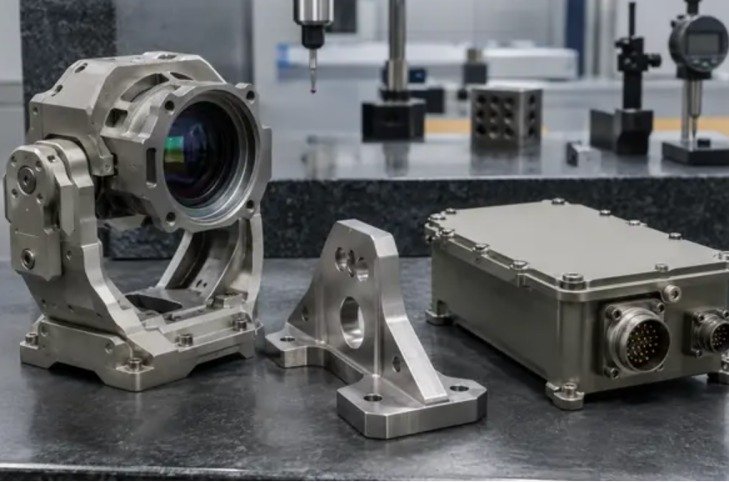
Defense equipment is built to serve for decades. The parts that keep it running are not.
Seals, bushings, bearing seats, gears, shafts, and structural wear components are consumed continuously across the service life of any vehicle, vessel, or platform. Yet the original manufacturers of these parts may discontinue them within a few years, supply chains shift, and counterfeit components increasingly find their way into maintenance channels. For procurement managers and MRO engineers, choosing the wrong supplier does not just waste budget — it grounds equipment, compromises readiness, and creates compliance exposure.
This guide breaks down what makes sourcing defense wear parts different from ordinary industrial purchasing, the seven criteria that separate reliable suppliers from risky ones, and a practical three-step process for validating a new supplier before you commit.
First, Understand What Makes This Procurement Different
Sourcing wear parts for defense applications is not the same as sourcing parts for commercial machinery. Four differences define the category:
Service life mismatch. The platform may serve for 30 years. The part supplier may exist for five. Obsolescence is not an exception — it is the default condition of long-cycle defense maintenance.
Small batches, many varieties, urgent timelines. A typical MRO order is dozens of pieces across multiple part numbers, often needed immediately because equipment is down. The cost of a grounded asset dwarfs the cost of the part.
Strict compliance requirements. Export control regimes, material traceability mandates, and confidentiality obligations apply throughout the supply chain. A supplier who treats these as paperwork rather than process is a liability.
Counterfeit risk. Wear parts with faded markings and unverifiable origins are a documented problem in defense maintenance channels. Traceability is your primary defense.
Before approaching any supplier, prepare a complete technical package: drawings, material specifications, surface treatment requirements, and acceptance criteria. Suppliers who quote without asking for these documents should be filtered out immediately.
The Seven Criteria That Matter
1. Quality System and Industry Certifications
ISO 9001 is the baseline. AS9100 — the quality standard common to aerospace and defense manufacturing — is a strong positive signal. But certificates alone prove nothing: ask for audit records and, more importantly, ask how the quality system shows up in daily practice. A certificate on the wall with no process behind it is decoration.
2. Material Traceability
Every batch of material should arrive with a mill test certificate (EN 10204 3.1 or equivalent), with heat and lot numbers traceable back to the raw material source. Ask the supplier directly: how do you verify that incoming material is genuine? A serious supplier has a documented counterfeit-prevention process — incoming inspection, PMI (positive material identification) testing, retained samples. A casual one has a shrug.
3. Machining Precision and Inspection Capability
Wear parts are typically low-volume, but their tolerance requirements do not shrink with the batch size. Bearing seats, sealing surfaces, and mating features must hold spec whether you order one piece or one thousand. Look for coordinate measuring machine (CMM) capability, a formal First Article Inspection (FAI) process, and complete inspection reports shipped with every order. If a supplier cannot show you a sample inspection report before you place an order, stop the conversation.
4. Small-Batch Flexibility and Responsiveness
Defense MRO orders are structurally different from production runs: small quantities, many line items, tight deadlines. Ask concrete questions. Is there a minimum order quantity? What is the turnaround for an urgent order? How fast can a first article be delivered? Suppliers built for mass production often cannot economically serve this profile — better to learn that before the order than after.
5. Reverse Engineering and Obsolete Part Replication
This is the dividing line between an ordinary machine shop and a genuine wear-parts partner. When the OEM has discontinued a part, can the supplier work from a worn sample — measuring, analyzing material, and reproducing it to specification? Reverse engineering capability turns a stranded asset back into a working one. Not every supplier has it; the ones who do are worth keeping.
6. Confidentiality and Data Security
Defense-adjacent drawings deserve serious handling. A qualified supplier signs NDAs without hesitation, restricts drawing access to project personnel, and never forwards files to third parties. Ask how drawings are stored and transmitted. The answer reveals more about a supplier’s professionalism than any brochure.
7. Supply Chain Resilience
The past several years taught every procurement team the same lesson: single sourcing is a single point of failure. Evaluate whether the supplier has multi-source raw material channels, spare capacity, and documented export experience. A supplier who understands trade compliance and packaging for international shipment will save you problems you have not yet imagined.
Red Flags That Should End the Conversation
Some warning signs are consistent enough to treat as disqualifiers:
Quotes dramatically below market. Cheap parts come from somewhere — usually material substitution or skipped inspection.
No mill certificates or inspection reports. If they cannot document it, they did not verify it.
Reluctance to sign an NDA. Confidentiality hesitation today becomes a leak tomorrow.
Quoting without studying your drawings. A price generated without questions about tolerances and materials is a guess, not a quote.
No verifiable facility. Refusing a site visit or even a video walkthrough means there is nothing to show.
A Practical Three-Step Validation Process
Step 1: Document review. Request certifications, sample mill certificates, and sample inspection reports. The quality of a supplier’s paperwork predicts the quality of their parts.
Step 2: Trial order. Start with a single non-critical wear part. Validate quality, lead time, communication, and documentation on something that cannot hurt you.
Step 3: Facility audit. Visit in person if possible, or request a live video tour. Machines, inspection labs, and workshop discipline cannot be faked in real time.
What This Looks Like in Practice
To make these criteria concrete, consider how a capable precision machining operation answers them. Weldo Machining, a precision CNC manufacturer with 34 machining centers including five-axis Haas and Hurco machines, structures its defense industry wear-parts work around exactly this checklist: mill certificates with every material batch, PMI verification on incoming stock, Hexagon CMM inspection with full dimensional reports, no minimum order quantity, reverse engineering from worn samples, and NDA-governed drawing management. Both single-piece MRO replacements and repeat small-batch supply — the two patterns that dominate defense wear-parts demand — are supported as standard practice.
The point is not that this is the only supplier capable of meeting the standard. The point is that the standard exists, is verifiable, and should be applied to everyone on your shortlist.
Conclusion
Sourcing defense wear parts is fundamentally an exercise in risk management. Certifications, traceability, inspection discipline, small-batch flexibility, reverse engineering, confidentiality, and supply chain resilience — these seven criteria matter more than unit price ever will, because the true cost of a failed part is measured in grounded equipment, not dollars.
Apply the criteria, run the three-step validation, and treat any supplier who resists the process as having answered your question already.
Evaluating suppliers for a wear-parts program? Our engineering team can provide a complete capability statement — certifications, equipment lists, and sample inspection reports — on request.
About the Author