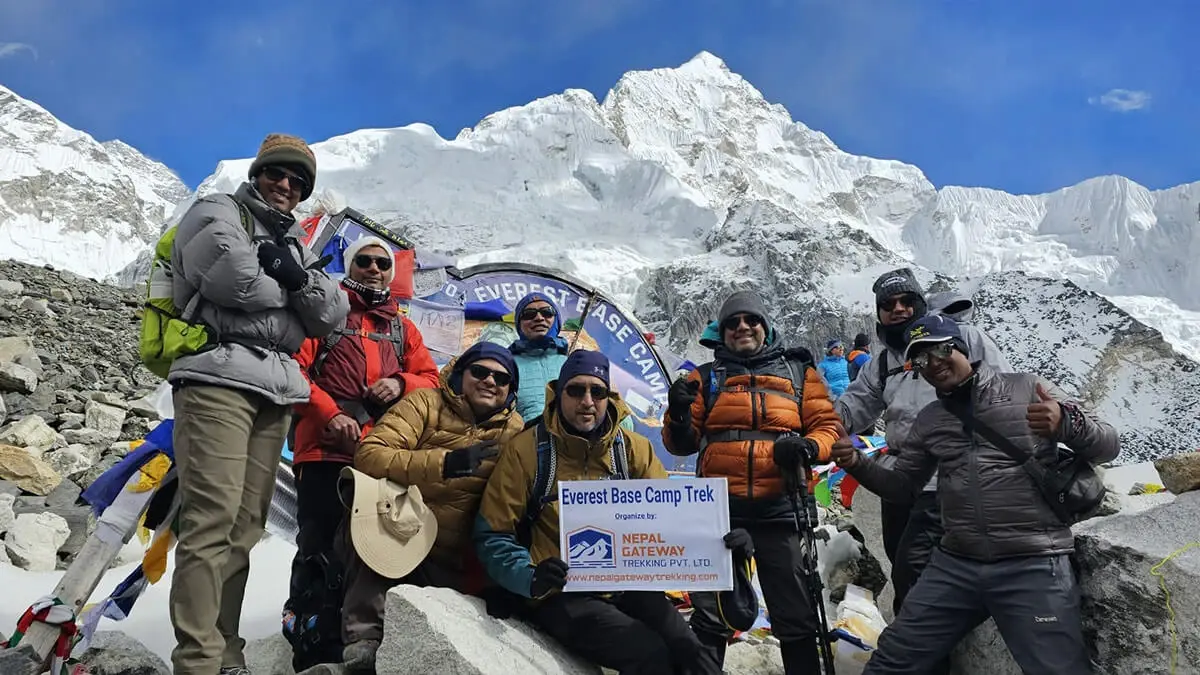
The EBC Trek, also called the Everest Base Camp Trek, is one of the most popular trekking experiences in Himalaya, Nepal. The trek can take you to the pristine heart of the Everest region, with spectacular mountain sceneries, traditional Sherpa villages, Buddhist monasteries, suspension bridges and the highest peaks of the world. The trail drives you to the base camp of Everest, located at 5364 M (17598ft).
The trek itself (not the technical aspect of climbing but walking at high altitude) is physically strenuous with a good level of fitness, proper acclimatisation, proper gear and preparation is essential for the long walking days and changing mountain environment.
What is the EBC Trek?
The EBC Trek is a popular high altitude trek in the Khumbu region of Nepal. The standard route involves a two hour flight from Kathmandu to Lukla, then several days walking through the Sagarmatha National Park to Everest Base Camp.
The trail traverses through well known mountain villages like Phakding, Namche Bazaar, Tengboche, Dingboche, Lobuche and Gorak Shep. Here trekkers get the opportunity to observe the mountains like Everest, Lhotse, Nuptse, Ama Dablam, Thamserku and other neighboring Himalayan peaks.
More than just an opportunity to get to Everest Base Camp, the trek provides an opportunity to absorb in to Sherpa culture, and life in the Himalaya. Prayer wheels, mani walls, prayer flags, monasteries, villages and all other facets of Sherpa life are abundant on the route.
Which place does the EBC Trek begin?
The classic EBC trek begins with a flight from Kathmandu to Lukla, a small mountain village located at about 2,860m. From lukla the trail slowly follows the Dudh Koshi Valley towards Namche Bazaar.
The initial days are aimed to allow the trekkers to acclimatize at a higher altitude. The trek then proceeds to Namche and thereafter to Tengboche and beyond into the higher valleys of Dingboche and Lobuche.
A few of the itinerary sections now require different transportation options, such as a road journey, due to the uncertain May-October weather and the unpredictability of how the operational flights to Lukla will be. As the season and flight schedule fluctuates, travelers may be departing from Ramechhap Airport.
EBC Trek Itinerary
Most EBC treks’ duration varies from 12 to 16 days according to itinerary, getting used to conditions, transportation options and including extra viewpoints or helicopter flight return.
Usually an itinerary goes from Lukla to Phakding, Namche Bazaar, Tengboche, Dingboche, Lobuche, Gorak Shep and the Everest Base Camp. Namche and Dingboche are the most recommended places for acclimatization.
Once at Everest Base Camp, many trekkers make the short trip to Kala Patthar, which is one of the finest vantage points for close up views of Everest and the surrounding peaks. The trail then turns back and descends through the Khumbu Valley to Lukla.
It is generally more comfortable to take longer than to attempt to do the trek in the minimum time. Additional days can help to acclimatise, and give you more opportunity to enjoy the scenery.
EBC Trek Difficulty
EBC Troad is seen as moderate to hard. The challenge does not come so much in the technical route, as the high-altitude, long walking days, steep sections, rough, rocky, trails and unpredictable mountain weather.
Altitude is a more significant concern after Namche Bazaar. The path finally comes to a halt at Gorak Shep, around 5164 meters, before proceeding to Everest Base camp. The amount of oxygen in the atmosphere is much lower at this height, making it hard to even walk around.
The more physically prepared you are the easier the trek will be. Try to walk, hike and climb stairs as much as possible prior to leaving, also try and incorporate some running, cycling, general fitness classes and weight training into the program.
Altitude and acclimatization on the EBC trek
The EBC Trek is designed with acclimatization days because the process of acclimatization is one of the most important parts of the trek. Your body must gradually become accustomed to the elevation as you ascend.
Namche Bazaar is the standard first big stop for acclimation. Rather than staying in the same place all day and sleeping, most hikers usually do a fairly short trek to a higher altitude and then come back down to stay.
Another key point for the acclimatisation is Dingboche. From this point hikers are able to make an easy ascent to a higher elevation and descend back into the village.
The usual rule is to go up slowly and not to rush. Symptoms such as headache, dizziness, abnormal fatigue, nausea and shortness of breath are all signs of altitude sickness. Any severe symptoms or deterioration should never be missed and descending is the single most crucial response to serious altitude illness.
Best Time for the EBC Trek
Overall, the optimal seasons for the EBC Trek are the spring and the fall. From March to May, trekking conditions are fairly dependable, the rhododendrons are in full bloom, and the mountain views are very impressive. From September to November, the weather is usually nice and clear, providing outstanding visibility.
Winter provides cold but possibly stunning conditions with less trekkers on the path. Snow and the shivering cold temperatures can make the trek up higher levels hardier especially in and around Gorak Shep and Everest Base Camp.
During the summer monsoon season (roughly June until September) there will be rain and cloud in many areas of Nepal. Readiness is also affected in Lukla by weather. Conditions affect some individuals but others prefer to travel and do so.
Accommodation and Food During the EBC Trek
Most of the accommodation along the EBC Trek comes in the form of tea houses. However, these are quite basic and most would have limited facilities, for example beds and mixed bathroom facilities. At higher altitudes facilities are more spartan and temperatures can become very cold overnight.
Refreshments are available for purchase wherever you go. Dal bhat, noodles, pasta, soups, potatoes, eggs, bread and other basic foods are abundant. Dal bhat is the suchatorn. Because it offers both protein and carbohydrate and can be replenished at numerous tea houses.
Regular meals and fluid intake is more important at altitude than at lower levels. Similarly alcohol intake should be limited in the high altitude sections of the trip, as it may cause dehydration and impair acclimatisation.
Things to Take on the EBC Trek
Packing the right things can be really helpful for your comfort. The weather can be quite different between Lukla and Everest Base Camp, so make sure you have a few layers of clothing.
Typically standard equipment comprises comfortable trekking boots, thermal clothing, a warm down jacket, waterproof outer layers, trekking trousers, gloves, a warm hat, sunglasses, sunscreen, sleeping bag (appropriate for cold conditions), a headlamp, water bottles and a basic first-aid kit.
A backpack should be as light as possible. Numerous trekkers do use porter services and thus only maintain a light daypack, since the porter carries the overall load.
EBC Trek Cost
The price of EBC Trek will be determined by the duration of the trip, accommodation, porters, guides, Permits, Flights, Food & drinks, Equipment, and personal expenditure.
Budget-style trips can reduce some expenses, private guided journeys and better hotel or travel choices can add to others. The time of year can influence the cost of flights and accommodations.
Your of an a trekking package, do not just compare the price. Find out if the following are included: airport transfers, domestic flights, permit, accommodation, food, guides, porters, insurance, in the event of an emergency, etc.
Why pick the EBC Trek?
The EBC Trek delivers an experience of mountain, adventure, culture and accomplishment that very few trekking routes can equal. More than just heading for a well-know destination, you‘ll be journeying through one of the most amazing mountain environments on earth.
Walking through Sherpa villages and visiting Buddhist monasteries provides a cultural aspect to the hike. Meanwhile the ever-changing scenery from lush valleys and forests to rough glacial terrain ensures the trek remains visually interesting.
The achievement is just as great when the group reaches Everest Base Camp after walking for days. However, for many trekkers what they will recall most about their trip are the experiences they had while walking.
Final Thoughts on the EBC Trek
The EBC trek is one of the most memorable in the Himalayas. Its combination of stunning mountain scenery, Sherpa culture and high-altitude trekking culminates in the memorable experience of standing at the foot of Mount Everest. Although the trek is physically challenging it does not require previous mountaineering experience nor any technical mountain climbing skills.
If sufficiently trained physically, with a well designed itinerary, proper acclimatization, suitable equipment and an expert trekking team, it is possible to undertake the Everest Base Camp trek without any difficulty.
The most critical factor is to heed the altitude and not go rushing. Have patience, walk correctly, and allow yourself to integrate into the culture, walk slowly, get used to the pressure, stay well hydrated and marvel at the breathtaking scenery and local inhabitants.
About the Author