
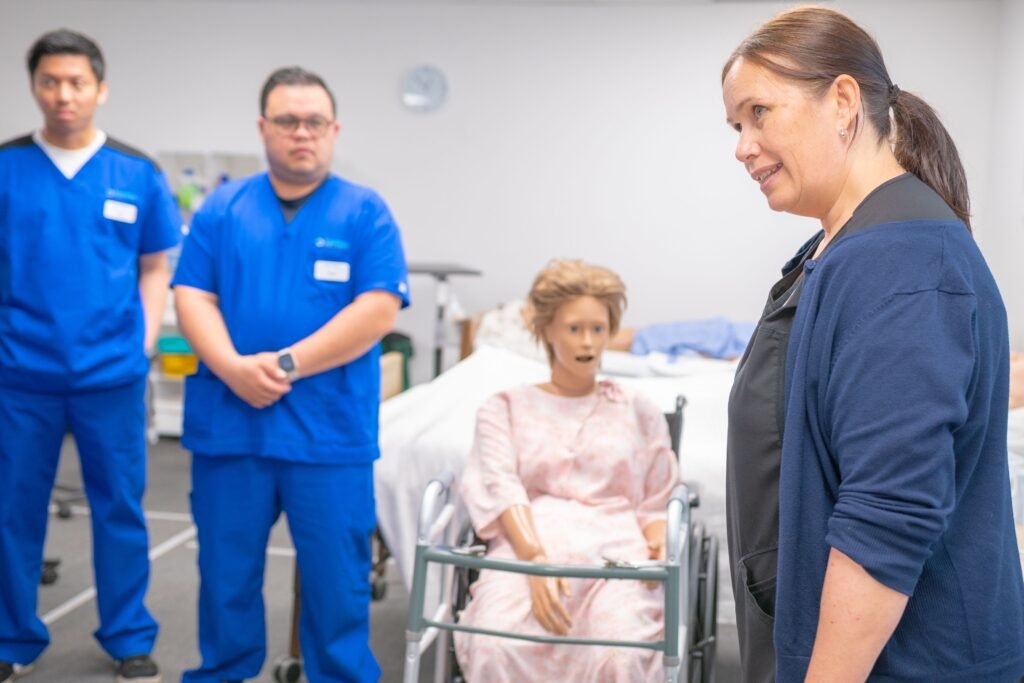
Nursing careers rarely follow a single straight line. Many nurses spend years at the bedside, build deep clinical judgment, and then reach a point where the work that interests them most is no longer only about caring for patients directly. It becomes about shaping the people who will do that work next. Teaching, mentoring, and training are natural extensions of clinical expertise, and the nurses who move into these roles bring something no textbook provides, which is lived experience of what actually happens on a unit when conditions get difficult.
The demand for skilled nurses continues to grow, and with it grows the need for qualified educators who can prepare students and staff for real clinical environments. Someone has to design the coursework, run the training sessions, evaluate performance, and help new hires find their footing. Nurses who feel called to teach often start looking for a structured way to make that shift official, and formal recognition of teaching expertise is one of the clearest paths forward.
Why Formal Recognition Matters in Nursing Instruction
Experience alone opens doors, but it does not always open every door. A nurse can be an outstanding informal mentor and still find that certain teaching positions ask for evidence of formal preparation. Recognition of this kind signals to employers, colleagues, and learners that a nurse meets high national standards in nurse education rather than simply being good at explaining things on the fly.
Nurses considering this move usually want a clear comparison before committing, since the credentials available to nurse educators are not interchangeable and each one points toward a different kind of career. Understanding the CNE vs NPD certification distinction gives a nurse the information needed to choose the path that matches the work they actually want to do. That single decision shapes where a nurse teaches, who they teach, and what their daily responsibilities look like for years afterward.
Two Very Different Audiences
Audience is what separates one teaching path from another more than anything else. One group of nurse educators spends its time with people who have not yet entered practice, walking them through structured coursework, readying them for clinical practice and licensure, and laying the groundwork that everything later depends on. The learners in front of them are still figuring out what the profession asks of them.
A second group works with licensed nurses already holding down clinical responsibilities. That work involves easing new hires into an unfamiliar setting, delivering ongoing education for staff, and encouraging professional development among people with real caseloads. The goal is helping practicing nurses succeed where they already stand, not preparing them to arrive.
Neither group is the softer assignment. What changes is the instinct each one requires. A student who has never inserted a line needs patience with the basics repeated as often as it takes. A nurse ten years into practice needs credibility, genuine respect for the knowledge already in the room, and new competencies introduced in a way that never sounds like correction.
Where the Work Actually Happens
The setting a nurse educator ends up in is decided by who they teach. Educators whose learners have not yet reached practice tend to be based on a campus. Their responsibilities include designing the curricula, lecturing, mentoring students, and evaluating performance. Terms and semesters shape the calendar, and the result of the work is a graduate prepared to step onto a unit.
Educators whose learners already hold licenses tend to be based inside hospitals, clinics, or health systems. Their days go into building training programs, running workshops, and keeping staff current on clinical competencies for their nursing roles. Nothing here follows a semester. A device gets swapped out, a protocol is revised, a group of new hires walks through the door, and the educator meets each of those in real time.
Choosing between the two deserves real thought. Some nurses feel the pull back toward the floor almost as soon as they leave it. Others find that stepping into an academic setting hands them the time to think and plan that no clinical shift ever did.
Preparing for the Move
Moving into teaching work is not something most nurses do overnight. It usually begins informally. A nurse becomes the person other staff asks questions of. A nurse volunteers to orient new hires. A nurse notices that explaining a procedure clearly is satisfying in a way that performing it alone is not.
From there, the practical steps involve building teaching experience deliberately rather than by accident. Taking on orientation responsibilities, precepting, leading in-service sessions, and contributing to policy education all count. These experiences build the record a nurse will draw on later, and they test whether teaching genuinely appeals before any larger commitment is made.
Nurses should also pay attention to the academic preparation expected of educators in the setting they are targeting, since expectations differ meaningfully depending on whether the goal is academic teaching or workforce development inside a health system. Graduate study focused on nursing education is a common route, and coursework in that area can often be completed entirely online, which matters a great deal for nurses who cannot step away from clinical work while they study.
What Keeps Educators Effective Over Time
Nurse education is not a field where knowledge holds still. Educational methods evolve, clinical practices emerge, and healthcare systems change around everyone. Educators are expected to stay current with all of it, which is why ongoing learning and continued professional work are built into the expectations for nurses in these roles.
This is worth planning for rather than discovering later. Nurses who think through their long-term goals early tend to make better choices about which direction to pursue, because they are weighing not only what the role looks like now but what maintaining it will ask of them over the coming years.
Making the Decision
The nurses who succeed in teaching roles tend to be the ones who chose deliberately. They identified what kind of educator they wanted to become, matched that vision against the realistic demands of each path, and then built toward it with intention.
Both directions serve genuine and complementary functions in healthcare. One shapes the profession at its entry point. The other strengthens it continuously from within. A nurse who understands that difference clearly is in a far better position to build a teaching career that lasts, and to be the kind of educator who changes how other people practice.