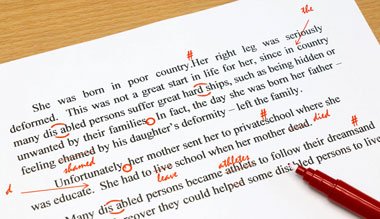
For vs Four vs Fore explains homophones with similar sounds, different meanings, and clear usage rules that improve English communication skills. The English language can sometimes feel like a tricky language because many words share the same pronunciation but have different meanings. In my language learning experience, I have seen how these small words create a major impact on communication. The words for, four, and fore are common homophones with similar sounds, but their definitions, applications, and contexts are different. Understanding these distinct meanings helps you choose the right word at the right spot in a sentence and make your message much clearer.
The word for works as a preposition that explains a purpose or reason connected to someone or something. For example, the sentence “This gift is for you” shows that an item is meant for a person. On the other hand, four represents a quantity or count used in numerical counting. The number 4 tells an exact amount, such as “I have four apples.” A family of four may enjoy a delightful meal under the shade of a large tree during a picnic, while children laughed, played, and practiced counting numbers. These examples improve word usage, sentence structure, and grammar so people can accurately convey their thoughts.
The word fore connects with the front or forward part of something and is commonly used in golf terminology. A golfer may have teed off, and the ball flew straight toward the fairway, surpassing hazards and reaching a favorable position. The warning shout “fore” alerts others when the ball moves in an unsafe direction. Recognizing these word differences helps writers avoid common mistakes, including spelling errors, hidden errors, and homophone confusion. Through proofreading, editing, and writing accuracy, professionals create an error free manuscript and a spelling-error-free document. Even writers with 40 years experience face challenges because an incorrectly chosen word may pass through spell-checkers and automated tools. Careful manuscript review, proofreading process, and spelling correction support better document quality, professional writing, and accurate publication.
Understanding the Difference Between For, Four, and Fore
The biggest reason people confuse for, four, and fore is that they are homophones. Homophones are words that have the same pronunciation but different spellings and meanings.
For example:
- I bought this gift for my sister.
- I bought four gifts for my sisters.
- The golfer shouted “Fore!” before hitting the ball.
Each sentence contains a different word. The pronunciation stays similar, but the meaning changes completely.
Here is a quick comparison:
| Word | Meaning | Word Type | Example |
| For | Shows purpose, reason, benefit, or time | Preposition/Conjunction | This message is for you. |
| Four | Represents the number 4 | Number/Numeral | She has four books. |
| Fore | Means front, ahead, or a warning | Noun/Prefix/Interjection | Fore! Watch out for the ball. |
A simple memory trick can help:
- For = Purpose
- Four = Number
- Fore = Front
Once you connect each word with its meaning, choosing the correct spelling becomes much easier.
What Does For Mean?
The word for is one of the most common words in English. It usually works as a preposition, although it can also function as a conjunction in certain situations.
Unlike four, which always represents a number, for explains a relationship between ideas.
You will often see for used when talking about:
- A purpose
- A reason
- A person receiving something
- A length of time
- Support or benefit
For as a Preposition
As a preposition, for connects one part of a sentence to another. It helps explain why something happens, who receives something, or how long something lasts.
Showing Purpose
When something exists or happens because of a specific goal, for shows that purpose.
Examples:
- This exercise routine is for beginners.
- She created a guide for new writers.
- This medicine is for treating allergies.
In these examples, for explains the intended use of something.
Showing a Recipient
We also use for when something is given, created, or done for another person.
Examples:
- I made dinner for my family.
- She bought flowers for her friend.
- They saved a seat for their teacher.
The word connects an action with the person who benefits from it.
Showing Duration
The word also describes how long something continues.
Examples:
- We stayed there for three days.
- He studied English for five years.
- The movie lasted for two hours.
A useful rule:
If you can answer the question “How long?”, the answer is often used for.
For as a Conjunction
Although less common, for can act as a conjunction to introduce a reason or explanation.
This usage often appears in formal writing or literature.
Example:
She didn’t attend the meeting, for she was feeling unwell.
Here, for means because.
Modern conversational English usually prefers “because,” but for still appears in formal contexts.
Common Phrases Using For
The word for appears in many everyday expressions.
Examples include:
- For example — used to introduce an illustration
- For instance — another way to introduce an example
- For sure — definitely
- For now — temporarily
- For the first time — something happening initially
- For good — permanently
Example:
“Learning homophones takes practice. For example, understanding for vs four vs fore helps improve spelling.”
What Does Four Mean?
The word four has one clear meaning: it represents the number 4.
It comes between three and five in the counting sequence.
Number sequence:
1 → One
2 → Two
3 → Three
4 → Four
5 → Five
Unlike for, the word four has nothing to do with purpose or explanation. It simply identifies quantity.
Four as a Number
We use four whenever we talk about groups, measurements, amounts, or positions.
Examples:
- A car usually has four wheels.
- A square has four sides.
- A year has four seasons.
- Most people have four main limbs.
The number appears everywhere in daily life.
Common Uses of Four in Everyday Language
The number four appears in many familiar concepts.
Four Seasons
The four seasons are:
- Spring
- Summer
- Fall (Autumn)
- Winter
Four Directions
The four main directions are:
- North
- South
- East
- West
Four Corners
A room often has four corners, and the phrase “cover all four corners” means paying attention to every part of something.
Common Mistakes With Four
Because four sounds exactly like for, writers often accidentally choose the wrong spelling.
Incorrect:
I have pencils in my bag.
Correct:
I have four pencils in my bag.
The first sentence says you own pencils intended for something. The second sentence correctly states the quantity.
Another example:
Incorrect:
She waited four two hours.
Correct:
She waited for two hours.
The first sentence uses a number where a time expression is needed.
What Does Fore Mean?
The word fore has fewer everyday uses than for and four, but it still plays an important role in English.
The main idea behind fire is something related to the front, ahead, or before.
It can appear as:
- A standalone word
- A prefix
- A warning expression
Fore Meaning “Front” or “Before”
The word fore often refers to something located at the front of an object or position.
Examples:
- Forehead → the front part of the head
- Foreground → the front area of an image or scene
- Foremost → the most important or leading position
The prefix fore- usually suggests something ahead or earlier.
Fore in Sports: The Golf Warning
The most recognizable use of fore appears in golf.
When a golfer hits a ball that may accidentally strike another person, they shout:
“Fore!”
This warning tells people nearby to pay attention and protect themselves.
Example:
A golfer hits a powerful shot toward another group. They immediately yell “Fore!” so others can move away.
In this situation, fore does not mean the number four or the preposition for. It acts as a safety warning.
Words That Use Fore as a Prefix
Many English words contain fore-.
Here are some examples:
| Word | Meaning |
| Forecast | A prediction about the future |
| Foresee | To predict or know beforehand |
| Foretell | To say something before it happens |
| Foreword | An introduction placed before a book |
| Foreground | The front part of a scene |
The prefix often carries the idea of something coming before or being positioned ahead.
For vs Four vs Fore: Key Differences at a Glance
The following table summarizes the differences:
| Feature | For | Four | Fore |
| Pronunciation | Same | Same | Same |
| Meaning | Purpose, reason, benefit, duration | Number 4 | Front, before, warning |
| Common Usage | Very common | Very common | Less common |
| Grammar Role | Preposition or conjunction | Number | Noun, prefix, interjection |
| Example | This gift is for you. | I bought four apples. | Fore! Move away. |
How to Remember the Difference Between For, Four, and Fore
Many learners remember these words better by connecting them with simple ideas.
Remember For
Think:
For = For someone or something
Examples:
- This letter is for Anna.
- This tool is for writing.
The word usually answers questions like:
- For whom?
- For what purpose?
- For how long?
Remember Four
Think:
Four = The number after three
Examples:
- Four chairs
- Four pages
- Four children
If you are counting, you need four.
Remember Fore
Think:
Fore = Front
Examples:
- Foreground = front area
- Forehead = front part of the head
- Forewarning = warning before something happens
A quick shortcut:
For has a purpose.
Four has a number.
Fore faces forward.
Common Mistakes When Using For, Four, and Fore
Even experienced writers sometimes confuse homophones. The mistake happens because people often write based on sound instead of meaning.
Mistake One: Using For Instead of Four
Incorrect:
There are for chairs in the room.
Correct:
There are four chairs in the room.
The sentence talks about quantity, so four is required.
Mistake Two: Using Four Instead of For
Incorrect:
This present is four my brother.
Correct:
This present is for my brother.
The sentence explains the receiver, not the amount.
Mistake Three: Forgetting Fore in Special Contexts
Incorrect:
The player yelled “four” during golf.
Correct:
The player yelled “fore” during golf.
The warning in golf uses fore, not four.
Read More: ‘Renumeration’ vs ‘Remuneration’: What’s the Difference
For vs Four vs Fore Examples in Sentences
Seeing for vs four vs fore in real sentences makes the difference much easier to understand. Context acts like a guide because the meaning of the sentence tells you which spelling fits.
Below are examples showing how each word works.
Examples With For
The word for appears in countless everyday situations.
| Sentence | Meaning of For |
| This book is for students. | Shows the intended users |
| She worked for ten hours. | Shows duration |
| I bought a gift for my friend. | Shows the receiver |
| We left early for safety reasons. | Shows purpose |
| He is famous for his artwork. | Shows a reason or association |
Notice that for connecting ideas. It explains relationships between actions, people, reasons, and goals.
Examples With Four
The word four always represents the number 4.
| Sentence | Meaning of Four |
| I have four brothers. | Shows quantity |
| The table has four legs. | Shows a count |
| She arrived at four o’clock. | Shows a specific number |
| A rectangle has four sides. | Describes a shape |
| They purchased four tickets. | Shows an amount |
Whenever you can replace the word with the numeral 4, you should use four.
Example:
- I have four books.
- I have 4 books.
Both sentences mean the same thing.
Examples With Fore
The word fore appears less often, but it has specific meanings.
| Sentence | Meaning of Fore |
| The golfer shouted “Fore!” | A warning before danger |
| The ship’s fore section faced the waves. | Front part of a ship |
| The foreground contains the main subject. | Front area of an image |
| She made a foreword for the book. | Introduction before the main text |
| Scientists can sometimes foresee future problems. | Predict beforehand |
Pronunciation and Grammar Tips for For, Four, and Fore
The pronunciation of for, four, and fore creates most of the confusion.
In many English accents, all three words sound like:
/fɔːr/
However, spelling depends on meaning, not pronunciation.
A listener cannot know which word you mean only by hearing it. They understand through context.
For example:
I bought four apples for my family.
Both four and for appear in the same sentence, but their meanings are completely different.
- Four = the number of apples
- For = the people receiving the apples
This is why English learners should focus on the sentence’s meaning rather than sound alone.
Grammar Clues That Help You Choose Correctly
Certain grammar patterns can help identify the right word.
Use For When You Talk About:
- Purpose
- Reasons
- Benefits
- Time periods
- Recipients
Examples:
- This course is for beginners.
- I stayed there for a week.
Use Four When You Talk About:
- Counting
- Numbers
- Amounts
- Measurements
Examples:
- She owns four cars.
- The recipe needs four eggs.
Use Fore When You Talk About:
- Front positions
- Things happening before
- Warnings
Examples:
- The boat’s fore section is damaged.
- The golfer shouted.
Historical Background of For, Four, and Fore
The similarity between these words did not happen randomly. Their histories explain why they developed different spellings while eventually gaining similar sounds.
Origin of For
The word for comes from Old English roots connected with ideas such as:
- Direction
- Purpose
- Benefit
- Exchange
Over centuries, the word kept its basic meaning while becoming one of the most frequently used English words.
Today, for appears in thousands of common expressions.
Examples:
- For you
- For example
- For a while
- For the future
Origin of Four
The word four developed from the Old English word feower.
It connects with other Germanic languages:
- German: vier
- Dutch: vier
- Old Norse: fjórir
Although the spelling changed over time, the number meaning remained consistent.
The concept of four has always played an important role in human understanding because people commonly organize things into groups of four.
Examples:
- Four seasons
- Four directions
- Four elements in ancient traditions
Origin of Fore
The word fore also comes from Old English roots. It developed from meanings connected to:
- Before
- Ahead
- Front position
This meaning remains visible in modern words.
Examples:
- Foresee → see beforehand
- Forecast → estimate what may happen
- Foreground → front area
The word also became associated with golf as a warning call.
Real-Life Case Study: How One Sound Creates Three Different Meanings
Consider this sentence:
The golfer prepared four clubs for the tournament and shouted fore when the ball moved toward the crowd.
This single sentence contains all three words.
Let’s break it down:
Four Clubs
The word four describes the number of clubs.
Meaning:
- Quantity
- Number 4
For the Tournament
The word for explains the purpose.
Meaning:
- Used for an event
Shouted Fore
The word fore acts as a warning.
Meaning:
- Watch out
Although the words sound identical, the context separates them clearly.
How Writers Can Avoid Confusing For, Four, and Fore
Strong writing depends on accuracy. A single incorrect word can distract readers and reduce credibility.
Here are practical ways to avoid mistakes:
Read the Sentence Slowly
Ask yourself:
- Am I talking about a number?
- Am I explaining a purpose?
- Am I describing something in front?
Your answer usually reveals the correct spelling.
Replace the Word With a Similar Meaning
Try replacing the word.
Example:
This gift is ___ Sarah.
Replace it:
This gift is intended for Sarah.
The correct choice is for.
Another example:
I bought ___ oranges.
Replace it:
I bought 4 oranges.
The correct choice is four.
Use Context Instead of Sound
Never choose a spelling only because it sounds right.
English contains many homophones:
- Their / There / They’re
- To / Too / Two
- Your / You’re
- For / Four / Fore
The meaning of the sentence always decides the correct spelling.
FAQs
1. What is the main difference between for, four, and fore?
The main difference is their meaning and usage. For is a preposition used for purpose or reason, four represents the number 4 or a quantity, and fore refers to the front or is used as a warning shout in golf terminology.
2. Are for, four, and fore examples of homophones?
Yes, for, four, and fore are homophones because they have the same pronunciation but different spellings, definitions, and contexts.
3. How can I use for correctly in a sentence?
You can use for when explaining a purpose, reason, or connection. For example, “This gift is for you” shows that something is intended for a person.
4. What does four represent in English?
The word four represents a quantity or count. It is a numerical counting word used to show the amount of something, such as “I have four apples.”
5. Where is the word fore commonly used?
The word fore is commonly used in golf as a warning shout. A golfer uses it when a ball may move toward another person.
6. Why do people confuse for, four, and fore?
People often confuse these words because they have a similar sound and the same pronunciation. Their different meanings and applications make them challenging for many English learners.
7. How can I remember the difference between these three words?
Remember that for connects with purpose, four connects with numbers, and fore connects with the front or golf terminology.
8. Can incorrect use of these words create writing mistakes?
Yes, using the wrong word can create spelling mistakes, word choice problems, and communication issues. Careful proofreading helps remove these errors.
9. How do for, four, and fore improve English learning skills?
Learning these words improves vocabulary, grammar, and overall English skills. Understanding their contexts helps learners choose the correct word in every sentence.
10. What is the best way to master homophones like for, four, and fore?
The best way is through regular language learning, reading, writing practice, and understanding real-life examples. Breaking words down by their definitions makes learning easier.
Conclusion
Understanding for, four, and fore is important for improving English communication and avoiding common mistakes. Although these homophones have the same sound, they have completely different meanings, spellings, and uses. For explains a purpose, four shows a quantity, and fore describes the front or works as a golf warning. By learning their contexts, practicing correct word usage, and focusing on accurate writing, you can make your sentences more clear, effective, and professional.
Mastering these small but important English words helps improve vocabulary, grammar, and writing accuracy. Many writers face problems with hidden spelling errors because homophones are not always detected by spell-checkers. Regular proofreading, careful editing, and better word choice can create an error-free document. Whether you are learning English or preparing professional content, knowing the difference between for, four, and fore makes your communication more precise and confident.
About the Author