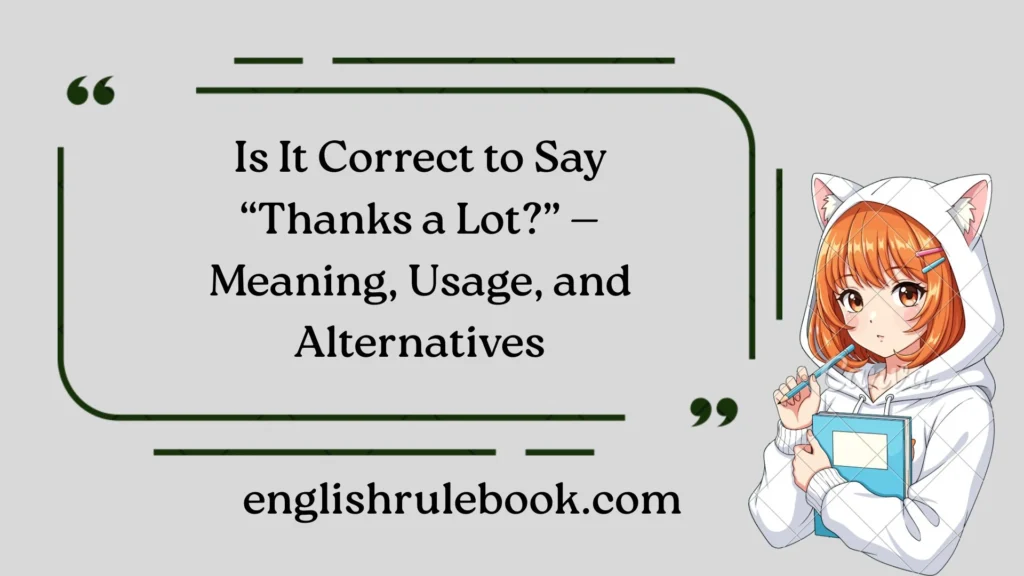
Is It Correct to Say “Thanks a Lot?” Many people wondered about this, as expressing gratitude can feel natural yet tricky depending on context, audience, and tone. In my experience, this phrase works well in everyday communication, emails, or conversations when polite, genuine, and heartfelt, but in casual settings, the listener might interpret it as sarcastic or even rude. Paying attention to sentence structure, choice of words, and emphasis ensures your message is clear, professional, and fits the situation.
In real-world interactions, hesitation often creeps in when someone is unsure if Thanks a Lot is too formal or too casual. Observing norms, cultural, and social etiquette helps navigate these nuances, making gratitude precise, effective, and impactful. Mastering alternatives like thank or appreciation, and practicing them in spoken and written English, enhances your confidence, interaction, and communication skills. A kind gesture or favor received can bubble up words naturally, but proper phrasing, attention, and awareness of the setting or occasion ensures your expression lands right, straightforward, and fitting, leaving a lasting impression in both professional and personal contexts.
Understanding “Thanks a Lot”
At its core, “Thanks a lot” is a combination of “thanks” (a simple expression of gratitude) and “a lot,” which intensifies the sentiment. But unlike “thank you very much,” which is almost always sincere, “Thanks a lot” can swing between sincerity and sarcasm.
Literal vs. Implied Meaning
| Phrase | Common Interpretation | Tone |
| Thanks a lot | Gratitude for help or effort | Sincere or sarcastic depending on context |
| Thank you very much | Formal, sincere appreciation | Sincere |
| Thanks so much | Casual yet warm | Sincere |
Example:
- Sincere: “Thanks a lot for helping me move today; I couldn’t have done it without you.”
- Sarcastic: “Thanks a lot for spilling coffee on my report.”
Notice how the same words can mean completely different things depending on tone and situation.
Sarcasm Versus Sincerity
Tone is everything. Linguists call this “pragmatics” — the study of context in language. In spoken English, sarcasm is often conveyed with stress on “a lot” or with a drawn-out intonation.
Examples of sarcastic “Thanks a lot”:
- After someone forgets your coffee: “Thanks a lot for bringing decaf instead of regular.”
- When a friend borrows your book and returns it damaged: “Thanks a lot, just what I needed!”
Examples of sincere “Thanks a lot”:
- Receiving a thoughtful gift: “Thanks a lot! This is exactly what I wanted.”
- Help with a project: “Thanks a lot for staying late to help me finish the report.”
Tip: When writing, sarcasm is harder to detect. Always consider punctuation and phrasing to prevent misunderstandings.
Also Read This: Wreckless vs Reckless: Meaning, Usage, and Common Mistakes
Gratitude in Different Contexts
Saying “thanks” is universal, but how you say it matters based on context. Here’s a breakdown:
Casual Settings
In casual interactions with friends, family, or online peers, “Thanks a lot” is generally acceptable. Tone and body language often clarify intent.
- Texting a friend: “Thanks a lot for covering me during class!” ✅
- Social media comment: “Thanks a lot for sharing this helpful tip!” ✅
Formal Settings
In formal or professional settings, “Thanks a lot” may feel too casual and sometimes awkward. It can even be misinterpreted as sarcasm if overused.
- Emails to colleagues: Better to use “Thank you very much” or “I greatly appreciate it.”
- Business meetings: A simple “Thank you” or “I really appreciate your support” works best.
Table: Casual vs. Formal Gratitude Phrases
| Setting | Phrase Options | Notes |
| Casual | Thanks, Thanks a lot, Thanks so much | Warm, friendly, informal |
| Formal | Thank you, Thank you very much, I greatly appreciate it | Professional, sincere |
| Neutral | Many thanks, Much appreciated | Versatile, can fit either |
Professional Thank-Yous: Best Practices
In professional communication, choosing the right words is crucial. Misplaced sarcasm or casual phrasing can damage your credibility.
When “Thanks a lot” works professionally:
- Emailing a team member who went above and beyond on a project.
- Informal internal communications where the team shares a relaxed culture.
Alternatives to sound professional and sincere:
- “Thank you for your prompt response.”
- “I sincerely appreciate your guidance.”
- “Much obliged for your support.”
Case Study:
A marketing manager emailed her team:
- Incorrect: “Thanks a lot for finishing the report late last night.” (could sound sarcastic)
- Correct: “Thank you very much for completing the report; your effort is appreciated.” ✅
Situations Where “Thanks a Lot” Might Be Misunderstood
Even in casual settings, “Thanks a lot” can backfire. Misunderstandings happen if:
- Tone is ambiguous in speech or text.
- Punctuation misleads the reader: “Thanks a lot.” vs. “Thanks a lot!”
- The recipient is unfamiliar with your sense of humor or style.
Examples of Misinterpretation:
- A coworker misses a meeting. You text: “Thanks a lot for missing this.” → Likely perceived as sarcastic.
- Friend brings the wrong item for a potluck. “Thanks a lot” → Could be read as annoyed, not grateful.
Tip: When in doubt, use a clearer alternative like “Thank you so much” to avoid ambiguity.
Alternatives to “Thanks a Lot”
Sometimes, you just need a phrase that perfectly fits your tone and context. Here’s a detailed guide:
Casual Alternatives
- Thanks
- Thanks so much
- Many thanks
- Appreciate it
Formal/Professional Alternatives
- Thank you very much
- I sincerely appreciate it
- Much obliged
- I am grateful for your assistance
Friendly or Creative Alternatives
- Thanks a million!
- Thanks heaps!
- Cheers! (informal, friendly)
- Big thanks!
Quick Tip: Choose alternatives based on audience, context, and medium. Emails and text messages may require different phrasing than spoken conversation.
The Role of Tone, Body Language, and Medium
Tone is a silent but powerful influencer of meaning. Written messages lack vocal cues, so punctuation, formatting, and emojis can help convey sincerity.
- Emails: Use polite, complete phrases. Example: “Thank you very much for your help.”
- Text messages: Emojis can soften the tone. Example: “Thanks a lot 😊”
- In-person: Smile, maintain eye contact, and use warm body language.
Tip: Even a perfect phrase can fall flat if the delivery doesn’t match the intent.
Summary and Key Takeaways
Saying “Thanks a lot” can work wonderfully when you match tone, context, and audience. Misuse can lead to misunderstandings or unintended sarcasm.
Key points:
- Tone matters: Vocal stress and punctuation influence perception.
- Context matters: Casual vs. formal situations dictate appropriate phrasing.
- Medium matters: Written communication requires extra clarity.
- Alternatives exist: Choose “Thank you very much,” “Thanks so much,” or other options based on situation.
Quick Reference Table: Choosing the Right Thank-You Phrase
| Situation | Recommended Phrase | Notes |
| Casual chat | Thanks, Thanks a lot | Friendly, informal |
| Professional email | Thank you very much, I greatly appreciate it | Clear and sincere |
| Sarcasm (humor with friends) | Thanks a lot! (with playful tone) | Only for close relationships |
| Gratitude with clarity | I sincerely appreciate it | Never ambiguous |
FAQs About “Thanks a Lot”
Q1: Is it correct to say “Thanks a Lot?”
Yes, Thanks a Lot can be correct in many contexts, but its tone, audience, and setting matter. It works well in everyday communication when polite, genuine, and heartfelt, but may feel sarcastic or rude if misinterpreted.
Q2: Can I use “Thanks a Lot” in professional emails?
Absolutely. Paying attention to sentence structure, choice, and emphasis ensures your message remains clear, professional, and fits the situation. Using alternatives like thank or appreciation can also enhance interaction.
Q3: Is “Thanks a Lot” too casual?
It depends. In casual conversations, it’s usually fine. In formal settings, observe norms, cultural etiquette, and audience perception. Practicing proper phrasing helps your gratitude feel precise and impactful.
Q4: Are there better alternatives?
Yes. Words like thank, thanks, or appreciation, when mastered and used correctly, can make your expression professional, heartfelt, and appropriate for any setting or occasion.
Conclusion
Is It Correct to Say “Thanks a Lot?” Yes, it demonstrates gratitude naturally when expressed with attention, clarity, and confidence. Understanding context, tone, and audience ensures your message lands right, friendly, polite, and heartfelt, making your interactions both professional and personal. Mastering alternatives, phrasing, and nuances enhances your communication skills and leaves a lasting impression.